9 Best Hearing Aids for Music of 2026
By the HearSmart research desk · Updated November 27, 2026 · Next review January 11, 2027 · 9 products compared
 Ranked firstWidex Alluremusic lovers with mild loss who want the least processed sound8.4
The short version
Widex Allure ranks first for its sub 0.5 millisecond PureSound path, beat detector and streaming compressor, and Widex Moment Sheer gives the same PureSound path at the same $2,798 entry price. Phonak Audéo EON Sphere is the pick for stronger losses, and Oticon Intent documents the widest amplification range at 80 Hz to 10,000 Hz. Apple AirPods Pro 3 at $249, Jabra Enhance Select M3 and Sennheiser All Day Clear cover mild to moderate loss without a clinic. Starkey Omega AI+ has the longest battery at 51 hours, and Signia Pure Charge&Go IX is the cheapest prescription aid at $2,398.
Short answer
Widex Allure sounds the most natural for live music in 2026 because its PureSound program uses ZeroDelay processing, which Widex says keeps delay below 0.5 milliseconds, and its sound classifier adds a beat detector; it starts at $2,798 per pair at ZipHearing. Phonak Audéo EON Sphere suits musicians with more severe loss, covering mild to profound loss with dedicated Music programs from $3,198 per pair, and Apple AirPods Pro 3 are the cheapest option at $249 for mild to moderate loss (prices checked November 2026). Players who want an OTC aid tuned by a professional should pick Jabra Enhance Select M3 at $1,995 list.
This list is for musicians and music lovers with hearing loss who want live and streamed music to sound like music again. We compared the documented music features of 9 hearing aids: low processing delay, dedicated music programs, frequency range, feedback handling, streaming and battery life, along with published US prices, and scored performance, ease of use and value. We compared documented features and published prices; we did not test the devices. Vendor study results are labeled as vendor claims. The six prescription makers do not publish US prices, so we read per-pair prices at ZipHearing, a seller that includes local care. We dropped several suggested models: Phonak Sphere Infinio, ReSound Nexia and Starkey Edge AI because newer models from the same makers were on sale, and Unitron Vivante, Bernafon Encanta, Jabra Enhance Pro 20 and Sony CRE-E10 because we could not read current product pages or prices for them.
At a glance
| Rank | Product | Best for | Price | Score |
|---|---|---|---|---|
| 1 | Widex Allure | music lovers with mild loss who want the least processed sound | From $2,798 per pair (entry level) to $4,398 (440) at ZipHearing with local care included; the maker publishes no US price | 8.4 |
| 2 | Widex Moment Sheer | musicians who want PureSound at the lowest Widex price | From $2,798 per pair (110 or 220) to $4,398 (440) at ZipHearing with local care included; the maker publishes no US price | 8.3 |
| 3 | Phonak Audéo EON Sphere | music fans who want automatic switching and connection to any phone | $3,198 per pair (entry) to $4,598 (90) at ZipHearing with local care included; the maker publishes no US price | 8.1 |
| 4 | Apple AirPods Pro 3 | iPhone owners with mild to moderate loss on a budget | $249 | 8.0 |
| 5 | Oticon Intent | listeners who want the widest documented frequency range | From $2,898 per pair (Intent 4) to $4,598 (Intent 1) at ZipHearing with local care included; the maker publishes no US price | 8.0 |
| 6 | Jabra Enhance Select M3 | OTC buyers who want an audiologist to tune music settings remotely | $1,995 per pair list; $1,695 during the November 2026 sale | 7.7 |
| 7 | Starkey Omega AI+ | performers who need all-day battery and water resistance | From $3,198 per pair (16) to $3,998 (24) at ZipHearing with local care included; the maker publishes no US price | 7.7 |
| 8 | Signia Pure Charge&Go IX | band members who need to follow talk between songs | From $2,398 per pair (1ix) to $3,798 (7ix) at ZipHearing with local care included; the maker publishes no US price | 7.6 |
| 9 | Sennheiser All Day Clear | OTC buyers who stream a lot of music | $899.95 list; $699.95 during the November 2026 sale | 7.5 |
Figures worth knowing
- 42.6%Tinnitus was reported by 42.6% of musicians in the 2026 meta-analysis, compared with 13.2% of control populations.Source: American Academy of Otolaryngology-Head and Neck Surgery
- 38.6%A 2018 systematic review of 41 studies and 4,618 professional musicians found audiometric hearing loss in 38.6% of them.Source: International Journal of Environmental Research and Public Health
- 3.61Professional musicians in Germany had a hazard ratio of 3.61 for noise-induced hearing loss compared with the general insured population, based on 2004 to 2008 insurance data for more than 3 million people.Source: Occupational and Environmental Medicine
- 94-110 dBANIDCD lists concerts, sporting events and headphones at maximum volume at 94 to 110 dBA.Source: National Institute on Deafness and Other Communication Disorders
- 28.8 millionAbout 28.8 million US adults could benefit from using hearing aids, according to NIDCD calculations from national hearing exam data.Source: National Institute on Deafness and Other Communication Disorders
How we make the call
Every entry gets a 0 to 10 rating on the three criteria below, and the order follows the weighted total. The ratings rest on the documented features and published prices on each maker's own pages, never hands-on testing.
- 40%Performance
- 25%Ease of use
- 35%Value
No. 1, top ranked
Widex AllureA prescription hearing aid on the Widex W1 chip with the ZeroDelay PureSound program, a beat detector and a dedicated streaming compressor.
8.4of 10Best for music lovers with mild loss who want the least processed sound
- Performance
- 9.4
- Ease of use
- 8.0
- Value
- 7.6
Price
From $2,798 per pair (entry level) to $4,398 (440) at ZipHearing with local care included; the maker publishes no US price
Quoted from the Widex Allure pricing page on November 27, 2026:
Widex Allure 2200 [pair] $2,798.00 USD
Widex Allure is the strongest fit for listeners whose main complaint is that hearing aids make music sound processed. Its PureSound program runs on ZeroDelay technology, which Widex says brings the delay between microphone and receiver below 0.5 milliseconds, and the Widex professional site says PureSound processes sound 8 to 20 times faster than other digital hearing aids. That speed matters with open fittings, where sound reaching the eardrum directly mixes with the aid's sound. Allure adds two music details on top: the Enhanced Sound Classifier has a beat detector that Widex says improves music enjoyment, and a dedicated streaming compressor keeps streamed music free of sudden volume changes. The app has a three-band equalizer. The limit is fit: Widex tailors Allure PureSound to new wearers and people with mild loss, so musicians with moderate or greater loss will use the standard Widex sound path. ZipHearing lists Allure from $2,798 to $4,398 per pair with local care.
What it does well
- +Widex reports the Allure PureSound program improves speech intelligibility in noise by 4.3 dB for mild to moderate loss
- +Allure BTE R D covers mild to profound hearing loss, so stronger losses can stay on the platform
- +Same $2,798 entry price at ZipHearing as the older Widex Moment
Where it falls short
- −Widex tailors Allure PureSound to new wearers and others with mild hearing loss, so it may not suit greater loss
- −Widex publishes no maximum input level in dB SPL on the Allure consumer page
- −Sold only through hearing care professionals; the top 440 level costs $4,398 per pair at ZipHearing
- Price
- $2,798 to $4,398 per pair at ZipHearing
- Music feature
- Beat detector, PureSound program
- Streaming
- Dedicated streaming compressor
- Charge
- 4 hours for a full day
No. 2
Widex Moment SheerWidex's earlier PureSound platform with two sound paths: ZeroDelay for mild to moderate loss and a universal path for all losses.
8.3of 10Best for musicians who want PureSound at the lowest Widex price
- Performance
- 9.0
- Ease of use
- 7.8
- Value
- 7.8
Price
From $2,798 per pair (110 or 220) to $4,398 (440) at ZipHearing with local care included; the maker publishes no US price
Quoted from the Widex Moment Sheer pricing page on November 27, 2026:
Widex Moment 110 [pair] $2,798.00 USD
Widex Moment Sheer introduced the PureSound idea that Allure builds on, and it remains a sensible way to buy it for less at the top level. Widex explains that with many hearing aids the direct sound and the processed sound reach the eardrum at different times, which produces a comb-filter effect people call tinny. Moment Sheer has a second ZeroDelay pathway that keeps the delay below 0.5 milliseconds for mild to moderate loss in open or vented fittings, and a universal Widex path for everyone else. Widex cites a study in which 85% of participants with hearing loss preferred PureSound, and survey data in which 95% of wearers said sounds were where they expected them; both are Widex research. What Moment Sheer lacks, compared with Allure, is the beat detector and the dedicated streaming compressor. ZipHearing lists the 110 and 220 levels at $2,798 per pair, and the 330 at $3,798.
What it does well
- +In a Widex study, 85% of participants with hearing loss preferred PureSound in real-life sound scenarios
- +Widex reports 95% of wearers say sounds appear exactly where they expect them with PureSound
- +Entry 110 and 220 levels cost $2,798 per pair at ZipHearing, the lowest Widex price on this list
Where it falls short
- −PureSound is aimed at open and vented fittings for mild to moderate loss
- −Widex cannot fit PureSound alone; it runs alongside the universal program
- −Allure is the newer Widex platform and adds the beat detector and streaming compressor
- Price
- $2,798 to $4,398 per pair at ZipHearing
- Music feature
- PureSound with ZeroDelay
- Delay
- Below 0.5 milliseconds (Widex)
- Levels
- 440, 330, 220, 110
No. 3
 Phonak Audéo EON Sphere
Phonak's AI-chip receiver-in-canal aid for mild to profound loss, with automatic Music and Media music programs.
8.1of 10Best for music fans who want automatic switching and connection to any phone
- Performance
- 9.1
- Ease of use
- 8.2
- Value
- 6.8
Price
$3,198 per pair (entry) to $4,598 (90) at ZipHearing with local care included; the maker publishes no US price
Quoted from the Phonak Audéo EON Sphere pricing page on November 27, 2026:
Phonak Audéo EON Sphere $3,198.00 USD
Phonak Audéo EON Sphere is the choice for people who want the aid to recognize music on its own. Its AutoSense OS AI 8.0 features table lists a Music program and a Media music + mic program among the automatic programs, and up to 4 extra programs can be added, which leaves room for a manual music setting for rehearsals. Phonak's audiology blog says retraining the classifier for AutoSense OS 7.0 produced 24% higher accuracy classifying music and speech in noise scenes, and that music was one of two conditions it prioritized because genres vary so much. EON Sphere also covers mild to profound loss, connects to virtually any Bluetooth device and receives Auracast broadcasts. Battery life is up to 38 hours. ZipHearing lists it from $3,198 per pair, the highest entry price among the top four.
What it does well
- +Rated for mild to profound hearing loss, the widest range in this list's top three
- +Phonak says retraining AutoSense OS 7.0 gave 24% higher accuracy classifying music and speech in noise scenes
- +Works with Bluetooth phones beyond iPhone and Android
Where it falls short
- −$3,198 entry price at ZipHearing is $400 more than either Widex model
- −Automatic switching can move between music and speech programs; ask for a manual music program for gigs
- −Phonak publishes no maximum input level on the consumer pages
- Price
- $3,198 to $4,598 per pair at ZipHearing
- Music feature
- Music and Media music + mic programs
- Battery
- Up to 38 hours
- Loss range
- Mild to profound
Visit phonak.com|Read the full Phonak Audéo EON Sphere profile
No. 4
 Apple AirPods Pro 3
Earbuds with a clinical-grade Hearing Aid feature for perceived mild to moderate loss and Media Assist for music.
8.0of 10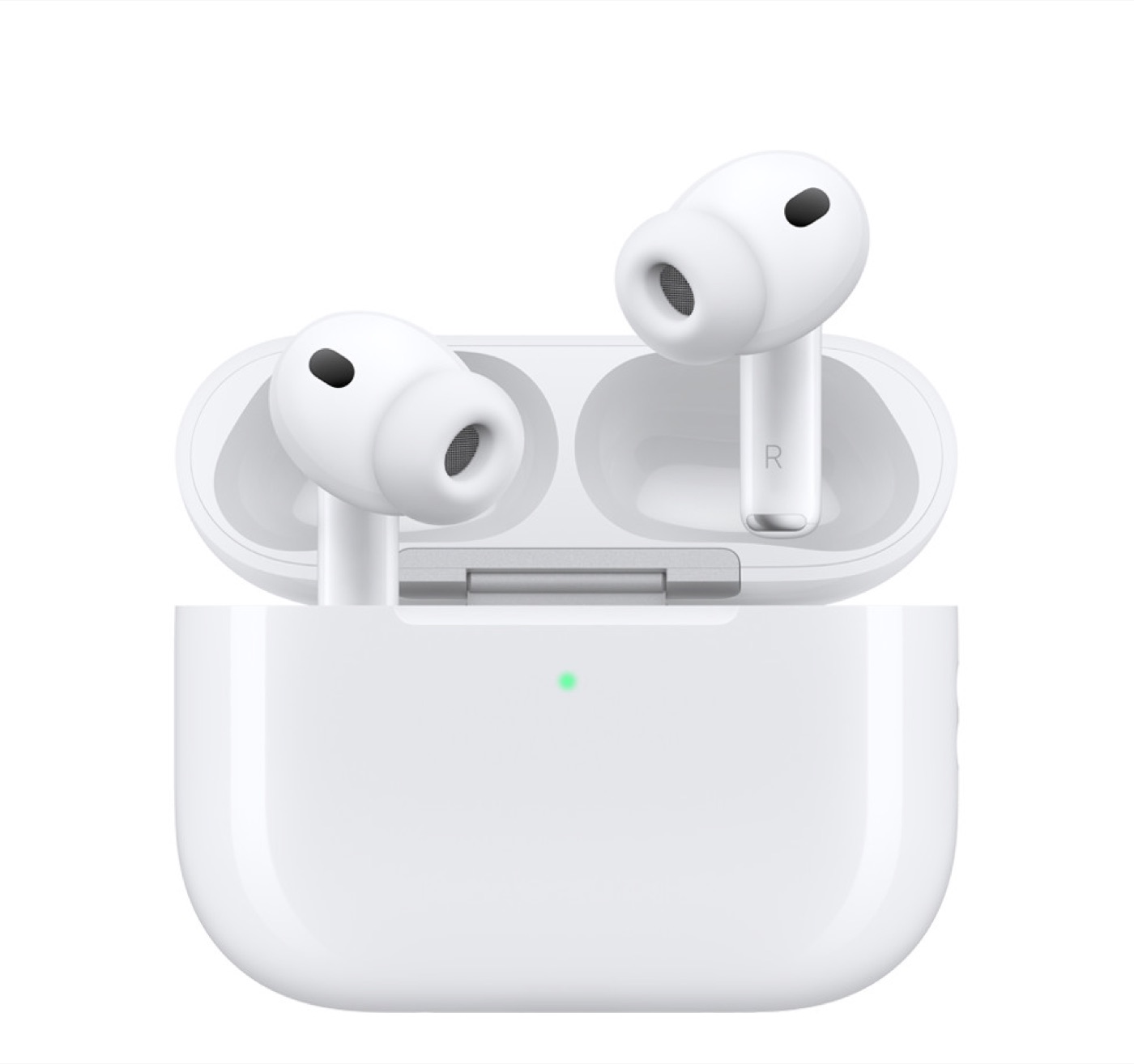
Best for iPhone owners with mild to moderate loss on a budget
- Performance
- 6.4
- Ease of use
- 8.8
- Value
- 9.2
Price
$249
Quoted from the Apple AirPods Pro 3 pricing page on November 27, 2026:
$249.00 Frequently Asked Questions
Apple AirPods Pro 3 are the low-cost entry point for music lovers whose loss is still mild to moderate. Apple's support page describes a clinical-grade Hearing Aid feature for perceived mild to moderate loss plus Media Assist, which applies your hearing test results to the sound of music, videos and calls. You can blend streamed music with Hearing Aid amplification and set each volume separately. For concerts, Hearing Protection lowers sound in environments as loud as 110 dBA, and Apple says the improved multiband compressor keeps live music natural while protecting hearing. The limits are clear on Apple's own pages: setup needs an iPhone or iPad, amplification only works in Transparency mode, and the protection is not meant for sustained sound above 110 dBA. At $249 they cost a fraction of a prescription aid, but they are not a substitute for one if your loss is greater.
What it does well
- +$249 is less than a tenth of the cheapest prescription aid on this list
- +Media Assist works across all noise control modes for streamed music
- +One product covers streaming, hearing assistance and concert hearing protection
Where it falls short
- −Needs an iPhone or iPad with current software to set up Hearing Aid and Media Assist
- −Hearing Aid amplification works only in Transparency mode
- −Not for loss beyond moderate, and Apple does not suit sustained sounds louder than 110 dBA
- Price
- $249
- Loss range
- Perceived mild to moderate
- Music feature
- Media Assist
- Protection
- Up to 110 dBA environments
No. 5
 Oticon Intent
Oticon's premium aid with 4D user-intent sensors, a wide 80 Hz to 10,000 Hz amplifier and feedback prevention.
8.0of 10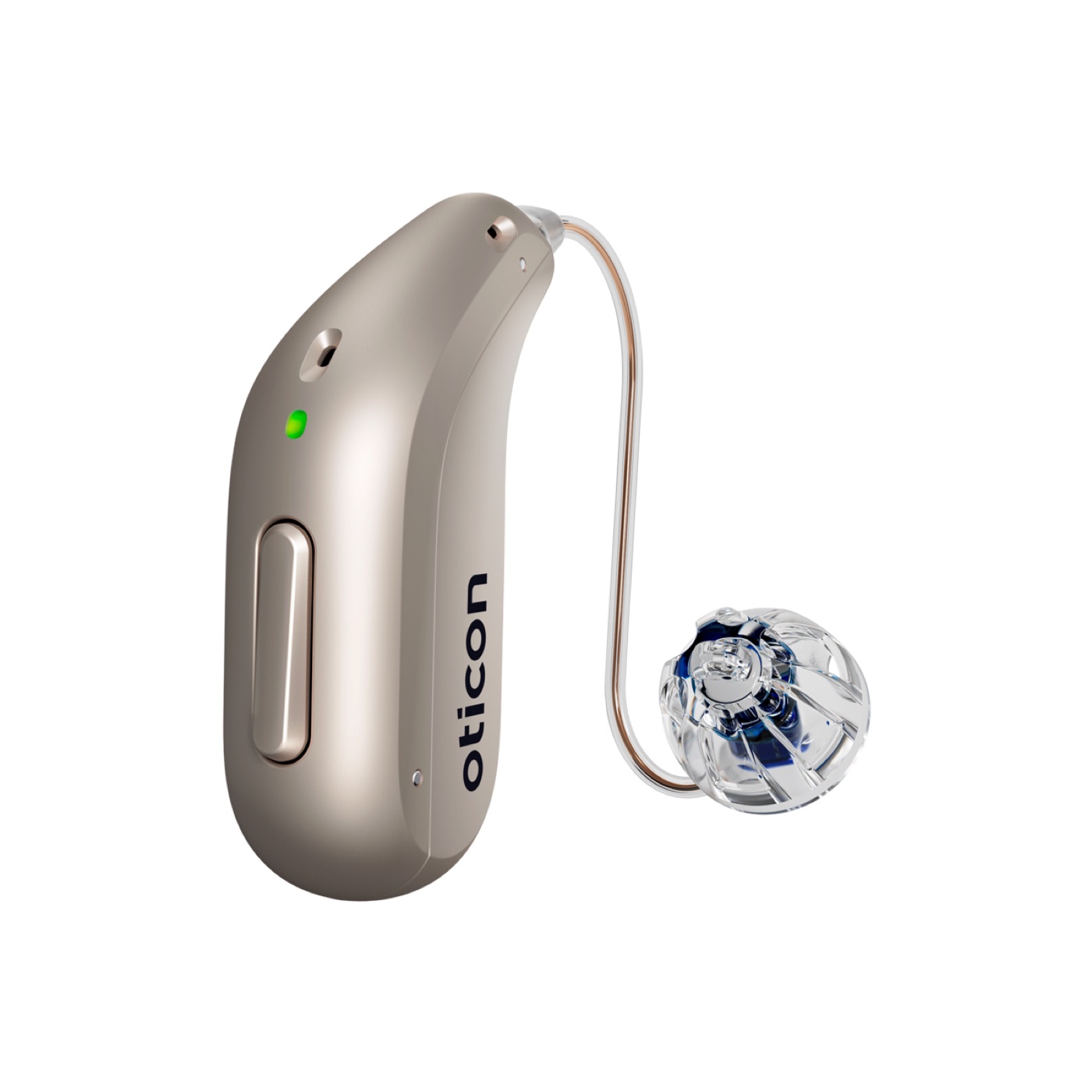
Best for listeners who want the widest documented frequency range
- Performance
- 8.8
- Ease of use
- 7.9
- Value
- 7.2
Price
From $2,898 per pair (Intent 4) to $4,598 (Intent 1) at ZipHearing with local care included; the maker publishes no US price
Quoted from the Oticon Intent pricing page on November 27, 2026:
Oticon Intent 4 [pair] $2,898.00 USD
Oticon Intent earns its place on two documented specs that matter for music. First, Oticon says MoreSound Amplifier 3.0 amplifies across a range from 80 Hz up to 10,000 Hz, measured in an ear simulator, so more of a bass line and cymbal shimmer is in play than with a speech-focused response. Second, MoreSound Optimizer creates a breaker signal that stops audible feedback before it happens, and Oticon says it does this without sacrificing gain. Sustained tones are a common trigger for feedback systems, so a method that does not pull gain down is useful with music. The 4D sensors and DNN 2.0 are aimed at conversation and reduce unwanted sound by up to 12 dB. Oticon does not describe a named music program on its consumer pages, so ask your fitter to set one. ZipHearing lists Intent 4 at $2,898 per pair.
What it does well
- +80 Hz to 10,000 Hz is the only full amplification range published by a maker on this list
- +Feedback prevention works without cutting gain, which helps with sustained notes
- +Intent 4 starts at $2,898 per pair at ZipHearing
Where it falls short
- −Up to 20 hours of battery life is the shortest among the prescription aids here
- −Oticon's consumer pages do not describe a named music program
- −Intent 1 costs $4,598 per pair at ZipHearing
- Price
- $2,898 to $4,598 per pair at ZipHearing
- Frequency range
- 80 Hz to 10,000 Hz
- Feedback
- MoreSound Optimizer
- Battery
- Up to 20 hours
No. 6
 Jabra Enhance Select M3
An FDA-cleared self-fitting OTC aid with LE Audio and Auracast streaming and three years of remote audiology.
7.7of 10Best for OTC buyers who want an audiologist to tune music settings remotely
- Performance
- 7.4
- Ease of use
- 8.4
- Value
- 7.6
Price
$1,995 per pair list; $1,695 during the November 2026 sale
Quoted from the Jabra Enhance Select M3 pricing page on November 27, 2026:
$1,695 $1,995 or as low as $55 /mo * per pair
Jabra Enhance Select M3 is the OTC route for music lovers who still want a professional involved. The product page lists Bluetooth streaming for calls, music and media, LE Audio and Auracast support, and a charging case that gives up to 96 hours of listening on the go. After the in-app hearing test, or from your audiogram, the licensed Audiology Team can program advanced settings and send updates to the app for three years, so a player can report that cymbals sounded harsh at rehearsal and get new settings without an appointment. The product page does not name a music program or publish a frequency range, which is why its performance score trails the prescription aids. The 100-day trial and the $1,995 list price ($1,695 in the November 2026 sale) make it the safest way to test whether an OTC aid works for your music.
What it does well
- +100-day risk-free trial covers several rehearsals and concerts
- +3 years of audiology included, so settings can be adjusted after a gig without an office visit
- +$1,995 list is $403 below the cheapest prescription aid at ZipHearing on this list
Where it falls short
- −OTC aids are for adults with perceived mild to moderate loss
- −Jabra Enhance does not describe a named music program on the product page
- −No published frequency range or input level
- Price
- $1,995 list, $1,695 on sale
- Streaming
- LE Audio, Auracast
- Trial
- 100 days
- Support
- 3 years of audiology
Visit jabraenhance.com|Read the full Jabra Enhance Select M3 profile
No. 7
 Starkey Omega AI+
Starkey's rechargeable AI aid with up to 51 hours of battery, Edge Mode, Auracast and a waterproof design.
7.7of 10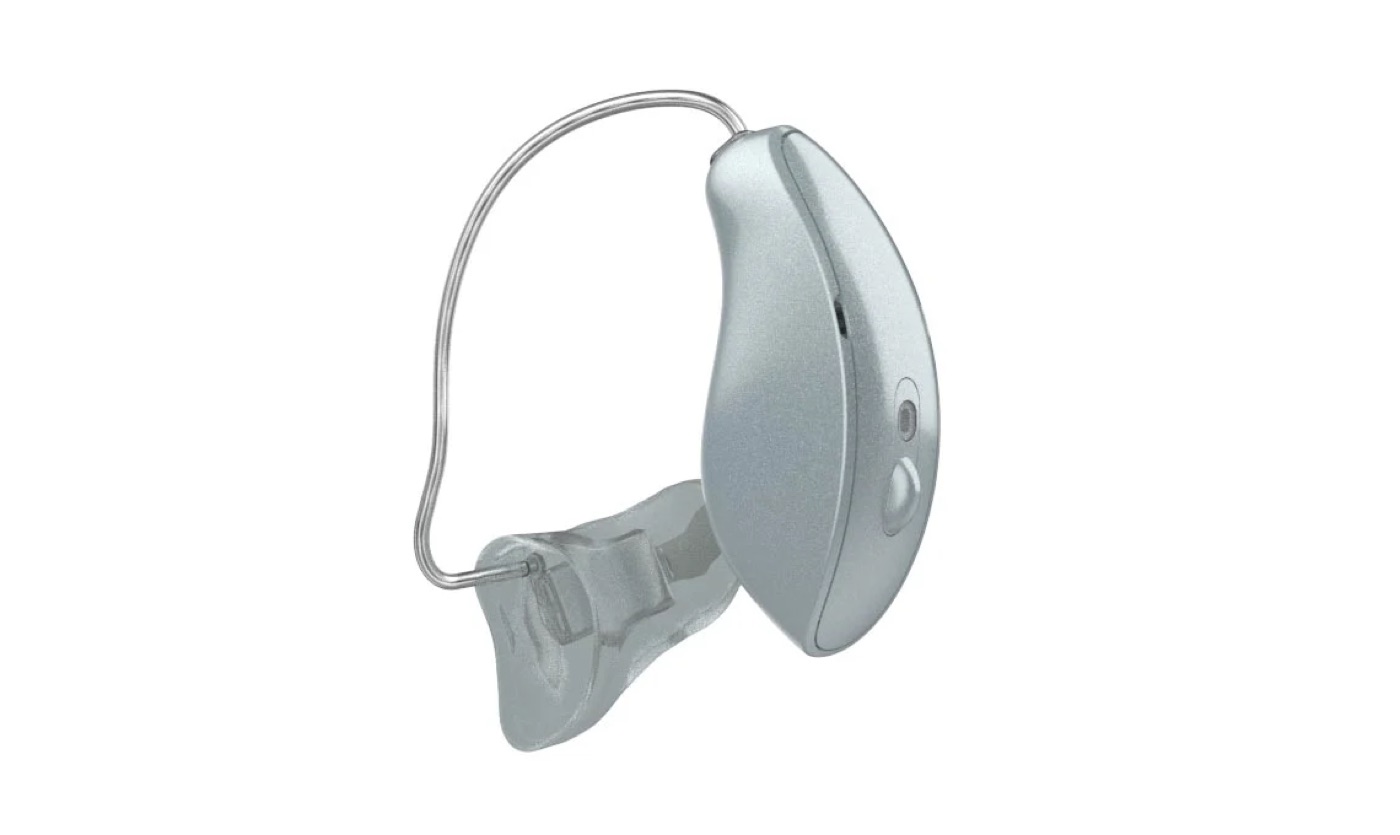
Best for performers who need all-day battery and water resistance
- Performance
- 8.4
- Ease of use
- 8.0
- Value
- 6.6
Price
From $3,198 per pair (16) to $3,998 (24) at ZipHearing with local care included; the maker publishes no US price
Quoted from the Starkey Omega AI+ pricing page on November 27, 2026:
Starkey Omega AI + 16 [pair] $3,198.00 USD
Starkey Omega AI+ is built for long days, which suits working musicians. Starkey quotes up to 51 hours of battery life and a waterproof rating to 1 meter on rechargeable styles, and the My Starkey app changes programs, volume and Edge Mode from a phone or Apple Watch. Music evidence comes from Starkey research rather than the product page: a poster Starkey presented at the American Auditory Society in February 2026 tested 20 experienced users and found that 6 of 10 musicians strongly preferred the dedicated Music program while 4 preferred their personal program. The same study found that poorer hearing was linked to a lower preference for the Music program and recommended that music programs and equalizers be discussed at fitting. ZipHearing lists Omega AI+ from $3,198 per pair.
What it does well
- +51 hours covers a long rehearsal day plus a show
- +In a 2026 Starkey study of 20 users, 6 of 10 musicians strongly preferred its Music program over a personal program
- +Waterproof rating suits sweaty stages
Where it falls short
- −$3,198 entry price at ZipHearing ties Phonak for the highest on this list
- −Starkey's product page does not describe its music program or frequency range
- −The same Starkey study found poorer hearing was linked to lower preference for the Music program
- Price
- $3,198 to $3,998 per pair at ZipHearing
- Battery
- Up to 51 hours
- Water
- Waterproof to 1 meter
- Streaming
- LE Audio, Auracast
No. 8
 Signia Pure Charge&Go IX
Signia's receiver-in-canal aid with RealTime Conversation Enhancement and 36 hours per charge.
7.6of 10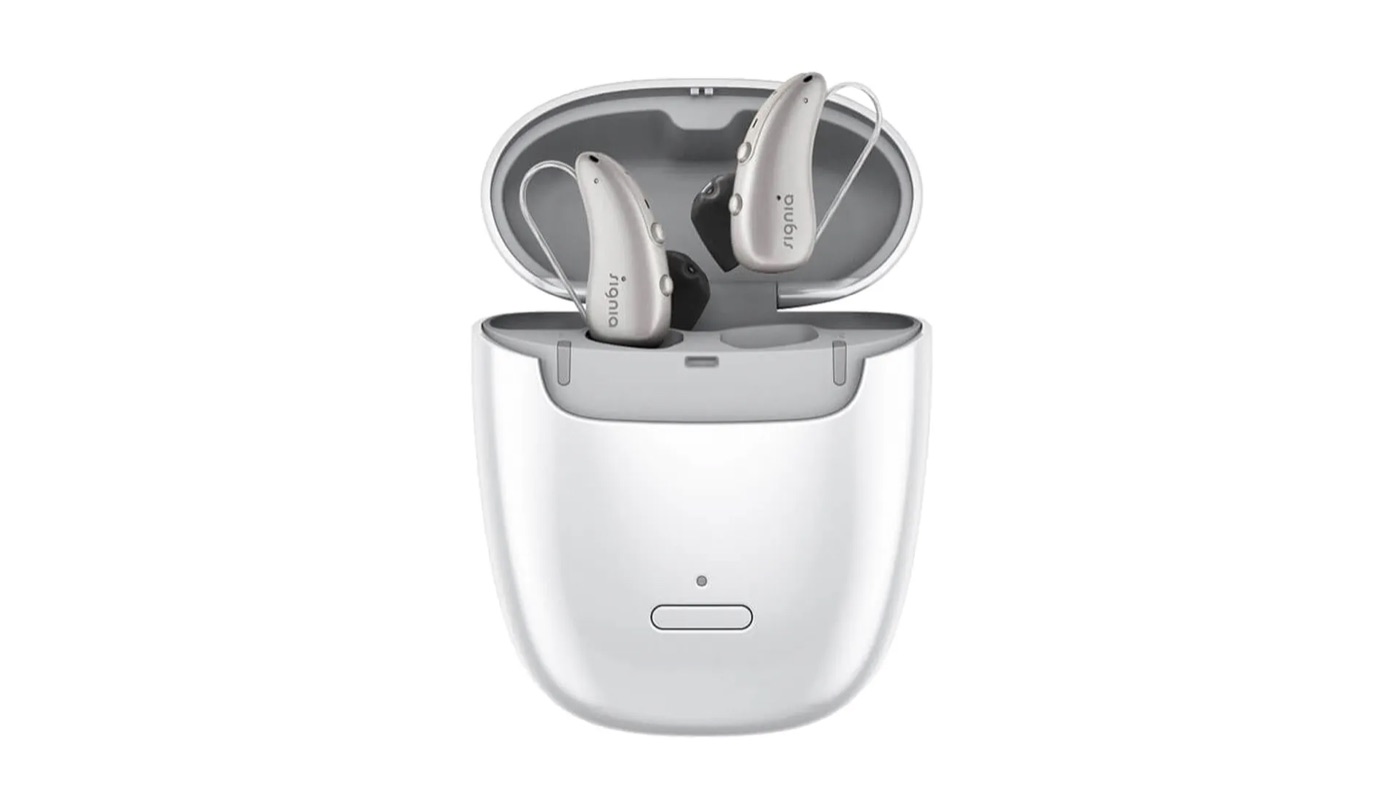
Best for band members who need to follow talk between songs
- Performance
- 8.2
- Ease of use
- 7.6
- Value
- 7.0
Price
From $2,398 per pair (1ix) to $3,798 (7ix) at ZipHearing with local care included; the maker publishes no US price
Quoted from the Signia Pure Charge&Go IX pricing page on November 27, 2026:
Pure Charge&Go 1ix [pair] $2,398.00 USD
Signia Pure Charge&Go IX makes the list for musicians who spend as much time talking with bandmates as playing. RealTime Conversation Enhancement follows several talkers as they move, which helps between songs at rehearsal, and the Bluetooth Classic model runs 36 hours on a charge with 5 hours of streaming. On music, the best Signia source is older: a 2016 ENT and Audiology News article by two Signia employees described three programs, for recorded music, live performance and playing an instrument, with noise reduction turned off and the instrument program aimed at preserving dynamics so players can judge their own level against the band. The current IX product page does not list these programs, so ask the fitter which are available on your level. ZipHearing lists the 1ix at $2,398 per pair, the lowest prescription price here.
What it does well
- +$2,398 for the 1ix is the lowest prescription entry price on this list
- +Signia's education team has described separate programs for recorded music, live music and playing an instrument
- +Bluetooth Classic streaming works with many phones and PCs
Where it falls short
- −The three music programs were described in a 2016 article by Signia staff, not on the current IX product page
- −RealTime Conversation Enhancement is not available in all models and performance levels
- −A newer Pure Charge&Go MaX is on sale
- Price
- $2,398 to $3,798 per pair at ZipHearing
- Battery
- 36 hours, 5 hours streaming
- Group speech
- RealTime Conversation Enhancement
- Levels
- 1ix to 7ix
Visit signia.net|Read the full Signia Pure Charge&Go IX profile
No. 9
 Sennheiser All Day Clear
An OTC behind-the-ear aid from Sennheiser with Bluetooth audio streaming and hands-free calls.
7.5of 10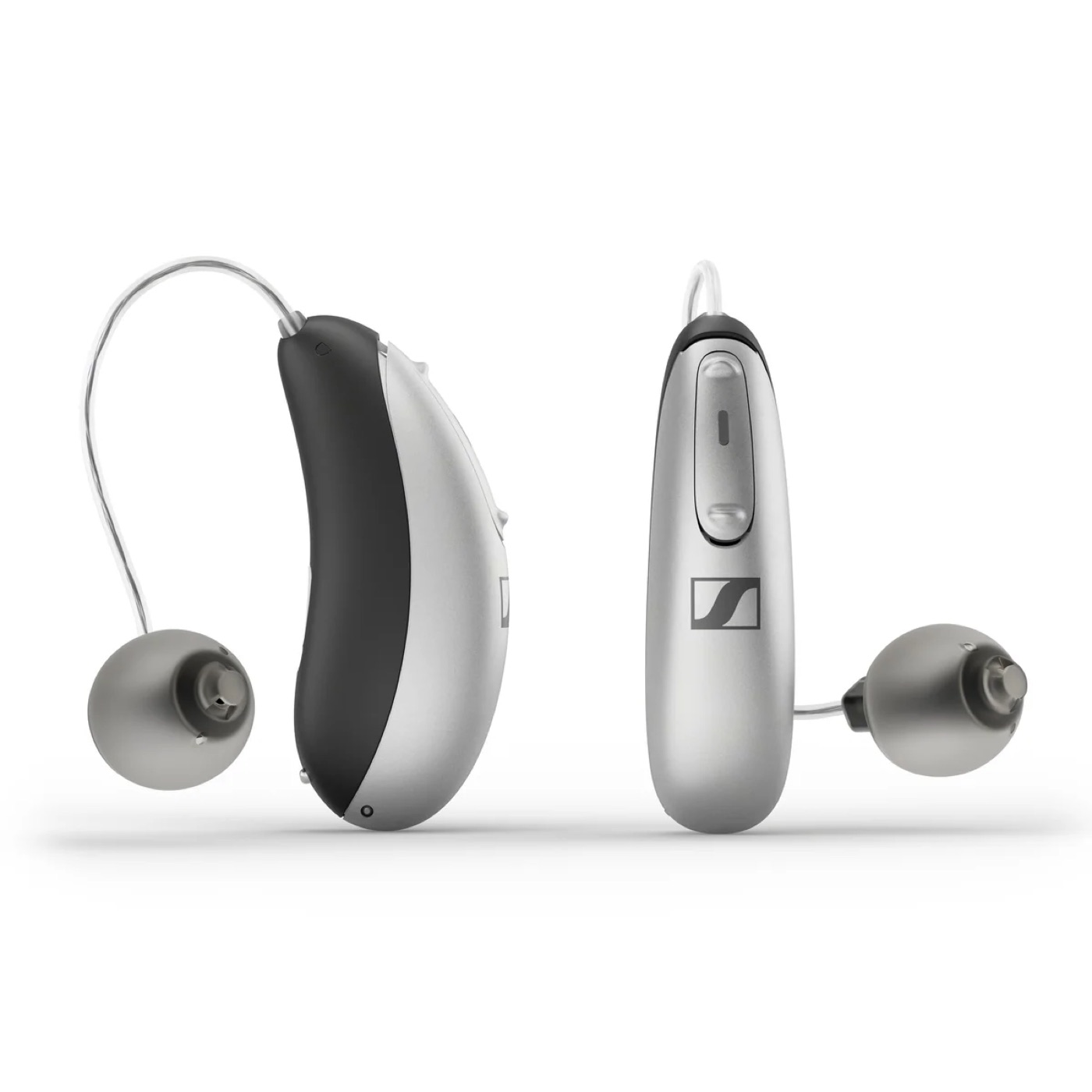
Best for OTC buyers who stream a lot of music
- Performance
- 6.6
- Ease of use
- 8.0
- Value
- 8.2
Price
$899.95 list; $699.95 during the November 2026 sale
Quoted from the Sennheiser All Day Clear pricing page on November 27, 2026:
$699.95 $899.95 Save $200.00
Sennheiser All Day Clear is a lower-cost OTC option for people whose music mostly arrives by phone. The product page lists built-in Bluetooth with hands-free calls and audio streaming for both Android and iOS, a 16-hour battery, a wide set of domes and an app for adjustments. An All Day Clear TV Connector is sold separately for $349.95. What it does not publish matters for musicians: there is no named music program, frequency range or input level on the page, so we scored its performance lower than the prescription aids and the Jabra model with remote audiology. The list price is $899.95, and it was $699.95 in the November 2026 sale with a 1-year warranty and free shipping.
What it does well
- +$699.95 sale price is the lowest for a dedicated hearing aid on this list
- +Streams music directly from both Android and iOS phones
- +Extra year of warranty coverage costs $18.49
Where it falls short
- −16 hours is the shortest battery life among the hearing aids here
- −No published music program, frequency range or input level
- −OTC only, for perceived mild to moderate loss
- Price
- $899.95 list, $699.95 on sale
- Streaming
- Bluetooth, Android and iOS
- Battery
- 16 hours
- Warranty
- 1 year
Visit sennheiser-hearing.com|Read the full Sennheiser All Day Clear profile
Before you pick a product or a plan
Ask for a separate music program
Speech settings use noise reduction and fast compression that can treat music as noise. Signia staff wrote in 2016 that music programs turn off noise reduction and use less compression. Ask your fitter for a manual music program alongside any automatic one, such as the Music programs in Phonak AutoSense OS AI 8.0.
Look at delay if you have mild loss
With open domes, sound from the aid mixes with sound entering the ear directly. Widex says its ZeroDelay pathway keeps the delay below 0.5 milliseconds to avoid a tinny comb-filter effect. This matters most for mild to moderate loss in open or vented fittings.
Check range and feedback handling
Music reaches lower and higher than speech. Oticon documents amplification from 80 Hz to 10,000 Hz for Intent. Sustained notes can trip feedback systems, so ask how the aid prevents whistling without pulling gain down, as Oticon describes for MoreSound Optimizer.
Separate live music from streaming
Streamed music skips the microphones, so streaming quality depends on the Bluetooth link and processing such as the Widex Allure streaming compressor. Live music goes through the microphones and the input stage. Test both during the trial.
Protect what hearing you have
Stage and concert levels can damage hearing further. AirPods Pro 3 Hearing Protection works in environments as loud as 110 dBA, and musicians' earplugs or in-ear monitors are worth discussing with an audiologist if you play loud music often.
Questions readers ask
- Which hearing aids sound most natural for live music?
- Widex Allure is our top pick for natural live music sound. Its PureSound program uses ZeroDelay processing, which Widex says keeps delay below 0.5 milliseconds, and its classifier has a beat detector. Widex tailors PureSound to mild loss; for greater loss, Phonak Audéo EON Sphere covers mild to profound loss.
- Do hearing aids have a dedicated music program?
- Yes, most prescription hearing aids can have one. Phonak lists Music and Media music + mic programs in AutoSense OS AI 8.0, and a 2026 Starkey study found 6 of 10 musicians strongly preferred its Music program. Your hearing care professional usually has to add or adjust it.
- Can musicians with hearing loss still play in a band with hearing aids?
- Yes, many do, with a music program set up for playing. Signia staff described an instrument program that preserves the dynamics of music so players can judge their own level against the band. Long battery life helps too: Starkey Omega AI+ runs up to 51 hours.
- What is the cheapest hearing aid option for music?
- Apple AirPods Pro 3 are the cheapest at $249 as of November 2026. They offer a Hearing Aid feature for perceived mild to moderate loss and Media Assist for music, but need an iPhone or iPad. The cheapest prescription aid here is Signia Pure Charge&Go IX 1ix at $2,398 per pair at ZipHearing.
- Why do hearing aids make music sound bad?
- Most hearing aids are tuned for speech. Noise reduction can mistake parts of music for noise, and a 2026 Starkey poster cites survey data in which 67% of users report difficulty enjoying music with hearing aids. A dedicated music program and a fitting that discusses music are the usual fixes.
- Are OTC hearing aids good enough for music?
- They can be for perceived mild to moderate loss. Jabra Enhance Select M3 streams music over LE Audio and includes three years of remote audiology for $1,995 list, and Sennheiser All Day Clear streams from Android and iOS for $899.95 list. None of the OTC models here publishes a music program.
Sources and price checks
The page behind each price, with the date we read it.
- Widex Allure
- Price: https://www.ziphearing.com/widex-allure, checked
- Widex Moment Sheer
- Price: https://www.ziphearing.com/widex-moment, checked
- Phonak Audéo EON Sphere
- Price: https://www.ziphearing.com/phonak-audeo-eon-sphere, checked
- Apple AirPods Pro 3
- Price: https://www.apple.com/shop/buy-airpods/airpods-pro-3, checked
- Oticon Intent
- Price: https://www.ziphearing.com/oticon-intent, checked
- Jabra Enhance Select M3
- Price: https://www.jabraenhance.com/product/enhanceselectm3, checked
- Starkey Omega AI+
- Price: https://www.ziphearing.com/starkey-omega-ai-plus, checked
- Signia Pure Charge&Go IX
- Price: https://www.ziphearing.com/signia-pure-charge-go-ix, checked
- Sennheiser All Day Clear
Cite this page
HearSmart. 9 Best Hearing Aids for Music of 2026. Updated November 27, 2026. https://hearsmart.org/best/best-hearing-aids-for-music
Spotted an error or a price change? Write to editorial@hearsmart.org
How we work is in our editorial policy. Makers change prices, plans and terms often, so check the price on their site before you buy or upgrade.