Guide · General
Noise Cancelling vs Noise Isolating: Which Works Best?
Noise Cancelling vs Noise Isolating explained: where each method works, where it fails, and how to choose for flights, offices and commutes.
By the HearSmart research desk · Updated November 12, 2026 · 13 min read
The usual advice that active noise cancelling is better than noise isolation misses the deciding factor: the sound being reduced. Active noise cancelling is generally the better choice for steady engine and ventilation rumble, while a well-fitted physical seal matters more for voices, clatter and sharper sounds. For the HearSmart research desk, the useful question in noise cancelling vs noise isolating isn't which label wins, but which combination suits the environment without being mistaken for certified hearing protection.
Table of Contents
- Active Noise Cancelling and Passive Isolation Side by Side
- Why Frequency Decides Which Method Wins
- Matching the Method to Each Environment
- Safety Limits of Blocking Sound
- When Consumer Headphones Are Not Hearing Protection
- How to Read Noise Reduction Claims
- Decision Steps Before You Buy
Active Noise Cancelling and Passive Isolation Side by Side
Active noise cancelling, or ANC, and passive isolation use different mechanisms. ANC uses microphones, signal processing and speakers to generate an opposing sound wave. Passive isolation creates a physical barrier through ear tips, earcups, cushions or earplugs.
Most sealed ANC earbuds combine these mechanisms. Their electronics address some incoming noise, while their tips keep providing a mechanical barrier. Switching ANC off doesn't turn a sealed earbud into an open-ear product.
Active noise cancelling and passive isolation compared
| Criterion | Active noise cancelling | Passive noise isolation |
|---|---|---|
| How it works | Microphones and processing generate an inverse-phase sound wave | A seal, earcup or earplug blocks sound mechanically |
| Strongest against | Steady low-frequency rumble such as engines, trains and ventilation | Speech, clatter and higher-frequency sound |
| Depends on | Electronics, signal processing and a good seal | Fit, seal and acoustic materials |
| Needs power | Yes | No |
| Works with a dead battery | No, the active function stops | Yes, the physical barrier remains |
| Typical products | ANC earbuds and headphones | Sealed earbuds, earmuffs and earplugs |
The seal comes before the electronics
A product's physical fit isn't a secondary comfort detail. It determines whether sound can leak around the barrier, which also affects how much benefit the electronics can add.
A peer-reviewed hearing-protector fit-testing paper describes attenuation in terms of the reduction measured at the wearer's ear. That distinction matters: a laboratory rating isn't a personal guarantee that every wearer receives the same reduction.
For earbuds, a useful fitting check is whether the tips maintain contact when the wearer turns their head or moves their jaw. For over-ear headphones, cushions should sit continuously around the ears rather than rest partly on them. Glasses, hair and worn cushions deserve attention wherever they interrupt that contact.
Practical rule: The seal comes first. ANC supplements the barrier rather than replacing it.
A dead battery illustrates the difference particularly clearly. Electronic cancellation stops, but the ear tip or earcup doesn't disappear. Buyers should match their most frequent noise to the relevant row in the table, then assess whether the product can maintain its seal comfortably.
Why Frequency Decides Which Method Wins
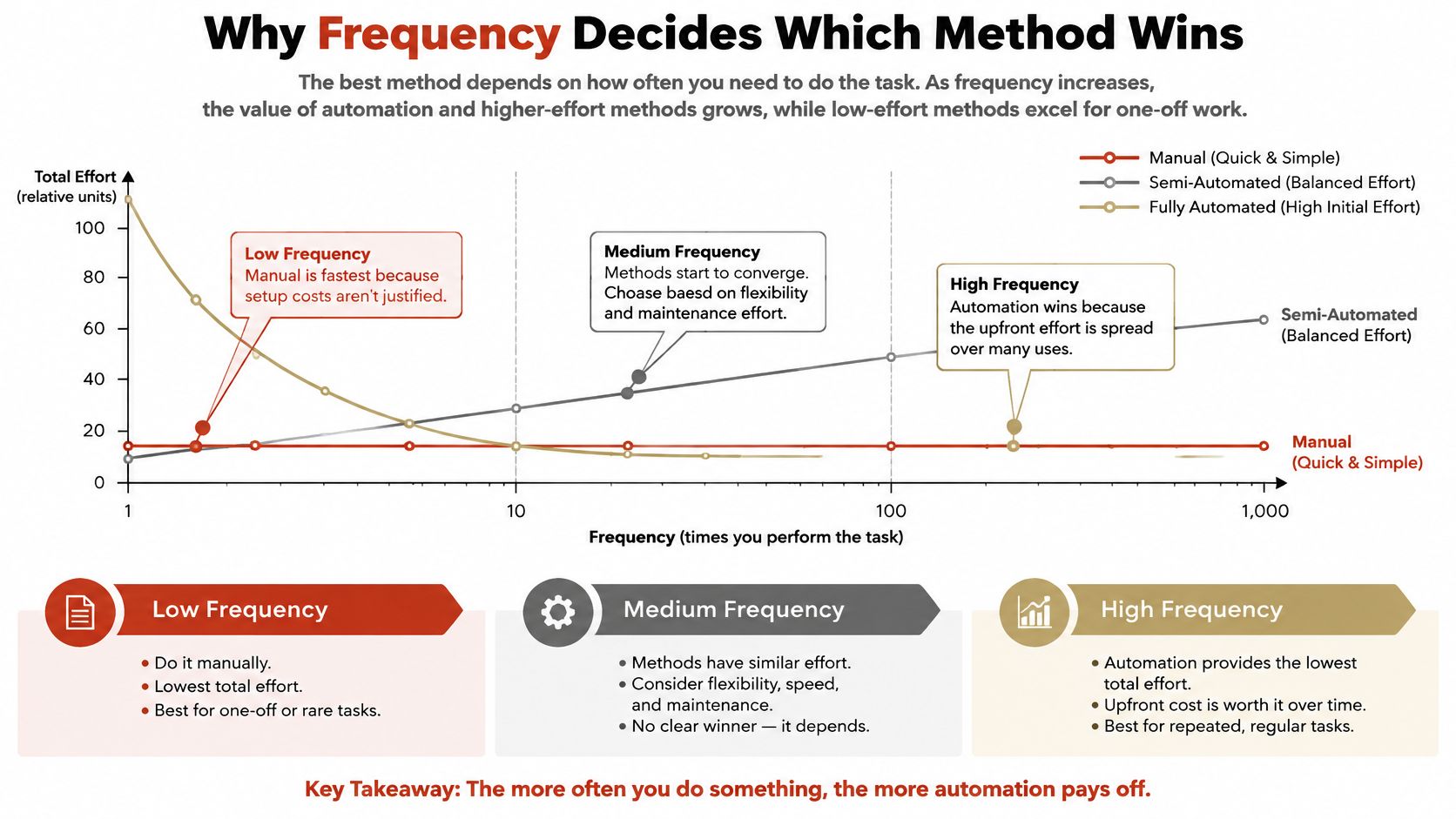
The two methods overlap across the spectrum instead of dividing it into separate territories. A 2024 study published by MDPI found that active attenuation dominated up to 500 Hz, while passive isolation became the dominant source above that frequency. That result describes the studied system, and a different headphone can shift the boundary in either direction.
The practical distinction sits between reducing one frequency band and reducing everything audible: strong cancellation of cabin rumble implies nothing about the passenger speaking nearby, because speech sits in the range where the electronics contribute least.
Measured attenuation by frequency band
| Frequency band | Stronger method | Reported figure |
|---|---|---|
| Below 500 Hz | Active noise cancelling | A real-ear measurement paper and its engineering discussion reports approximately 20 to 28 dB SPL of low-frequency reduction at the wearer's ear. |
| 80 Hz | Active noise cancelling | 14 dB in that paper's engineering measurement of a separate design |
| 160 Hz | Active noise cancelling | 16 dB in the same measurement |
| 240 Hz | Active noise cancelling | 15 dB in the same measurement |
| 320 Hz | Active noise cancelling | 12 dB in the same measurement |
| 250 Hz, 500 Hz and 1 kHz | Seal and passive design remain necessary; ANC earphones performed best in this comparison | A headphone insertion-loss study found almost no insertion loss for conventional earbuds and headphones at these frequencies, while ANC earphones provided the greatest insertion loss. |
| Above 500 Hz | Passive isolation | Dominant source of attenuation in the MDPI study cited above |
| Above 1 kHz in one digital feedback design | Neither reliably, based on the active result alone | Slight amplification rather than reduction was measured for that design |
What these measurements actually establish
The same real-ear measurement paper reports approximately −1 to 3 dB SPL of high-frequency reduction and about 9 to 14 dB SPL across the full measured range. A low-frequency headline therefore describes the strongest part of the result, not the listening experience as a whole.
The conventional-headphone finding carries a narrower meaning than it first appears. The tested products supplied little insertion loss in that band; the result says nothing about what a well-fitted passive design can achieve there. Construction and fit remain part of every measurement, which is why insertion loss belongs to a specific product on a specific ear.
The single-frequency rows reveal a second pattern: attenuation varied between 12 and 16 dB across neighbouring tones in one engineering measurement. Single-number claims hide that variability, and a design tuned for one frequency can do less at the next.
The conclusion is narrower and more useful than declaring either method the winner: identify the troublesome frequency band before comparing attenuation figures. Engine rumble, speech and metallic clatter each sit in a different row of the table, and no single decibel rating covers all three.
Matching the Method to Each Environment
A location's name is only a starting point. An office with loud ventilation presents a different problem from an office dominated by nearby calls, even though both appear under the same shopping category.
The following choices apply the frequency distinction to everyday situations. They aren't promises that every sound in that location will disappear.
Flight cabins. Continuous engine rumble favours ANC. A sealed fit remains useful for surrounding voices and cabin activity, while announcements may require a deliberate change of listening mode.
Commuter trains and buses. ANC addresses sustained vehicle rumble. Nearby conversation and abrupt announcements place more importance on the physical barrier, so commuters should assess both rather than buy on the ANC label alone.
Open offices. Voices, keyboards and phone calls make a snug sealed design important. ANC can address ventilation in the same room, but a loose-fitting product is a poor starting point for speech distraction.
Gyms. Sealed in-ear earbuds help reduce equipment clatter and surrounding noise. Open-ear earbuds leave the ears unobstructed when hearing other people or the room matters more than isolation.
Streets and cycling. Maximum isolation is the wrong objective when approaching vehicles must remain audible. Open-ear or transparency listening can preserve access to environmental sound, but neither should be treated as a safety guarantee.
Mixed environments. A room containing both air conditioning and conversation favours a design that combines effective ANC with a stable physical seal.
Occupational exposure. The purchasing category changes entirely. Documented hearing protection, not a consumer comfort feature, becomes the relevant requirement.
ANC answers how much steady rumble the electronics can remove. Isolation answers how much incoming sound the physical barrier can stop.
HearSmart's lists include both sealed in-ear earbuds for reducing gym noise and open-ear earbuds that leave ears free to hear traffic. Its Best Noise Cancelling Earbuds ranking gives Sony WF-1000XM6 a score of 9.0, while its Best Open Ear Earbuds ranking gives Shokz OpenFit 2 a score of 8.9. Those editorial scores serve different use cases, not a head-to-head measurement of sound blocking.
A useful shortlist starts with a written description of the noise encountered most often: continuous rumble, nearby speech, sharp impacts or a mixture. That description should determine the method.
Safety Limits of Blocking Sound
Less outside noise doesn't make any playback volume safe. Noise reduction can make lower-volume listening more practical, but neither ANC nor passive isolation removes the sound that the headphones themselves generate.
The National Institute on Deafness and Other Communication Disorders' 2025 guidance says sound at or below 70 dBA averaged across the day is generally considered safe. It also identifies 85 dBA as a level at which regularly exposed workers are more likely to develop noise-induced hearing loss, while recognising individual differences in susceptibility.
Exposure time before damage risk by sound level
| Sound level | Time before damage risk | Context |
|---|---|---|
| 70 dBA | Generally considered safe when averaged across the day, under the NIDCD guidance cited above | Most people, not a guarantee for every individual |
| 85 dBA | A few hours in the 2025 guidance; a separate occupational reference specifies at least eight hours | Regular exposure in work settings |
| 100 dBA | At least 14 minutes | Loud exposure, including listening or machinery |
| 110 dBA | At least two minutes | Very loud sources |
The NIDCD sound-measurement guidance supplies the occupational reference and the louder-exposure examples in the table. These are exposure-risk references, not countdowns that guarantee safety until the stated time.
Hearing the surroundings isn't the same as understanding them
Strong isolation also creates an awareness trade-off. A quieter commute can mean less access to sirens, announcements, approaching vehicles or coworkers trying to attract attention.
A peer-reviewed study of transparent hearing devices found a consistent speech-intelligibility disadvantage, alongside a trend toward greater listening effort, when speech and noise came from the same direction. The finding matters because electronically admitting outside sound doesn't necessarily preserve understandable speech.
Adaptive transparency can retain more environmental access while providing less noise reduction than full ANC. It's still a listening mode, not proof that the wearer will detect every warning.
- Manage playback separately. A quieter background is an opportunity to lower the volume, not permission to raise it.
- Match the mode to the task. Walking near traffic, cycling and childcare require attention beyond music or podcast clarity.
- Remove uncertainty. When hearing a vehicle, child or warning is essential, removing earbuds is more dependable than assuming transparency will suffice.
The guide to decibels and hearing damage provides additional context for judging level and duration together. During safety-critical moments, pausing audio or removing the earbuds should take priority over maintaining uninterrupted listening.
When Consumer Headphones Are Not Hearing Protection
Consumer ANC headphones aren't a substitute for certified hearing protection when workplace exposure must be controlled. The distinction is between making a workplace sound more comfortable and demonstrating that a worker's exposure has been reduced adequately.
The OSHA hearing-conservation guidance requires hearing-protection devices to bring occupational exposure down to a time-weighted average of 85 dBA or below. On that guidance, consumer ANC headphones are not effective protection against occupational noise: they are tuned for listening comfort and carry no evaluated attenuation rating for workplace hazards.
Device types and their workplace protection status
| Device type | What blocks the sound | Workplace protection status |
|---|---|---|
| Consumer ANC headphones | Electronic counter-wave, with any incidental physical isolation | Generally not effective for occupational noise under OSHA's guidance |
| Passive noise-cancelling headphones | Heavy-duty seal | Requires a documented protective rating and adequate fit; no universal NRR applies |
| Hybrid passive plus active protection | Seal plus electronics | OSHA describes NRR values between 20 and 30 dBA; appropriate only when properly evaluated |
| Certified earplugs or earmuffs | Physical seal | NRR appears on the package as a laboratory estimate; the product's printed value must be checked |
Read the rating as a starting point
The Noise Reduction Rating, or NRR, is a laboratory estimate rather than a direct reading of the wearer's protected exposure. A package rating therefore needs to be interpreted alongside the workplace noise assessment and how the protector fits.
That is also a frequency problem. A single package number compresses performance across the spectrum, while workplace noise may concentrate energy in bands where a given protector leaks. Subtracting a consumer headphone's advertised cancellation figure from a sound-level reading is therefore not an adequate protection assessment: the figure may describe a favourable frequency band, an electronic contribution alone or a test arrangement unlike the worker's situation.
Real-world fit widens the gap further. Field attenuation routinely falls short of the laboratory figure, so workplace assessments apply a margin to the printed rating rather than crediting it at face value.
Workplace distinction: A quieter-sounding machine isn't evidence that exposure is adequately controlled.
The defensible sequence is to establish the exposure, select rated protection suited to it, and check the wearer's fit. A heavy-duty appearance, a tight sensation or a noise-cancelling label cannot replace that process.
For occupational purchasing, the product must be evaluated as hearing protection. Consumer ANC should remain a comfort feature unless the device also has documented protective credentials and has been assessed for the actual workplace.
How to Read Noise Reduction Claims
Two products can advertise the same decibel figure and deliver entirely different results. One claim may describe the best-performing frequency, another an average across a test range, and a third a result obtained under controlled conditions a buyer will never reproduce.
Published measurements show why the band matters. The digital-feedback engineering benchmark reports at least 10 dB of broadband attenuation from 70 to 325 Hz, alongside roughly 1 to 2 dB of amplification above 1 kHz. One design can reduce low-frequency rumble while slightly amplifying higher frequencies, so a single figure averaged across both regions would describe neither accurately.
The comparison needs a method, not just a number
The 2025 RTINGS noise-isolation methodology states that some of the best noise-cancelling headphones attenuate noise by more than 15 dB in the tested range. That is an independent testing benchmark, a measured ceiling under one protocol rather than a manufacturer specification or a promise covering every environment.
Microphone position, seal, noise direction and signal-processing latency all influence a result. Laboratory and real-ear measurements also answer different questions: the first characterises the device under repeatable conditions, the second records what a particular wearer received.
A useful specification check includes:
- Frequency coverage. The result should identify the band measured rather than imply equal reduction everywhere.
- Measurement type. Sound-pressure reduction, spectrum-power reduction and a speech score are not interchangeable outcomes.
- Test conditions. The fit arrangement, noise source and listening mode should be stated.
- Publication date. A dated result identifies which product generation or design was tested.
- Documentation. An absent specification should remain absent rather than be reconstructed from informal commentary.
HearSmart applies that last principle directly: when a maker does not document a spec, the ranking marks it not listed rather than filling the gap from forums, reviews or guesswork. For physical protection choices, the earplug selection guide covers rated plugs without treating headphone cancellation claims as earplug ratings.
Figures are meaningfully comparable only when the measurement method, frequency coverage and conditions align. A larger number with a different denominator is not necessarily a better product.
Decision Steps Before You Buy
A useful buying decision starts with an environment, not a model name. The following sequence keeps noise reduction, awareness and documented performance separate.
Identify the dominant noise
The buyer should describe the main problem in concrete terms. A daily train journey suggests sustained rumble; a shared desk beside a frequent caller suggests speech; a workshop requires an exposure assessment rather than an ordinary headphone shortlist.
No frequency-measurement equipment is necessary to make that initial distinction. The purpose is to avoid choosing a product whose strongest feature addresses a different sound from the one causing difficulty.
Choose the appropriate design
- Flights and trains. Prioritise ANC in a product that also maintains a good seal.
- Speech and sharp everyday sounds. Prioritise a snug sealed design rather than assuming electronics will compensate for leakage.
- Mixed indoor noise. Look for documented active performance alongside effective physical isolation.
- Traffic and cycling. Prioritise environmental access, with audio paused or earbuds removed when attention is critical.
- Occupational noise. Choose evaluated, rated hearing protection rather than a consumer ANC substitute.
Fit should remain comfortable enough to maintain throughout the intended session. A seal that the wearer repeatedly loosens is not a reliable buying solution.
Confirm what the published evidence means
Shortlisted products should have documentation relevant to the noise being targeted. Test date, listening mode, frequency coverage and measurement method deserve more weight than an unexplained maximum-reduction claim.
The previously named earbud ranking scores are editorial scores, not independent attenuation measurements. The published weighting is Performance 40%, Ease of use 25% and Value 35%, applied consistently across products; documented features and published prices underpin the comparison rather than hands-on testing claims.
Prices and scores can change, so the date on each ranking should be checked before acting. For over-ear alternatives, the noise-cancelling headphones ranking provides another comparison route without making earbuds and headphones interchangeable.
The final choice should solve the dominant noise problem while leaving an acceptable way to hear important surroundings. Neither maximum isolation nor maximum feature count is automatically the right objective.
Before buying, write down the main noise, decide whether environmental awareness or occupational protection is required, and compare only products with relevant documentation. Use HearSmart's dated rankings to narrow the shortlist, then check the selected model's seal, published specifications and current seller price before placing the order.
Spotted an error in this guide? Email editorial@hearsmart.org