Review · Music & creators
 Cubase 16 review
Steinberg's long-running DAW for Mac and Windows, sold as Pro, Artist and Elements editions.
By the HearSmart research desk · Updated November 25, 2026
The short answer
Cubase 16 is Steinberg's digital audio workstation for Mac and Windows, sold as a one-time license in three editions: Elements at $99.99, Artist at $299.99 and Pro at $599.99 in Steinberg's US online shop when checked in November 2026. Artist is the sensible buy for most home producers because it removes the track limits and adds VariAudio pitch correction, the DrumMachine and Pattern Sequencer, while Pro is aimed at film scoring, Dolby Atmos mixing and large sessions. A free 30-day trial needs no payment details.
- Performance (40%)
- 9.2
- Ease of use (25%)
- 7.2
- Value (35%)
- 7.6
What it looks like
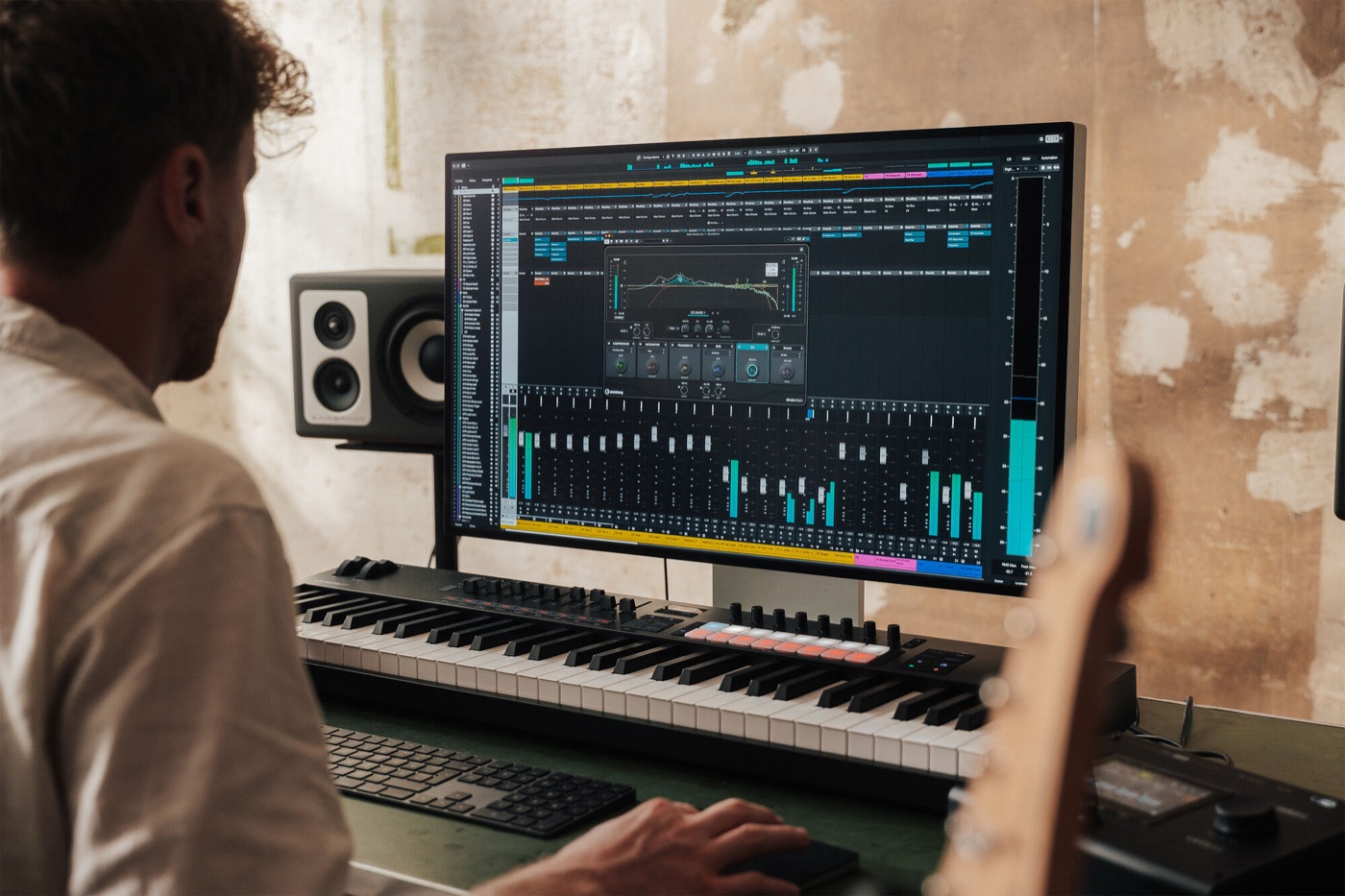
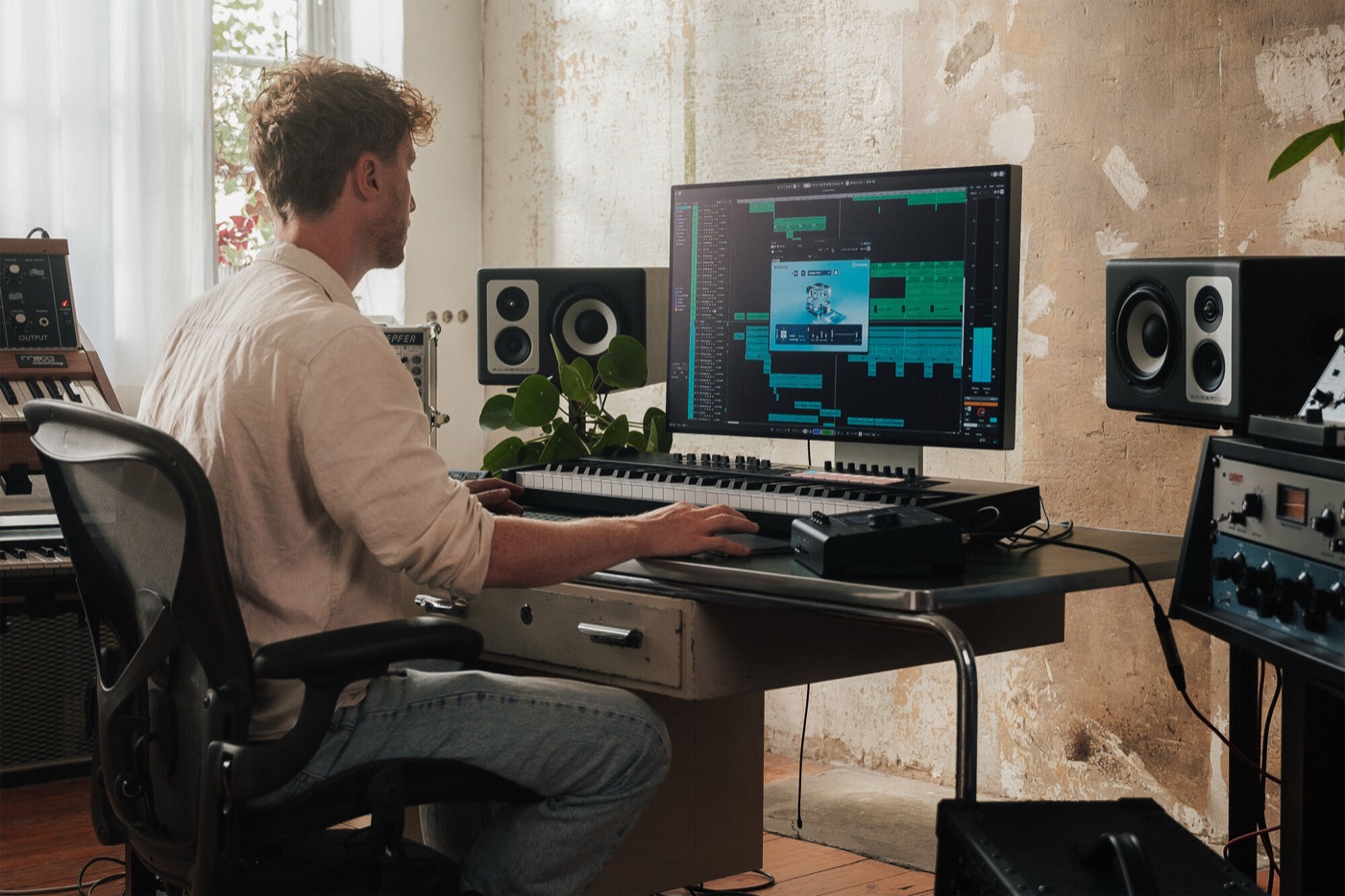
Our verdict
Buy Cubase 16 Artist if you write detailed MIDI parts, record vocals and want unlimited audio, MIDI and instrument tracks for a single $299.99 payment with no subscription. Step up to Pro at $599.99 only if you need Control Room with cue sends, Dolby Atmos authoring, VCA faders, Expression Maps for orchestral libraries or the 98 effects, or if you can use the competitive crossgrade, which Steinberg says saves up to 40% for owners of another DAW. Skip Cubase if you only use a Mac and want the lowest price for a full-featured DAW, since Logic Pro was $199.99 on the US Mac App Store, or if your budget is under $100 and you need unlimited audio tracks, since REAPER's discounted license is $60. The deciding fact is the edition split: Elements caps you at 48 audio tracks and 64 MIDI tracks and leaves out VariAudio, so most buyers should compare Artist against rivals, not Elements.
Overview
Cubase is Steinberg's long-running music production software. Steinberg describes it as a DAW that brings composition, recording, editing and mixing into one environment, and version 16 is the current generation listed on its compare page. It runs on 64-bit Windows 10 (22H2 or higher) and Windows 11 (25H2 or higher) and on macOS 15, 26 and 27, with native Apple silicon support. Every edition needs 16 GB of RAM and lists 89 GB of free storage for the full content install.
Steinberg sells three retail editions. Elements covers recording, songwriting and mixing with limited tracks (48 audio, 64 MIDI, 24 instrument tracks), 7 instruments and 45 effects. Artist removes the track limits, adds VariAudio 3, comping, the Pattern Sequencer and DrumMachine, MIDI plug-ins, MPE support and ARA 2, and comes with 12 instruments and 75 effects. Pro adds Control Room, Dolby Atmos authoring and rendering, VCA faders, Expression Maps, modulators, stem separation, Spectral Audio Warp, AAF and OMF exchange and 98 effects. Cubase AI and LE are cut-down versions bundled with Yamaha and partner hardware and are not sold on their own.
Version 16 adds Instrument Stacks, which layer several VST instruments, sampler tracks and drum tracks on one playable track, a Strum function and a Stretch function in the Key Editor, lyrics entry next to MIDI notes, a redesigned searchable Settings dialog, a redesigned tempo detection workflow and the DrumChain drum processor. Stem separation now extracts piano and guitar as dedicated stems. Steinberg also raised the limit from eight to sixteen sends per track and from four to eight cue sends, added Ableton Link, AAC and M4A import, expanded MIDI 2.0 support and support for the new Windows MIDI platform. Buyers get a two-month Waves Illugen subscription voucher.
Against the other DAWs on HearSmart's DAW list, Cubase sits in the middle on price and near the top on MIDI and scoring depth. Logic Pro costs $199.99 once but runs only on macOS. FL Studio starts at $99 for the Fruity Edition, which cannot record audio, and Image-Line includes lifetime free updates, while Steinberg sells new Cubase generations as optional paid updates (maintenance updates within a generation are free). REAPER costs $60 for a discounted personal license and offers a 60-day evaluation. Cubase Artist at $299.99 is the closest like-for-like rival to those options, and it runs on both Windows and Mac.
The limits are real. Elements leaves out VariAudio, comping, the Logical Editor and the Pattern Sequencer, so it suits beginners more than anyone tuning vocals. Some mixing tools that rivals include at lower prices, such as VCA faders, a loudness meter and Dolby Atmos tools, are Pro only. Steinberg's own FAQ notes that new generations and edition upgrades are paid, so owning Cubase over several years costs more than the first license. An internet connection is required for account sign-up, the installer download and license activation.
How it scored
Cubase 16 brings composition, recording, editing and mixing in one environment for Mac and Windows. Steinberg splits it into three editions. Elements covers the essentials with a limited track count, 7 instruments, 45 effects and side-chaining. Artist, which Steinberg calls the version most serious Cubase producers call home, removes the track limit and adds VariAudio pitch correction, the DrumMachine and Pattern Sequencer, 12 instruments and 75 effects. Pro adds Control Room, modulators, 98 effects and tools for surround mixing and scoring. All three include 20+ GB of samples and loops. A free 30-day trial lets you try it, and Steinberg says your projects and settings remain intact for when you buy. For a home producer, Elements or Artist is the realistic choice, since Pro targets film composers and large studios. Sweetwater lists Elements at $99.99 and Artist at $299.99.
Who it is for
Producers and composers who want deep MIDI editing and a clear upgrade path.
Good fit if
- Songwriters and producers on Windows or Mac who want unlimited audio and MIDI tracks for a one-time $299.99 with Cubase Artist
- Composers who write detailed MIDI parts and need the Key Editor, Drum Editor, Score Editor, Chord Track and Chord Pads, all listed in every retail edition
- Film and game composers who need Expression Maps for orchestral articulations, video output to multiple screens and Dolby Atmos authoring in Cubase Pro
- Vocal producers who want built-in pitch editing through VariAudio 3 in Artist and Pro, plus comping for combining takes
- Users of another DAW who can show proof of purchase and want Cubase Pro through the competitive crossgrade, which Steinberg says saves up to 40%
Skip it if
- Mac-only buyers who want the most features per dollar: Logic Pro is $199.99 once on the US Mac App Store
- Buyers with under $100 who need unlimited tracks: REAPER's discounted license is $60 with a 60-day evaluation, while Cubase Elements limits audio tracks to 48
- Loop and beat makers who want free lifetime updates: FL Studio includes lifetime free updates in every edition, while new Cubase generations are paid
- Live performers who launch clips on stage: Ableton Live 12 is built around clip launching, while Cubase is organized around a linear project timeline
Specifications
| Platforms | 64-bit Windows 10 (22H2 or higher) and Windows 11 (25H2 or higher); macOS 15 Sequoia, macOS 26 Tahoe, macOS 27 | source |
|---|---|---|
| Apple silicon | Native app, also runs under Rosetta 2 | source |
| Minimum CPU | Windows: Intel Core i5 8th generation, AMD Ryzen 3000 series or Windows on Arm; Mac: Intel Core i5 late 2018 or later, or Apple silicon; 4 or more cores | source |
| RAM and storage | 16 GB RAM minimum; 1.5 GB for the core install, 89 GB free space with all content | source |
| Audio engine and resolution | 64-bit engine, up to 192 kHz in Elements, Artist and Pro | source |
| Audio tracks | 48 (Elements), unlimited (Artist and Pro) | source |
| MIDI and instrument tracks | 64 MIDI and 24 instrument tracks (Elements); unlimited (Artist and Pro) | source |
| Physical inputs and outputs | 24 (Elements), 32 (Artist), 256 (Pro) | source |
| Virtual instruments and libraries | 7 (Elements), 12 (Artist and Pro) | source |
| Instrument sounds | More than 1,500 (Elements), more than 2,600 (Artist), more than 3,000 (Pro) | source |
| Effects | 45 (Elements), 75 (Artist), 98 (Pro); 17 MIDI effect plug-ins in Artist and Pro, none in Elements | source |
| Samples and loops | 20+ GB in every edition | source |
| Group channels and VCA tracks | 16 groups (Elements), 32 (Artist), 256 (Pro); 256 VCA tracks in Pro only | source |
| Free trial | 30 days, no payment details required; Pro and Elements trials offered | source |
Price
Elements 16 is $99.99 and Artist 16 $299.99 at Sweetwater; 30-day free trial.
Share Item ID: Cubase16E Limited-time Offer! Cubase 16 Now Available! Cubase 16 Now Available! $99.99
Quoted from the vendor pricing page on November 25, 2026.
Plans and pricing
| Plan | Price | What is included | Source |
|---|---|---|---|
| Cubase Elements 16 | $99.99one-time license, download | 48 audio, 64 MIDI and 24 instrument tracks; 7 virtual instruments, 45 effects, 20+ GB of samples and loops; Side-chaining, Chord Pads, Chord Track, Arranger Track and Score Editor; No VariAudio, comping or Pattern Sequencer | Checked Nov 23, 2026 |
| Cubase Artist 16 | $299.99one-time license, download | Unlimited audio, MIDI and instrument tracks; 12 virtual instruments, 75 effects, 17 MIDI effect plug-ins; VariAudio 3, comping, DrumMachine and Pattern Sequencer; MPE support, ARA 2 support and DAWproject support | Checked Nov 23, 2026 |
| Cubase Pro 16 | $599.99one-time license, download | Everything in Artist plus Control Room with cue sends; Dolby Atmos ADM authoring and renderer, VCA faders, loudness meter; Expression Maps, modulators, stem separation and Spectral Audio Warp; 98 effects, 256 physical inputs and outputs, AAF and OMF support | Checked Nov 23, 2026 |
| Cubase Pro 16 Competitive Crossgrade | Up to 40% off Cubase Pro; USD price not listed on the crossgrade pageone-time license, proof of another DAW required | Full Cubase Pro 16 license; Requires proof of purchase of a qualifying third-party DAW; No USB eLicenser required | Checked Nov 23, 2026 |
| Cubase 16 trial | Free30 days, no payment details | All music production features of the trialed edition for 30 days; Projects and settings carry over to a purchased license; Installs alongside an existing Cubase version | Checked Nov 23, 2026 |
Key features
Instrument Stacks
New in version 16 and available in Artist and Pro: several VST instruments, sampler tracks and drum tracks can be combined into one stack that plays from a single track, with filtering per layer and shared controls.
MIDI editing depth
Every retail edition includes the Key Editor, Drum Editor, Score Editor, Chord Track and Chord Pads. Version 16 adds Strum and Stretch in the Key Editor, lyrics entry next to notes and the option to rename MIDI controllers. Pro adds Expression Maps, and both Artist and Pro list MPE support.
VariAudio 3 and comping
Artist and Pro include VariAudio 3 for pitch and timing correction of monophonic audio, plus comping to build one performance from several takes. Elements includes neither, which is the biggest practical gap between the editions for vocal work.
Stem separation and Spectral Audio Warp
Pro can split mixed audio into stems, and version 16 adds dedicated piano and guitar stems. New Spectral Audio Warp modes handle extreme time stretching and pitch shifting. Both are listed for Pro only.
Mixing and routing
Version 16 raises sends per track from eight to sixteen and cue sends from four to eight. Pro adds Control Room, VCA faders, a loudness meter, MixConsole Snapshots and Dolby Atmos ADM authoring with a built-in renderer. Artist gets SuperVision metering and MixConsole History.
Beat making tools
Artist and Pro include the DrumMachine instrument and the Pattern Sequencer, and version 16 adds the DrumChain multi-effect for drums plus pitch detection and phase inversion in the Sampler Track and Drum Machine.
Onboarding for new users
Cubase 16 adds a guided tour of the interface and a Quick Help panel that explains tools in context, either in the left zone or a floating window. The redesigned Settings dialog puts preferences, key commands, project setup and audio connections in one searchable window.
Strengths and weaknesses
What we like
- One-time prices of $99.99, $299.99 and $599.99 in Steinberg's US shop, with no subscription required to keep using the software
- Artist and Pro have unlimited audio, MIDI and instrument tracks, and Pro supports 256 physical inputs and outputs
- Runs on both Windows and macOS with native Apple silicon support, unlike Logic Pro, which is Mac only
- Every edition ships with 20+ GB of samples and loops, and Pro lists more than 3,000 instrument sounds and 98 effects
- Version 16 doubles sends per track to sixteen and cue sends to eight, and adds piano and guitar stem separation
- Free 30-day trial with no payment details, and projects made during the trial carry over to a paid license
- Competitive crossgrade cuts up to 40% off Cubase Pro for owners of another DAW, and educational offers reach up to 50% off retail
What could be better
- Elements is capped at 48 audio tracks, 64 MIDI tracks and 24 instrument tracks, and leaves out VariAudio and comping
- Dolby Atmos tools, VCA faders, a loudness meter and Expression Maps require Pro at $599.99
- New Cubase generations are paid updates, while FL Studio includes lifetime free updates
- Every edition lists 16 GB of RAM as the minimum and 89 GB of disk space for the full content install
- Internet access is required for account sign-up, installer download and license activation
- More expensive than Logic Pro ($199.99) and REAPER ($60) for comparable unlimited-track recording
Key facts
- Platforms: Mac and Windows
- Free trial: 30 days, Pro or Elements
- Effects: 45 (Elements), 75 (Artist), 98 (Pro)
- Virtual instruments: 7 (Elements), 12 (Artist and Pro)
- Tracks: Limited in Elements, unlimited in Artist and Pro
- US price: $99.99 Elements, $299.99 Artist
Where it ranks
Cubase 16 is No. 9 in our Best DAW Software verdict.
Alternatives to consider
- Logic Pro: A one-time $199.99 Mac App Store purchase with a full set of recording and mixing tools, for buyers who only use macOS.
- REAPER: A $60 discounted license with unlimited tracks and a 60-day evaluation, for the lowest-cost route to unlimited-track recording.
- FL Studio: Starts at $99 with lifetime free updates and a pattern-based workflow, for beat makers who do not need deep audio recording.
- Ableton Live 12: A DAW centered on clip launching, for electronic producers and live performers who build tracks from loops.
- Pro Tools: Avid's DAW, worth comparing for anyone who needs to exchange sessions with studios that already run Pro Tools.
Questions readers ask
How much does Cubase 16 cost?
Steinberg's US online shop listed Cubase Elements 16 at $99.99, Cubase Artist 16 at $299.99 and Cubase Pro 16 at $599.99 in November 2026. All three are one-time license purchases delivered as downloads.
Is there a free version or free trial of Cubase 16?
There is no permanent free edition, but Steinberg offers a free 30-day trial that needs no payment details. After the trial ends you need a license, and your projects and settings stay intact.
Is Cubase 16 a subscription?
No, Steinberg sells Cubase 16 editions as one-time purchases. Maintenance updates within version 16 are free, while moving to a future generation or a higher edition is an optional paid update or upgrade.
What is the difference between Cubase Elements, Artist and Pro?
Elements limits tracks (48 audio, 64 MIDI) and includes 7 instruments and 45 effects. Artist has unlimited tracks, VariAudio 3, comping and the Pattern Sequencer with 12 instruments and 75 effects. Pro adds Control Room, Dolby Atmos tools, VCA faders, Expression Maps, stem separation and 98 effects.
Is Cubase 16 worth it?
Cubase Artist at $299.99 is worth it for Windows or cross-platform users who want deep MIDI editing, pitch correction and unlimited tracks without a subscription. Mac-only buyers can get Logic Pro for $199.99, and budget buyers can get REAPER for $60.
Cubase vs Logic Pro: which is better?
Logic Pro costs less at $199.99 but runs only on macOS, while Cubase runs on both Windows and Mac. Cubase Pro adds tools such as Expression Maps, Control Room and Dolby Atmos authoring, but at $599.99 it costs three times as much as Logic Pro.
What computer do I need for Cubase 16?
Steinberg lists 16 GB of RAM, a 4-core CPU (Intel Core i5 8th generation, AMD Ryzen 3000, Apple silicon or a late 2018 Intel Mac) and 89 GB of free space for the full content. Supported systems are Windows 10 22H2, Windows 11 25H2 and macOS 15, 26 and 27.
Can I switch to Cubase Pro from another DAW at a discount?
Yes, Steinberg's competitive crossgrade offers up to 40% off Cubase Pro if you can show proof of purchase of another DAW. Students and teachers can get educational offers of up to 50% off the full retail price.
Sources we checked
- Compare the Cubase versions (editions, feature matrix, system requirements), Steinberg, checked November 23, 2026
- Cubase overview and FAQ, Steinberg, checked November 23, 2026
- What's new in Cubase 16, Steinberg, checked November 23, 2026
- Try Cubase 16 free for 30 days, Steinberg, checked November 23, 2026
- Cubase Pro Competitive Crossgrade, Steinberg, checked November 23, 2026
- Cubase updates and upgrades, Steinberg, checked November 23, 2026
- Steinberg online shop checkout (US, USD) for Cubase Pro, Artist and Elements 16 full versions, Steinberg via FastSpring, checked November 23, 2026
- Logic Pro on the US Mac App Store, Apple, checked November 8, 2026
- FL Studio Pricing and Editions, Image-Line, checked November 18, 2026
- REAPER purchase page, Cockos, checked November 8, 2026
Deep review last updated November 23, 2026. We recheck prices and specs against these pages; send corrections to the address below.
Alternatives we scored
- Logic Pro9.2
- FL Studio8.8
- Ableton Live 128.7
- REAPER8.6
Cite this page
HearSmart. Cubase 16 review. Updated November 25, 2026. https://hearsmart.org/review/cubase-16
Visit steinberg.net · Questions or corrections: editorial@hearsmart.org