Guide · General
Alternatives to Cable in 2026: Live TV Streaming Compared
Compare alternatives to cable: YouTube TV, Sling, Hulu + Live TV, DirecTV, Fubo and Philo, with seller-published prices and plan details for 2026.
By the HearSmart research desk · Updated November 10, 2026 · 11 min read
What if the cheapest headline price isn't the cheapest cable replacement once the introductory rate ends and local channels are checked by ZIP code? The direct answer is that alternatives to cable divide into broad channel bundles, customizable or sports focused bundles, genre packs, and a lower cost entertainment plan, and the right choice depends on the regular monthly rate rather than the opening offer. The structural shift is measurable. The Leichtman Research Group report for 2023 records that the largest U.S. pay-TV providers lost about 5.035 million net video subscribers in 2023 and ended the year with about 71.3 million subscribers. Households comparing a switch therefore face a price, channel scope, and local coverage decision, not a simple ranking. Seller prices below are quoted as published and can change.
Table of Contents
- 1. Best - Best Live Tv Streaming Services
- 2. YouTube TV
- 3. Sling TV
- 4. Hulu + Live TV
- 5. DIRECTV
- 6. Fubo
- 7. Philo
- Live TV streaming alternatives to cable compared by listed price, channel scope and local coverage
- Choosing the Right Cable Replacement for Your Household
1. Best - Best Live Tv Streaming Services
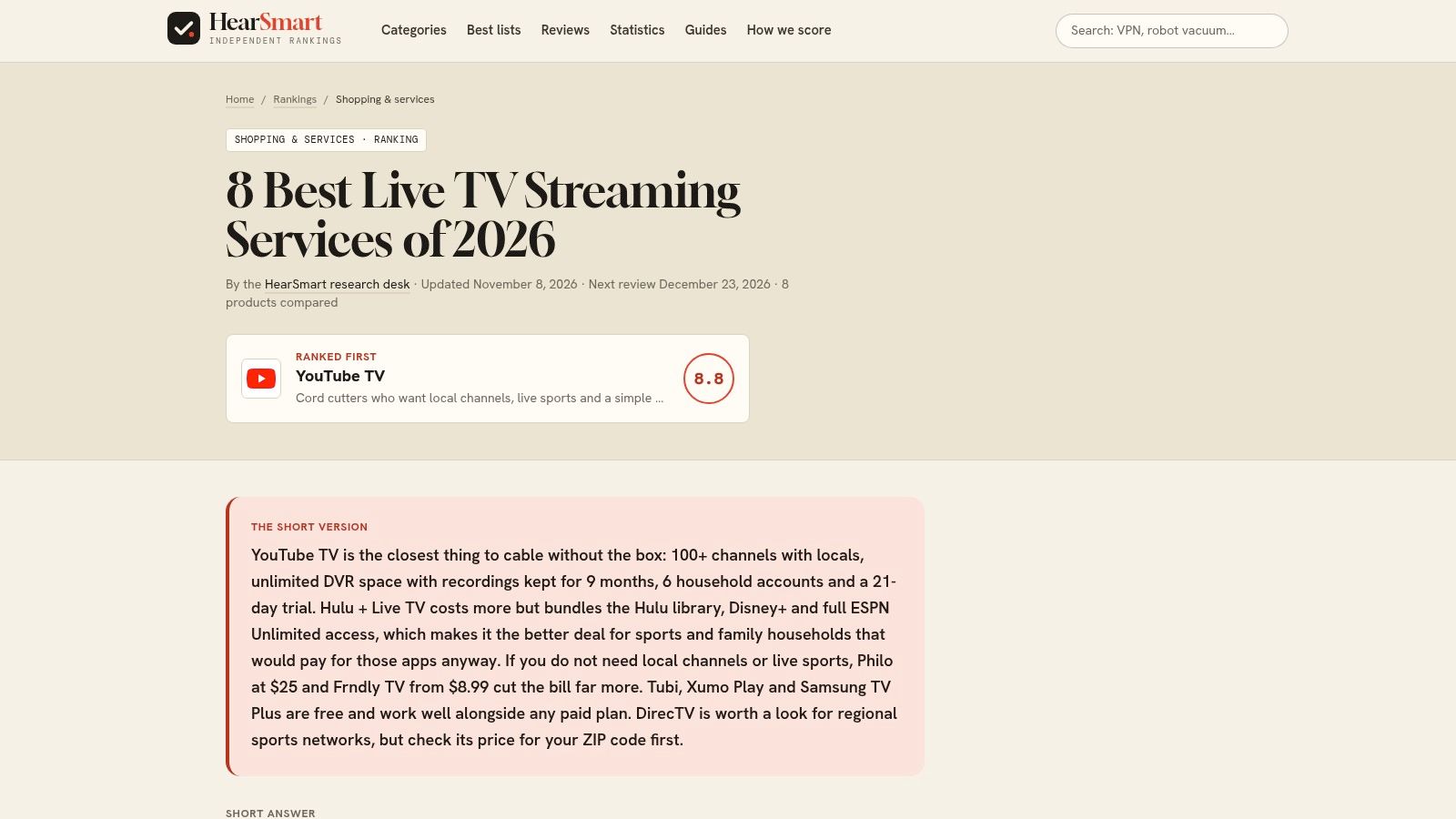
The HearSmart best live TV streaming services guide compares 8 live TV streaming services sold today for U.S. households replacing a cable or satellite bill with live TV over the internet. The ranking ranges from full cable replacements with local channels and sports to low cost entertainment bundles and free channel apps. That scope matters because a household that needs regional sports doesn't solve the same problem as a household that mainly watches lifestyle channels.
HearSmart states that performance scores cover the channel lineup, local and sports coverage, DVR, streams, and picture quality. The published formula weights performance at 40%, ease of use at 25%, and value at 35%, and rankings rest on documented features and seller published prices rather than paid placements or claimed hands-on testing. That's a transparent method, though it isn't a substitute for a ZIP code check on the seller's site.
How the Comparison Should Be Read
Viewing data explains why the guide exists, but it doesn't prove that any one bundle fits a given home. Nielsen's May 2025 measurement put streaming at 44.8% of total television viewing, compared with 20.1% for broadcast and 24.1% for cable. The figure measures viewing share, not subscriptions cancelled, so households still need to confirm channels directly.
- Published formula: The scoring weights are stated before any pick is made.
- Seller sourced prices: Prices and specifications come from sellers' own pages, with the date checked.
- No paid placements: HearSmart states that rankings aren't paid placements.
Supporting context for churn, prices, and household counts appears on the HearSmart streaming subscription statistics page, which lists 55 sourced statistics on subscribers by service, prices, churn, and households. The limit is clear. Documented features can't confirm picture reliability at a specific address, and the guide itself is the place to check current picks because plans change.
Practical rule: Rank services by the must-have channels and the regular rate first. Introductory savings come second.
2. YouTube TV
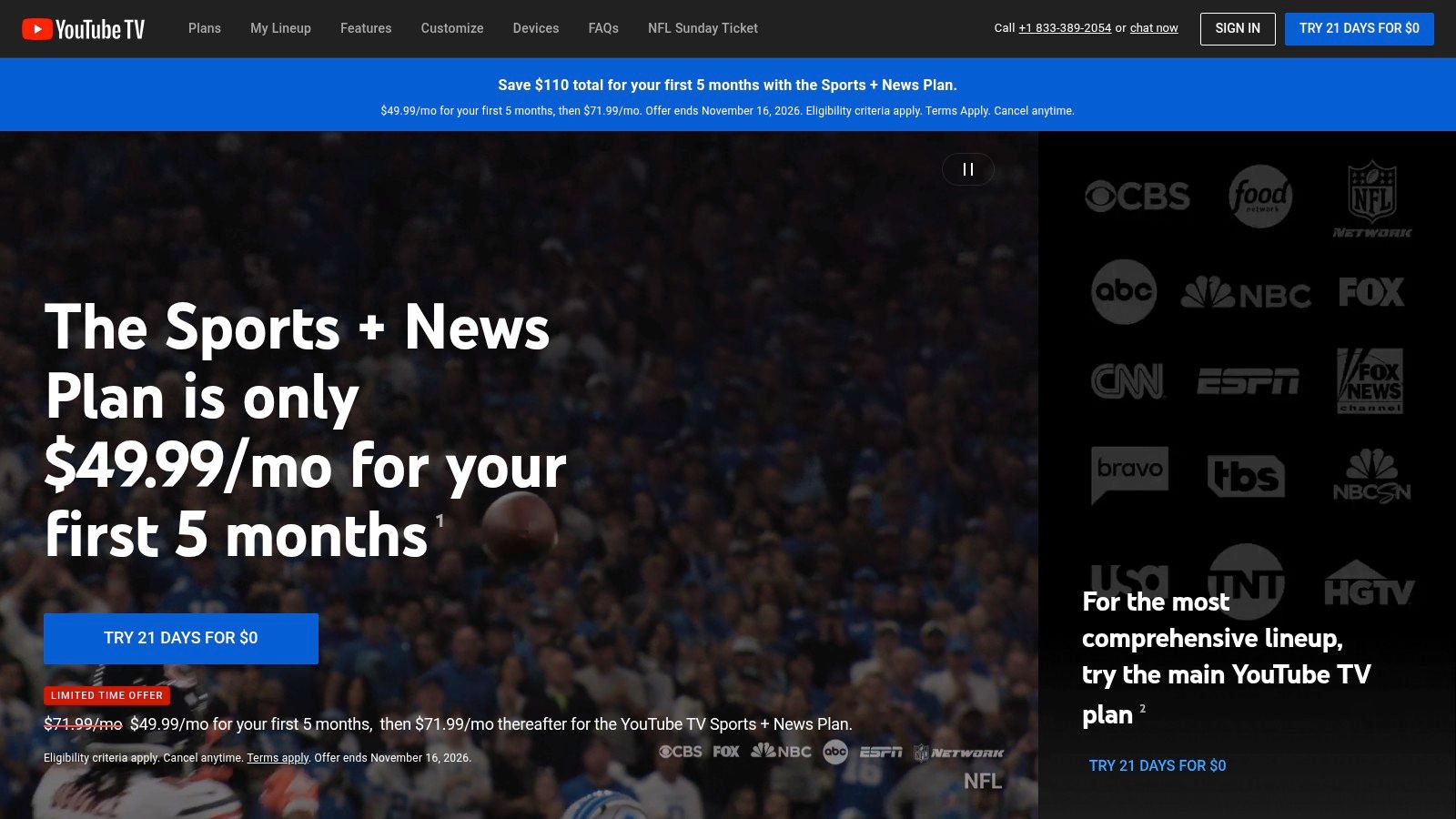
YouTube TV is the broad bundle in this set, aimed at households that want local stations, sports, news, and entertainment in one subscription. The main plan was listed on the seller's site at $59.99 per month for the first two months, then $82.99 per month, and prices can change. That step-up is the comparison point, since the regular rate determines the annual cost after the opening period ends.
The main plan includes 100+ channels as listed by YouTube TV on its plan page, including local channels where available. Smaller genre focused plans are also offered, which gives lighter viewers a way to avoid the full bundle. Cloud DVR and household sharing features round out the package for homes with more than one viewer.
- Broad channel scope: The lineup resembles a conventional cable package.
- Local channels where available: Coverage depends on ZIP code, so availability isn't universal.
- Smaller plans: Genre options may reduce cost for households with narrow viewing habits.
The trade-off is price at the regular rate. A household that watches only a handful of networks pays for breadth it won't use, while a household that needs live news and sports gets most categories in one bill. Verification is straightforward. The seller's ZIP code lookup should be checked for the exact local stations before any cable cancellation, since a missing local affiliate can make an otherwise complete bundle unsuitable.
3. Sling TV
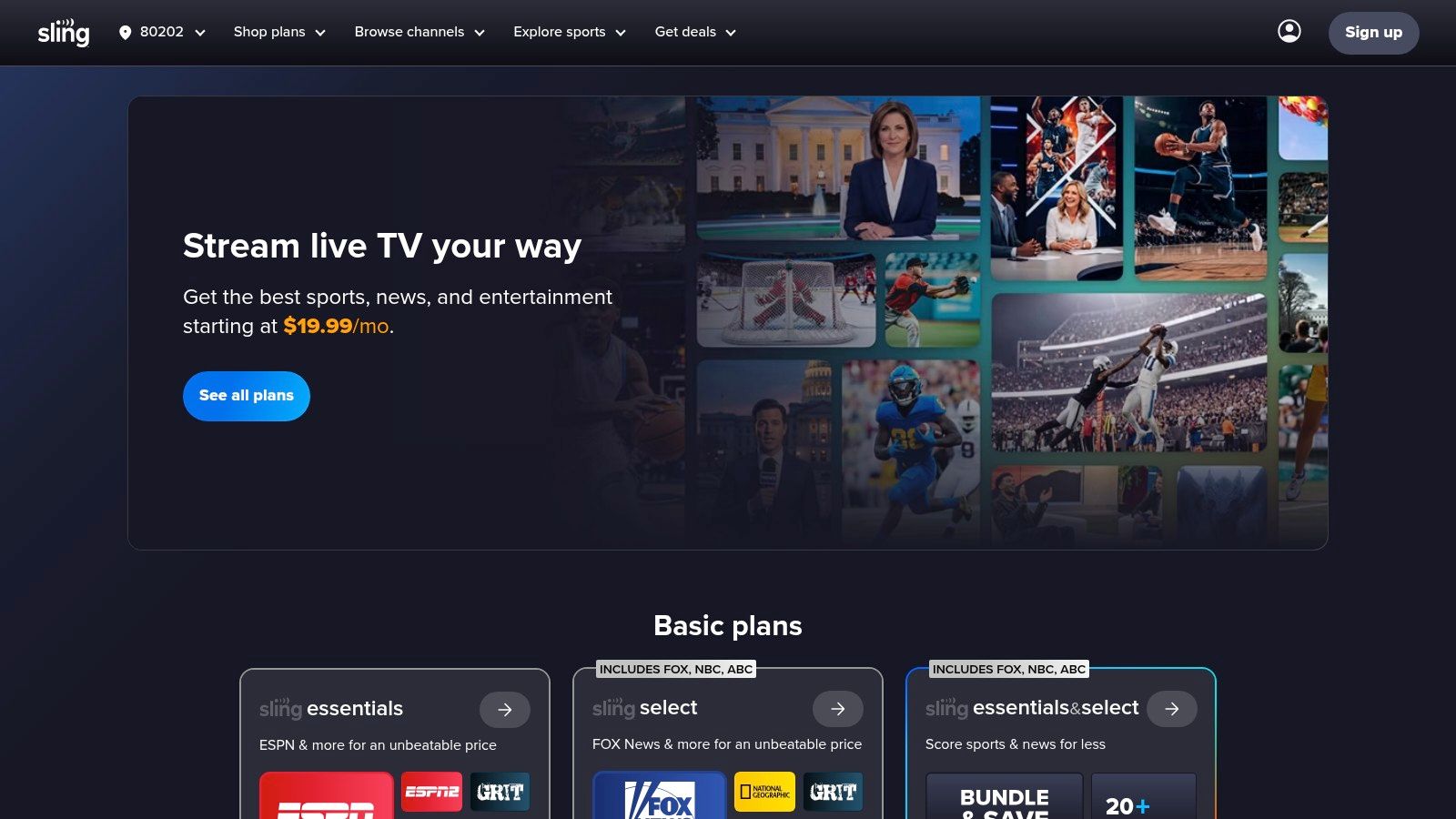
Sling TV takes the opposite approach from a single large bundle. Households choose Orange, Blue, or the combined package, then add optional packs for sports, entertainment, and other interests. Orange + Blue was listed by Sling TV from $60.99 per month, with exact pricing and channels dependent on plan selection and location, and prices can change.
That structure suits a selective viewer. A sports fan can weight the bundle one way, while a news and entertainment household can weight it differently, instead of both paying for the same full lineup. The cost risk is the opposite one. Each add-on narrows or removes the saving against a broad bundle, so the all-in total across a year is the figure that counts.
Limits to Check Before Choosing
Local channels are available in some markets only, which is the largest gap against cable. Households that rely on a local affiliate for news or sports need that confirmed by location first. Simultaneous stream limits also vary by channel and plan, even where the combined package supports viewing on more than one screen.
For households weighing a live bundle against on-demand libraries, the HearSmart best video streaming services guide covers the separate subscription decision. Sling TV is strongest where flexibility matters more than complete local coverage.
4. Hulu + Live TV
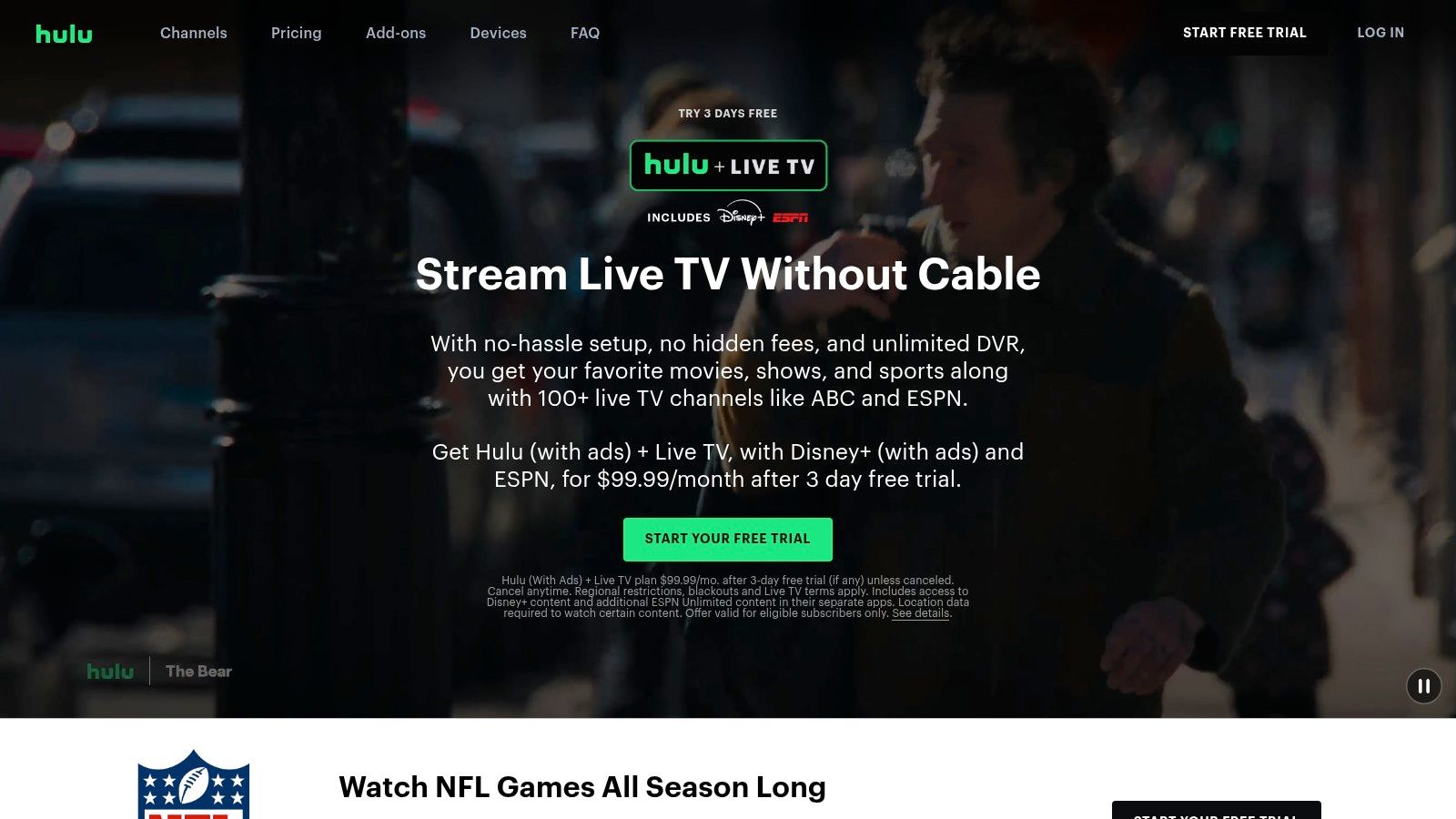
Hulu + Live TV combines live channels with Hulu's on-demand library in one subscription, and the advertised package includes Disney+ and ESPN+ access. Hulu (With Ads) + Live TV was listed by Hulu at $99.99 per month after any eligible free trial, and prices can change. That's higher than the other broad bundles here, so the bundled services have to be used for the price to hold up.
The case for the package is consolidation. A household already paying separately for Hulu's library, Disney+, and a live bundle may prefer one bill, provided the ad supported tiers are acceptable. Local channels are available in some markets, and a free trial may be available to eligible new subscribers.
A bundle only saves money when each included service replaces a separate payment. Unused services add nothing.
The trade-offs are concrete. Live and on-demand programming may include ads, and the price is considerably higher than Hulu's on-demand only plans. HearSmart says Hulu is strong for current TV and live TV, but should be bought inside the Disney+ bundle, a position set out in the HearSmart Hulu review. Households that don't watch Disney+ or ESPN+ are likely to find a standalone live bundle cheaper for the same channels.
5. DIRECTV
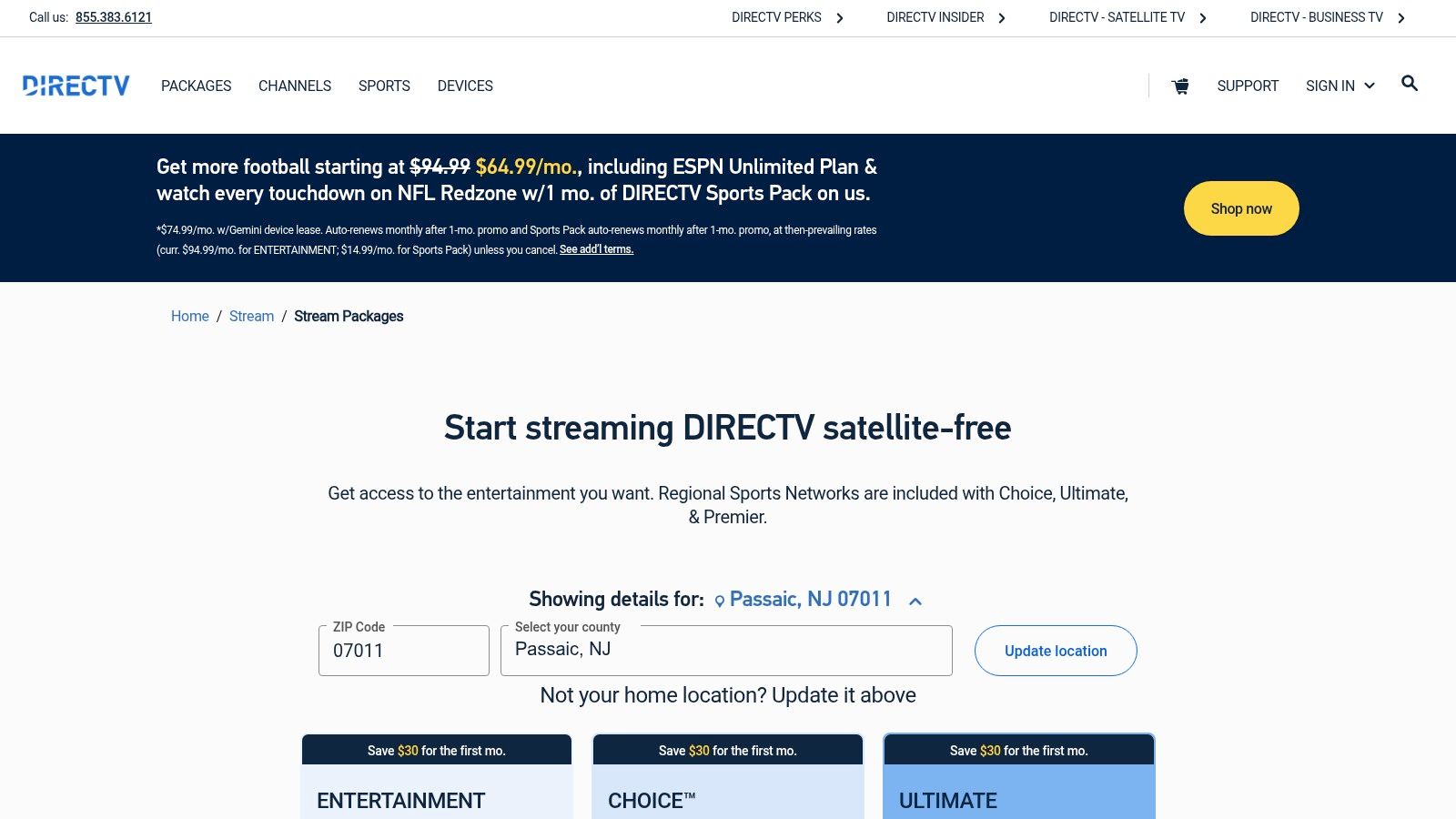
DIRECTV streaming packages offer the channel heavy route for viewers who want a traditional TV experience without satellite equipment. Genre Packs were listed by DIRECTV starting at $20.99 per month and streaming packages at $94.99 per month, before applicable taxes and fees, and prices can change. HearSmart marks DIRECTV's U.S. price as pending because the site could not load it from HearSmart's location, so the seller's page is the confirming source.
The range is the distinguishing feature. Streaming packages run from roughly 90+ to 185+ channels depending on tier as listed by DIRECTV on its packages page, while Genre Packs focus on sports, entertainment, news, and kids' programming. A household can therefore start narrow or buy the full lineup from one provider.
- Regional sports networks: Included in select packages, varying by market.
- No satellite equipment: The service works without a dish or cable box.
- Trial and contract terms: No annual contract and a five day trial were advertised for eligible customers.
The cost caution sits at the top tiers. Full packages can approach a cable bill once taxes and fees are added, and channel and sports network access varies by location. Longtime cable subscribers get the most familiar channel structure here, but familiarity isn't the same as value.
6. Fubo
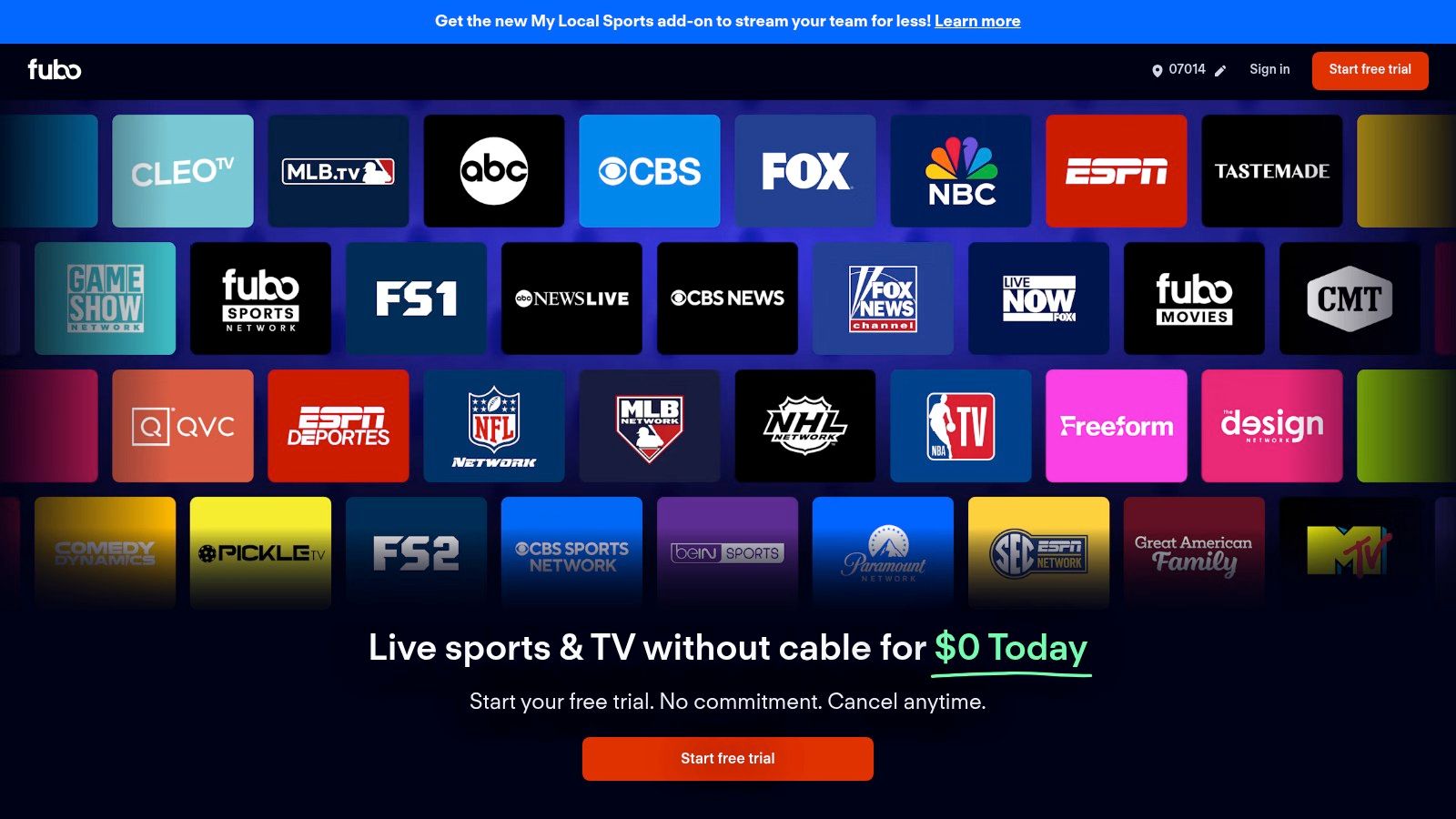
Fubo is the sports first option in this comparison, with sports focused tiers sitting alongside larger entertainment bundles. The Pro plan was listed by Fubo at $54.99 for the first month, then $84.99 per month, with higher tiers costing more, and prices can change. That first month discount is the sharpest step-up here, so budgeting on the introductory figure understates the cost.
Live sport is also the documented reason many households keep pay TV at all. Deloitte's 2025 Digital Media Trends survey found that 41% of cable or satellite subscribers cited sports as a primary reason for keeping the service. For that group, the relevant test isn't channel count. It's whether the specific leagues, teams, and regional games a household follows are carried in its market.
Cloud DVR and multi-screen streaming are available on eligible plans, and local broadcast channels and regional games appear in some markets. Higher tiers add sports and entertainment channels, which raises both coverage and price.
The conclusion follows from the viewing pattern. A household that watches live games most weeks can justify the regular rate where the right channels are confirmed locally. A household focused on entertainment or news pays for sports depth it doesn't use, and a cheaper bundle elsewhere in this list fits better.
7. Philo
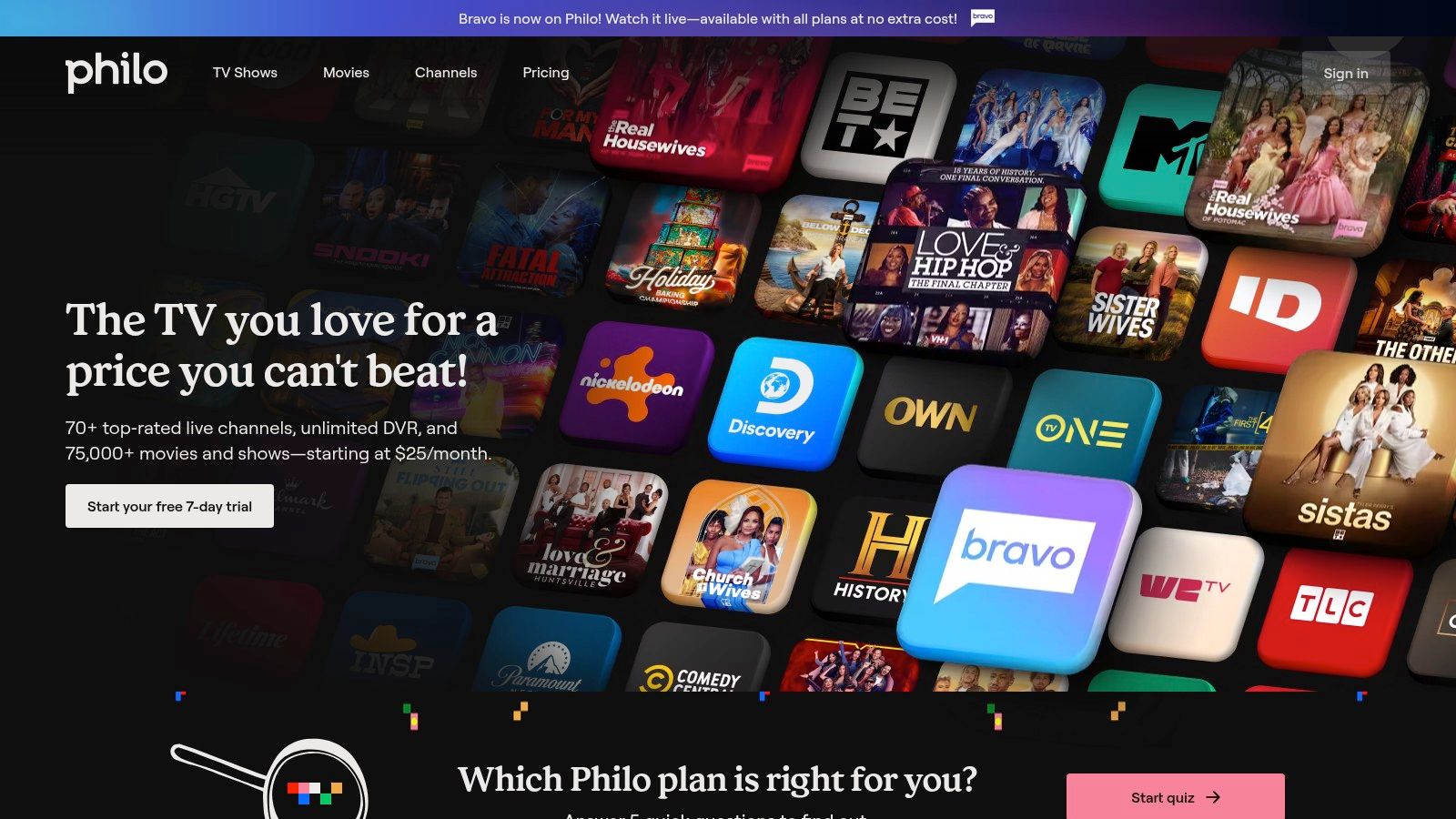
Philo removes local broadcast networks and major sports to hold the price down, and it's the clearest budget case among alternatives to cable. Essential was listed by Philo at $25 per month and Bundle+ at $33 per month, adding access to services including AMC+, HBO Max Basic with Ads, and discovery+, and prices can change.
The Essential lineup carries channels including AMC, Discovery, HGTV, Hallmark, Nickelodeon, TLC, and MTV. For households whose viewing is entertainment and lifestyle programming, the daily rotation is included without paying for sports rights. A free ad-supported channel option and a seven day trial for eligible new Essential subscribers lower the cost of testing it.
Where the Saving Comes From
The saving exists because expensive channel categories are absent, not because the same bundle is discounted. Deloitte's 2025 survey data as reported by The Streamable's 2025 State of Streaming notes that subscribers average $69 for four paid streaming services, a benchmark Philo stays well under on its own. Adding premium extras narrows that gap, yet the base plan remains the lowest regular price here.
Unlimited cloud DVR with recordings stored for one year, three simultaneous streams, and up to 10 profiles support shared households. The limit is absolute rather than partial. There's no route to local broadcast channels or major sports inside the service, so households that need either should choose a broad bundle instead.
Live TV streaming alternatives to cable compared by listed price, channel scope and local coverage
| Item | Listed monthly price (seller-published) | Channel scope | Local channels | Best for |
|---|---|---|---|---|
| Best - Best Live Tv Streaming Services | Not available in supplied content | Service recommendations and channel details not provided | Not specified | Comparing services using a published scoring formula |
| YouTube TV | $59.99/month for first two months, then $82.99/month | 100+ channels on main plan; smaller plans also available | Included where available; varies by ZIP code | Broad cable-style coverage with local channels, sports, and news |
| Sling TV | Orange + Blue from $60.99/month | Selectable Orange, Blue, or combined plans with optional add-ons | Available in some markets | Viewers who want a customizable, smaller bundle |
| Hulu + Live TV | $99.99/month for Hulu (With Ads) + Live TV | Live channels, Hulu on-demand library, Disney+, and ESPN+ | Available in some markets | Households wanting live TV and on-demand services together |
| DIRECTV | Genre Packs from $20.99/month; streaming packages from $94.99/month | Roughly 90+ to 185+ channels, plus genre-focused packs | Varies by market and package | Viewers seeking a traditional, channel-heavy lineup |
| Fubo | $54.99 for first month, then $84.99/month for Pro | Sports-focused options and broader entertainment tiers | Local and regional coverage varies by market | Viewers who prioritize live sports |
| Philo | Essential $25/month; Bundle+ $33/month | More than 70 entertainment-focused live channels on Essential | Not comprehensive for local broadcast channels | Budget-conscious viewers focused on entertainment and lifestyle programming |
Choosing the Right Cable Replacement for Your Household
The pattern across these alternatives to cable is consistent. Price rises with local channels, live sports, and channel breadth, and it falls when a household gives up one of those categories. YouTube TV and DIRECTV answer the full replacement problem, Fubo answers the sports problem, Sling TV answers the selective bundle problem, Hulu + Live TV answers the consolidation problem, and Philo answers the entertainment only budget problem.
Cost comparisons stay incomplete until broadband is added, since every service here needs a separate internet connection. The FCC Broadband Consumer Label guidance states that providers of standalone fixed and mobile broadband plans must display a label showing the monthly price, introductory rate when applicable, data allowance, and download and upload speeds. That label lets a household spot a promotional broadband price or a data cap that changes the effective cost of streaming, and it uses the same introductory versus regular distinction that applies to the TV plans above.
Fragmentation is the remaining risk. A cheap live bundle plus several on-demand subscriptions can recreate the cable bill it replaced, particularly where forgotten renewals and premium add-ons accumulate. The annualized all-in figure, covering the live plan at its regular rate, any on-demand subscriptions, taxes where they apply, and the broadband plan, is the number worth comparing.
- Confirm local coverage by ZIP code: Local stations and regional sports networks vary by market on every broad bundle.
- Price the regular rate: Introductory offers on YouTube TV and Fubo expire quickly relative to a year of service.
- Match the category, not the channel count: A missing must-have channel outweighs a larger total.
- Add broadband to the total: The label check takes minutes and prevents a false saving.
Makers change prices, plans, and terms often, so HearSmart advises readers to check the price on the maker's site before buying or upgrading. Households that run that check, verify local channels, and total a full year at regular rates will know whether a replacement costs less than cable.
Visit the HearSmart best live TV streaming services guide, enter each shortlisted service into a one year cost calculation at its regular rate, and confirm local channels by ZIP code on the seller's site before cancelling cable or starting a trial.
Spotted an error in this guide? Email editorial@hearsmart.org