Guide · General
10 Best Video Editor for Beginners Compared in 2026
Compare the best video editor for beginners by learning curve, core tools, platform support and price, with specs from each seller's own page.
By the HearSmart research desk · Updated November 15, 2026 · 14 min read
A first export takes about 22 minutes in iMovie and about 78 minutes in DaVinci Resolve. That threefold gap has nothing to do with missing features in either program. It's the price of learning an interface, and it's the most useful number a first-time buyer can compare. In a controlled beginner exercise summarized in an independent research report, participants finished a first export in approximately 22 minutes with iMovie, 34 minutes with CapCut, 41 minutes with Filmora, 45 minutes with Premiere Rush and 78 minutes with DaVinci Resolve.
Those timings change how a shortlist should be read. Fast software suits a beginner who needs a finished clip this week. Slow software buys headroom that only pays off later, and only if the person keeps editing. The same report recommends scoring ease of use as a measurable outcome: record time to first export, count mandatory setup steps, check for guided templates, and test whether trim, split, audio, captions and export are findable without documentation.
This comparison of the best video editor for beginners ranks ten options on four points: learning curve, core tools, platform support and price model. Each entry also answers a second question. How far can a beginner go before the software becomes the constraint?
Table of Contents
- 1. Best Video Editing Software
- 2. Apple iMovie
- 3. Microsoft Clipchamp
- 4. Wondershare Filmora
- 5. DaVinci Resolve
- 6. Canva Video Editor
- 7. CapCut
- 8. CyberLink PowerDirector
- 9. Shotcut
- 10. OpenShot
- How the beginner video editors compare on platform support, free access, learning curve and price model
- Matching an Editor to Your First Projects
1. Best Video Editing Software
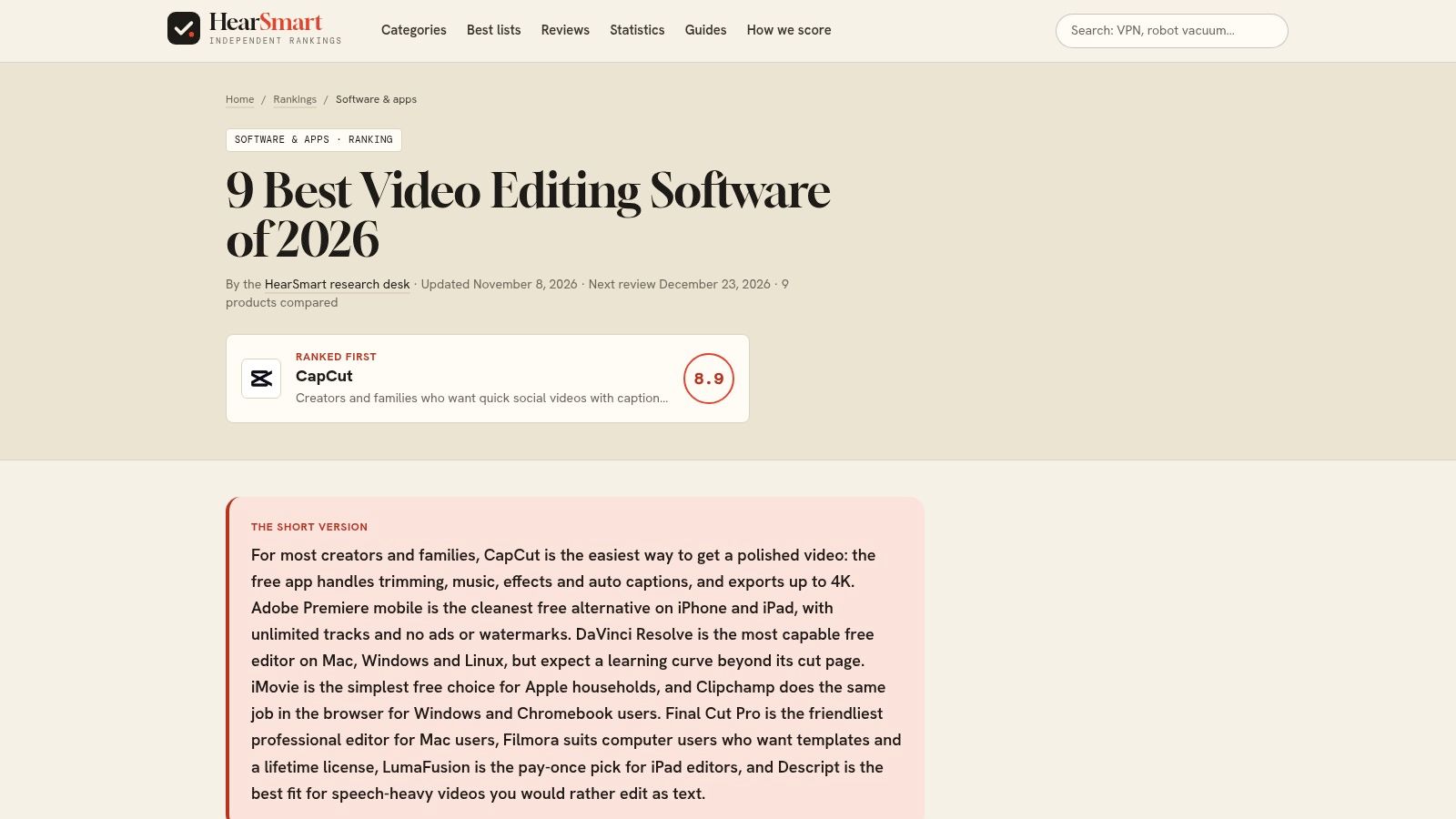
The useful first pick is the editor a beginner can finish a clip in, then stay with until the project outgrows it. On that test the shortlist is short. iMovie fits people already on Apple devices. Microsoft Clipchamp fits a free 1080p export. DaVinci Resolve fits learners who expect to keep editing for years and can tolerate a slower start.
HearSmart's best video editing software guide scores those options on one published formula: performance 40%, ease of use 25%, value 35%. The weights use documented product features and seller-published prices, with the date each price was checked. Rankings carry no paid placements and rest on documented specifications rather than claimed hands-on testing.
A 2025 estimate in the Straits Research video editing software market report puts consumer-grade editors at 64% of usage against 36% for professional suites, and cloud platforms at 52% usage share, up from 41% three years earlier. A score built only around professional depth would miss where most editing happens.
What the formula rewards and what it hides
Performance and value together favor an editor that exports reliably and stays affordable. Ease of use, a quarter of the score, stops complexity from climbing the list on features alone. That check matters in the first week, when the timeline, the media browser and the export settings are all new.
The formula still hides a ceiling. It can show that an editor is simple and cheap. It cannot mark the project where trim, titles and a basic export stop being enough, which is the point a beginner outgrows the tool. Because the ranking uses documented features only, it also makes no claim about how a specific laptop will run.
Pros
- Transparent weighting. The 40/25/35 split is published, so a reader can see whether speed, simplicity or cost drove a placement.
- Dated, documented prices. Figures come from the seller with the date checked, and no placement is paid for.
Cons
- Ceiling is indirect. Feature lists show what an editor includes, not the week a beginner hits its limit.
- Documented features only. The ranking makes no timed hands-on claims, so it cannot say how a specific laptop performs.
2. Apple iMovie
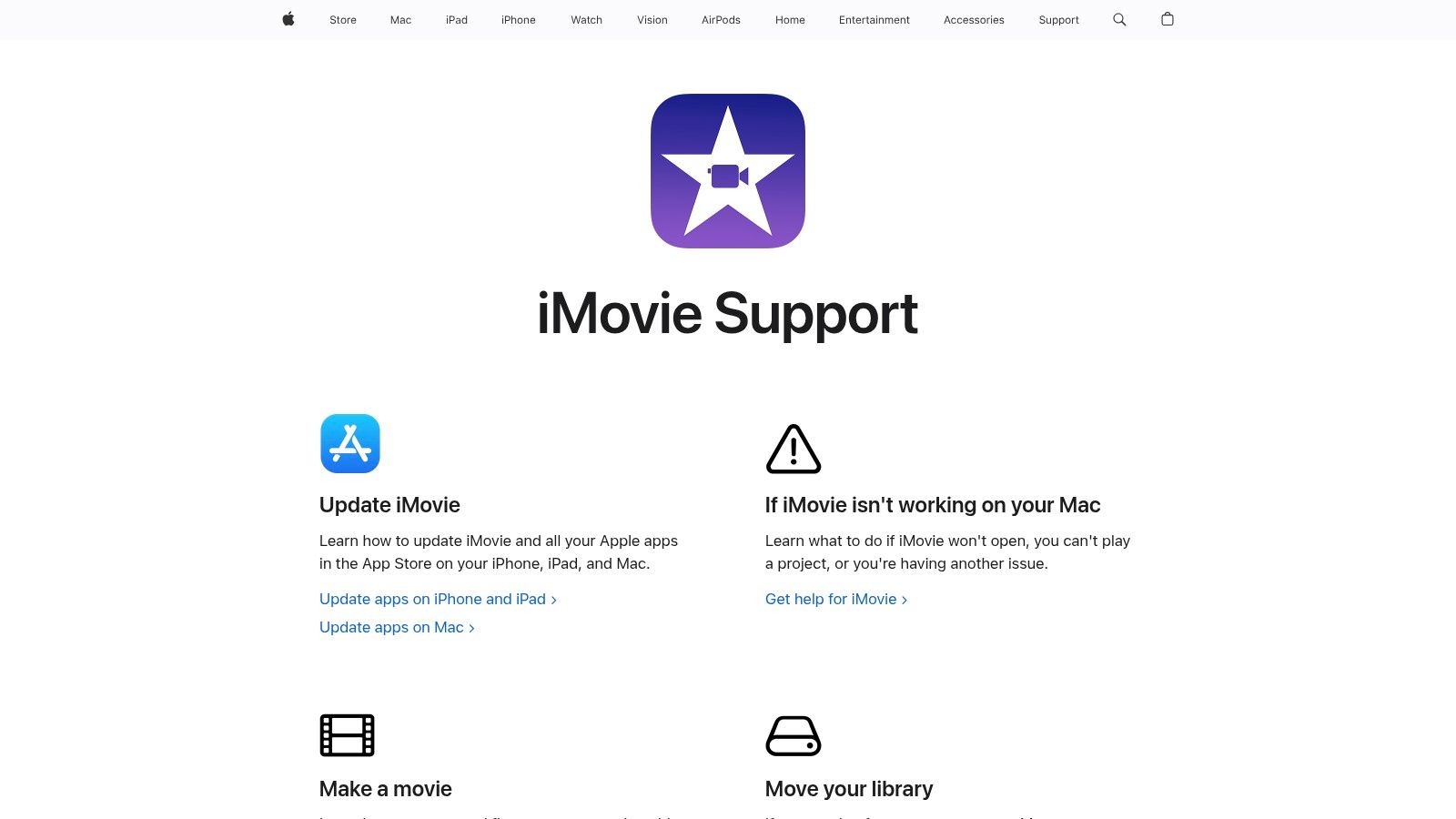
iMovie is free on supported Apple devices and the fastest route from phone footage to a finished clip for anyone already inside Apple's ecosystem. Magic Movie assembles chosen clips into an edited video, and Storyboards give common video types a structure with titles and music before the user meets a timeline.
Platform support settles this entry. iMovie runs on Mac, iPhone and iPad, with ways to move a project between them, and it doesn't run on Windows or Android. The Internshala video editing roadmap makes the wider point that the right software depends on device, budget, learning goals and content type, and notes that beginner guides often present desktop, mobile-first and browser workflows as interchangeable when their requirements differ.
Where a beginner outgrows it. Green screen, picture-in-picture, filters, music and narration cover home movies, school projects and straightforward social videos. Complex edits and advanced effects stall, which is the trade the design makes, and the iMovie review covers that ceiling in more detail.
Pros
- No licence cost. Free on supported Apple devices.
- Guided structure. Magic Movie and Storyboards remove decisions from a first project.
Cons
- Apple only. No Windows or Android workflow.
- A low ceiling. Simplicity turns restrictive once edits get complex.
3. Microsoft Clipchamp
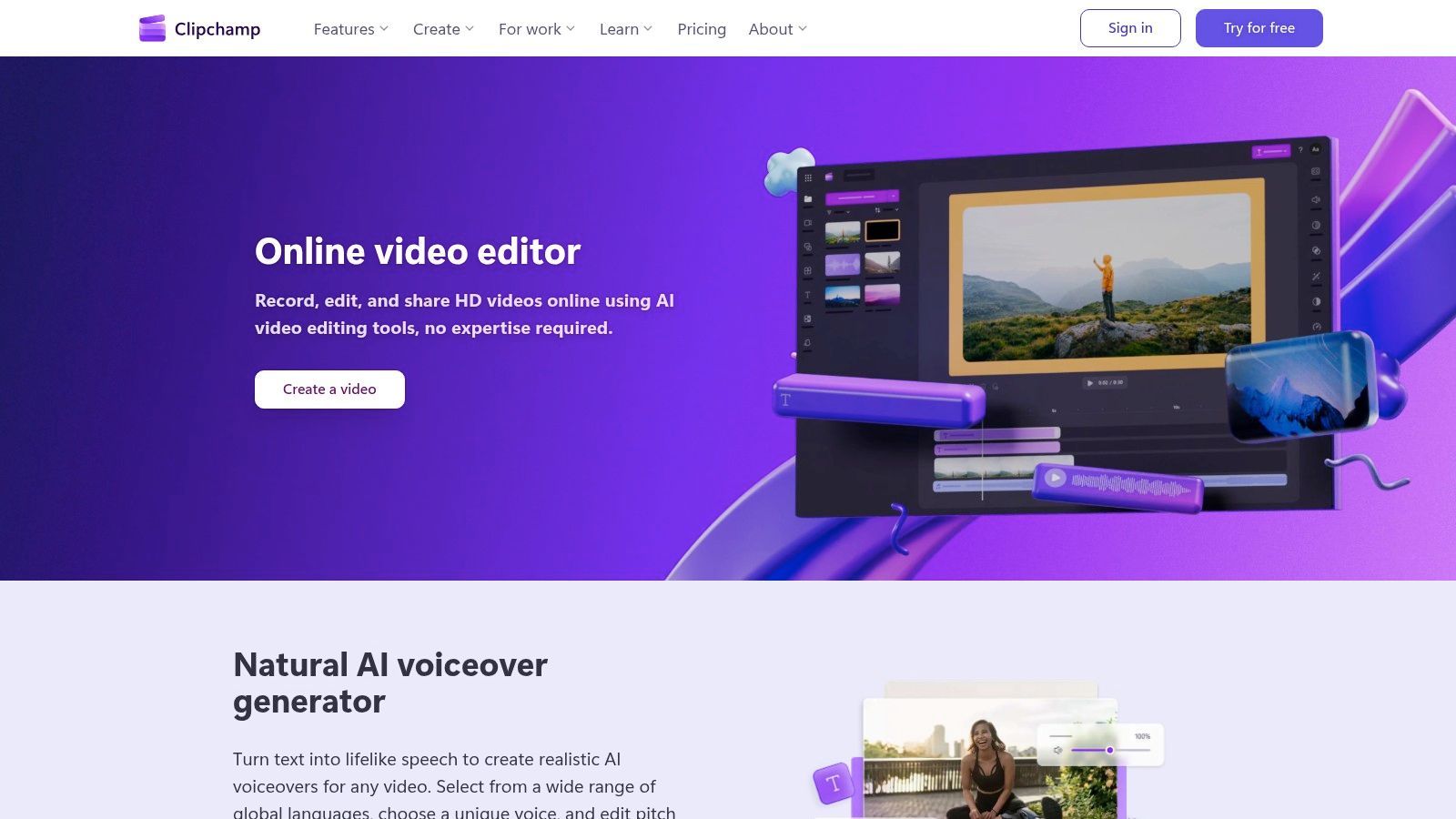
Clipchamp answers the question beginners ask first: can HD publishing happen without paying? Microsoft's Clipchamp product page states that the free tier supports unlimited exports without a watermark at up to 1080p HD, and that 4K UHD requires a Microsoft 365 Personal or Family subscription or Clipchamp Premium.
Export mechanics are documented in Microsoft's Clipchamp export format page. Free accounts choose from 480p SD, 720p HD and 1080p HD, standard video is delivered as MPEG-4 at 30 frames per second, a 15-second project can be saved as a GIF, and audio-only exports use M4A. A beginner filming 4K on a phone should know before starting that the free tier caps output below the source.
The editor runs in a browser and also installs as a Windows app. Trim, crop, rotate, resize and arrange cover everyday work, while animated titles, automatic subtitles and voiceovers handle the steps beginners usually abandon.
Pros
- No export quota. Unlimited watermark-free exports up to 1080p on the free plan.
- Nothing to install. Runs in a browser, which suits a shared or older machine.
Cons
- 4K is paid. And some premium assets need an eligible Microsoft 365 subscription.
- Short runway. Advanced timeline, colour and audio controls aren't there.
4. Wondershare Filmora
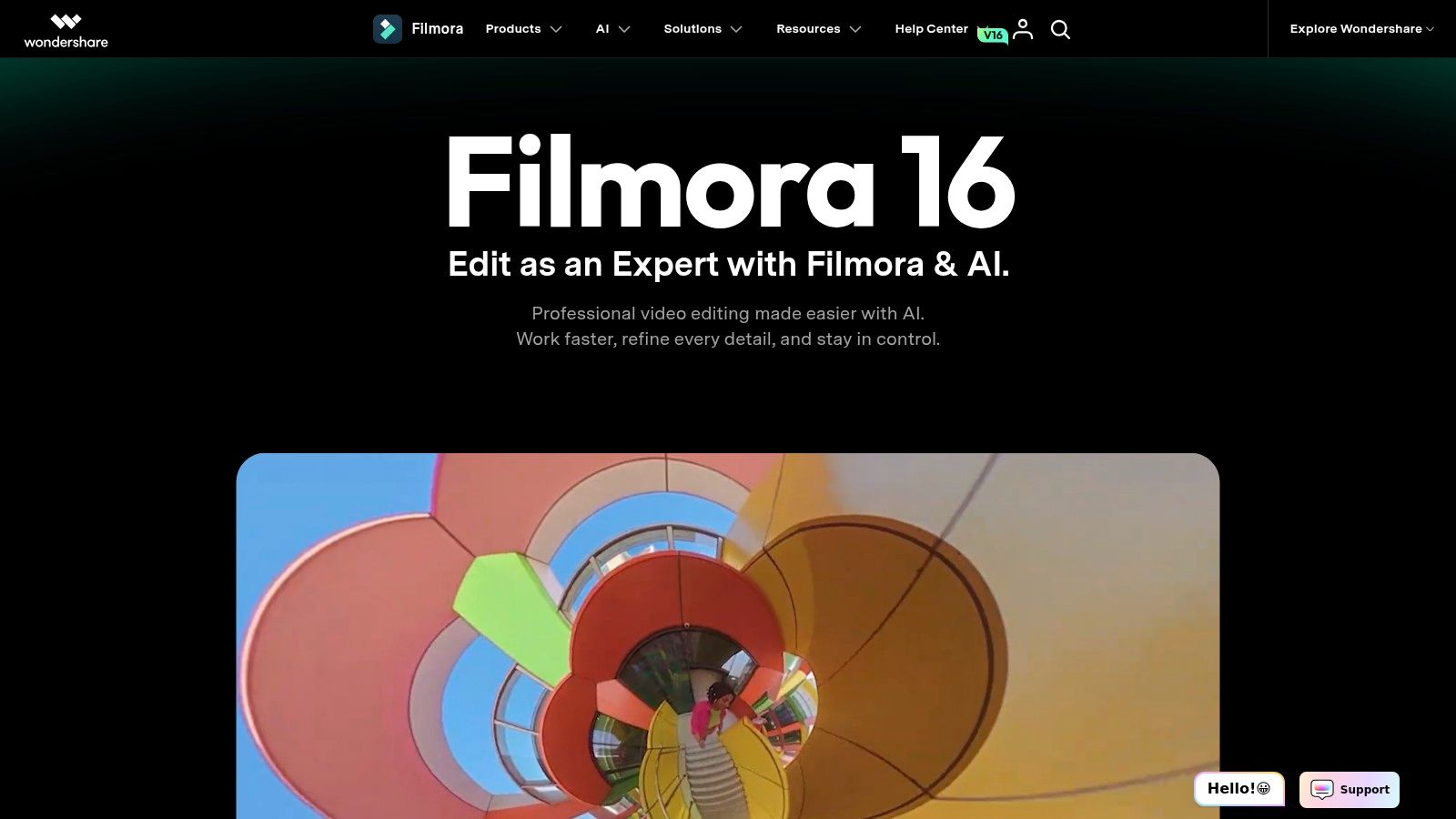
Filmora is a paid desktop editor for Windows and Mac that sits between template tools and professional suites. The timeline carries more than 100 listed editing features plus templates, effects, titles and a creative-assets library, and it exports in 4K. Plans come as subscriptions or a perpetual licence, and watermark-free export depends on the plan chosen.
Its AI tools raise a question beginners rarely ask. One compilation of industry figures cited by Mark Studios' AI video editing statistics reports 42% of surveyed marketers using AI video or audio editing tools. Usage says nothing about whether an automatic cut kept the speaker's meaning, whether captions can be corrected quickly, or where uploaded footage goes.
What to test before paying: run one real project through the automatic captions and the AI cut, then correct three errors by hand. If the correction takes longer than typing the caption from scratch, the automation isn't saving time.
Pros
- A wide toolkit in one product. Effects, titles and templates without a professional-style interface on day one.
- Two buying paths. Subscription or perpetual licence.
Cons
- Plan-dependent extras. AI credits, storage and assets vary by tier, and a perpetual licence doesn't necessarily include future major versions.
- Trial limits. Check what the trial does to exports before investing hours in a project.
5. DaVinci Resolve
DaVinci Resolve is the most capable free software here and the hardest to start. It began around 2004 as a software-based, resolution-independent colour-grading platform from da Vinci Systems, designed to run real-time 2K grading on ordinary PC hardware for professional digital-intermediate work, according to the DaVinci Resolve profile on Wikipedia. Blackmagic Design acquired the brand in 2009 and rebuilt it into a suite covering editing, colour, visual effects, motion graphics and audio post.
That history explains both the value and the friction. The free version handles Ultra HD up to 3840 by 2160 at up to 60 fps, subject to format limits, on Mac, Windows and Linux, and official training is published. The same profile records availability across macOS, Windows, Linux and iPadOS, with support for 10 languages.
A beginner who needs a finished clip this month should start elsewhere and return later. A beginner who expects to still be editing in two years can start here and skip a migration.
Pros
- No subscription. The free version carries substantial capability.
- A long runway. The same application covers colour, audio and effects as skills grow.
Cons
- A steep first week. The interface and toolset intimidate, and hardware demands run higher.
- Studio paywall. Some advanced features need the paid edition.
6. Canva Video Editor
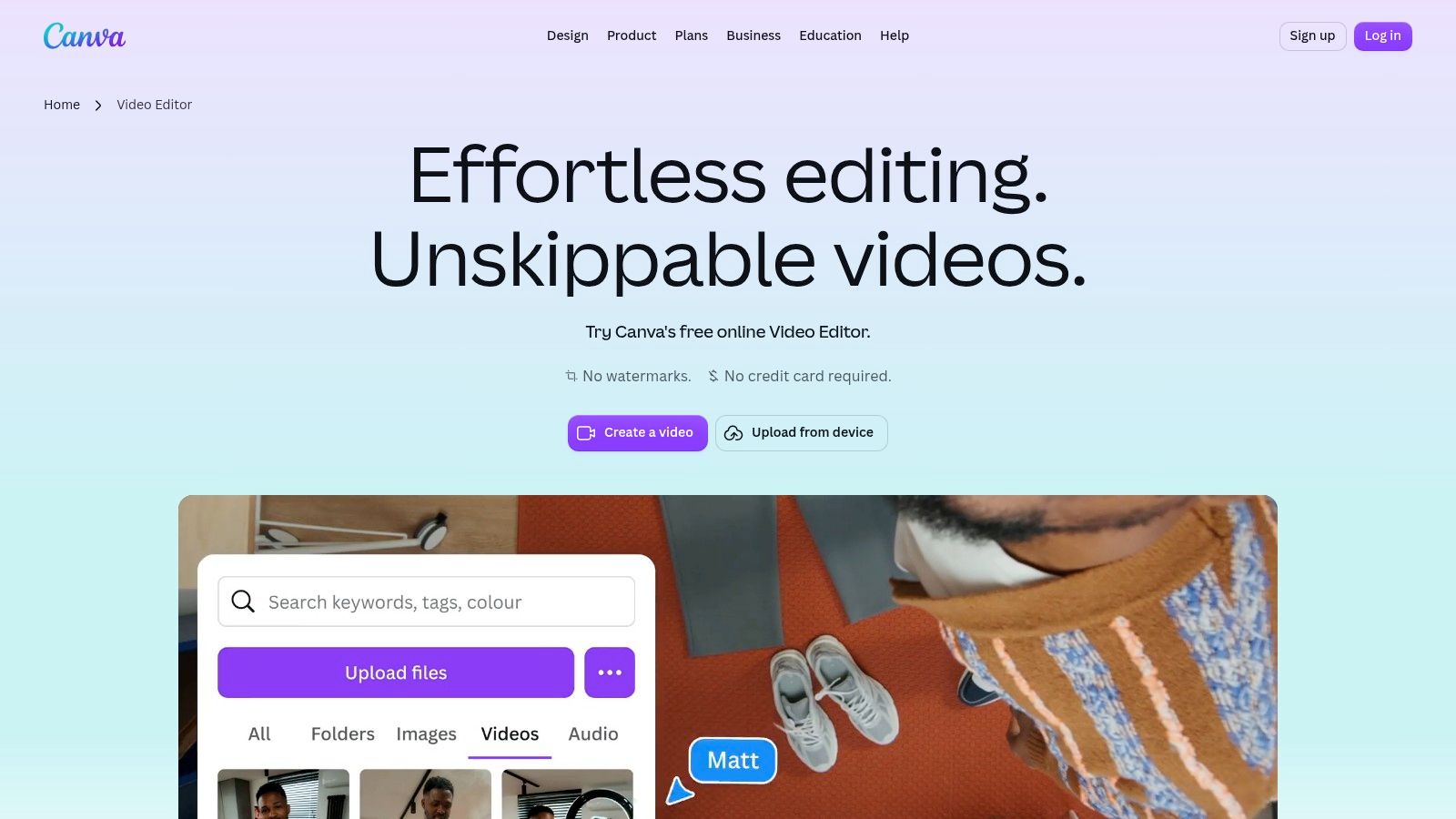
Canva's video editor is a design tool with a timeline attached, and that shape suits explainers, social posts and branded videos where text and graphics matter as much as footage. Templates come pre-sized for platforms, so a first project starts from a layout rather than an empty canvas.
Trimming, splitting and resizing work as expected, and the free plan exports without a watermark as long as the project uses free elements. Paid elements are the trap. Drop a Pro asset into a free project and the export carries a watermark until that asset is licensed or swapped.
Platform support is the browser plus a desktop app, which makes it the easiest option on a Chromebook or a shared family computer. The price model is freemium, with Pro adding content and features.
Pros
- Fast first draft. Templates and pre-sized formats remove setup decisions.
- Design and video in one place. Useful when branding has to stay consistent across clips.
Cons
- Watermark risk. Paid elements in a free project change the export.
- Not a finishing suite. Colour, audio and multi-track work are limited next to desktop editors.
7. CapCut
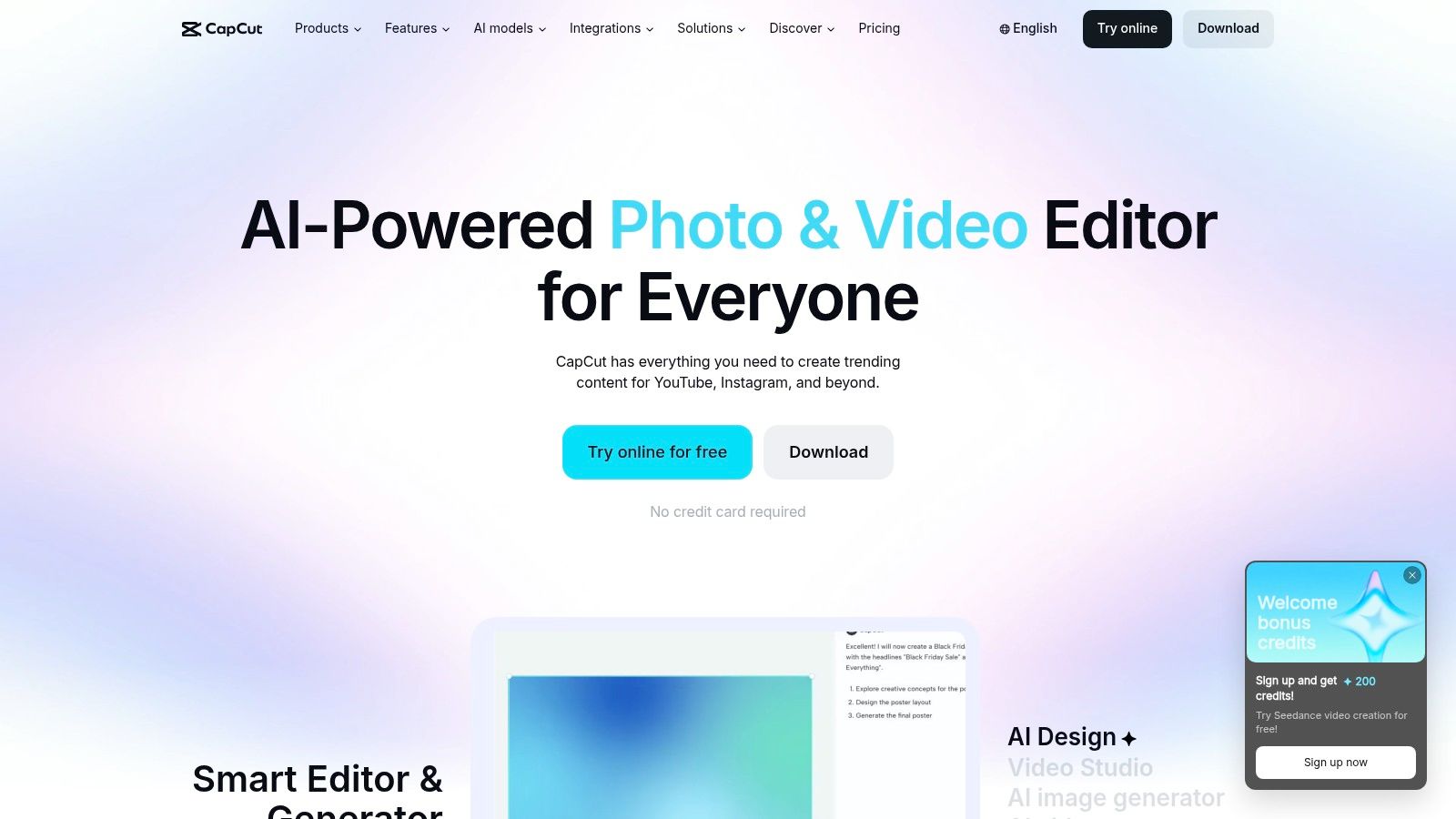
CapCut is built for the format most beginners publish: vertical, short and captioned. Templates, effects and AI captioning sit on a timeline that runs on desktop, mobile and web, and the free tier is enough to judge whether the workflow fits.
Adoption reflects that fit. In MIDiA Research's Q2 2024 video creator survey, 26% of beginner video creators used CapCut, compared with 24% who used Adobe Premiere Pro, as reported in MIDiA's analysis of CapCut's challenge to Premiere Pro.
Where the free tier ends. Pro adds premium templates, effects and tools, and important assets can be paywalled or moved between plans. Subscription prices vary by region and platform, so the figure on the account page is the one that applies, and it should be confirmed on the day of purchase. Longer, structured videos with scene-by-scene audio still go faster in a traditional desktop timeline. The CapCut review covers the toolset in more detail.
Pros
- Short-form fit. Vertical templates and captions are the default rather than an add-on.
- Free before Pro. The free version is enough to test the workflow.
Cons
- Shifting paywalls. Features and assets change between plans.
- Regional pricing. The cost depends on account and device.
8. CyberLink PowerDirector
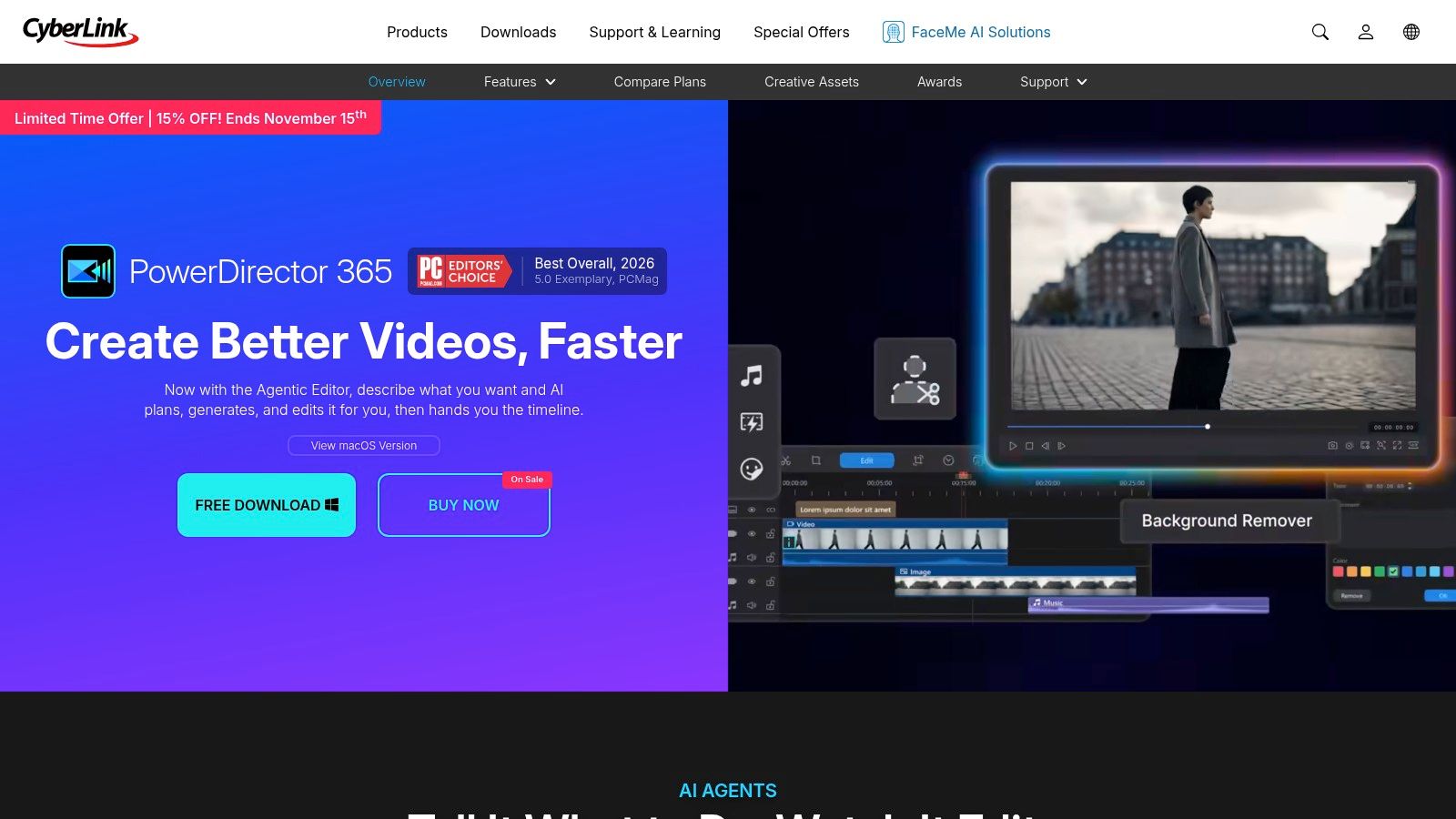
PowerDirector is the option for a beginner who wants a purchase decision rather than a subscription. CyberLink sells subscription and one-time-purchase editions, and a free Essential version covers core editing with restrictions, so the software can be tried before any payment.
Paid tiers carry drag-and-drop editing, effects, titles and transitions, plus 4K export according to CyberLink. The effect library is both the selling point and the risk. A beginner cutting a five-minute home video rarely needs that volume of options, and picking through them uses time the edit itself would spend better.
Willingness to pay is the constraint worth naming. In Q1 2024, 23% of consumers said they were willing to pay for video-editing tools, according to MIDiA Research. Most won't, which makes a usable free tier and a clear upgrade path more valuable than a deep feature list.
Pros
- Buy once or subscribe. Both paths exist, which suits a beginner who dislikes recurring charges.
- Try before paying. The Essential version covers core editing.
Cons
- Licence confusion. Features and prices differ by plan, so the exact licence needs comparing before purchase.
- Restricted free tier. Some advanced AI tools and export options are locked.
9. Shotcut
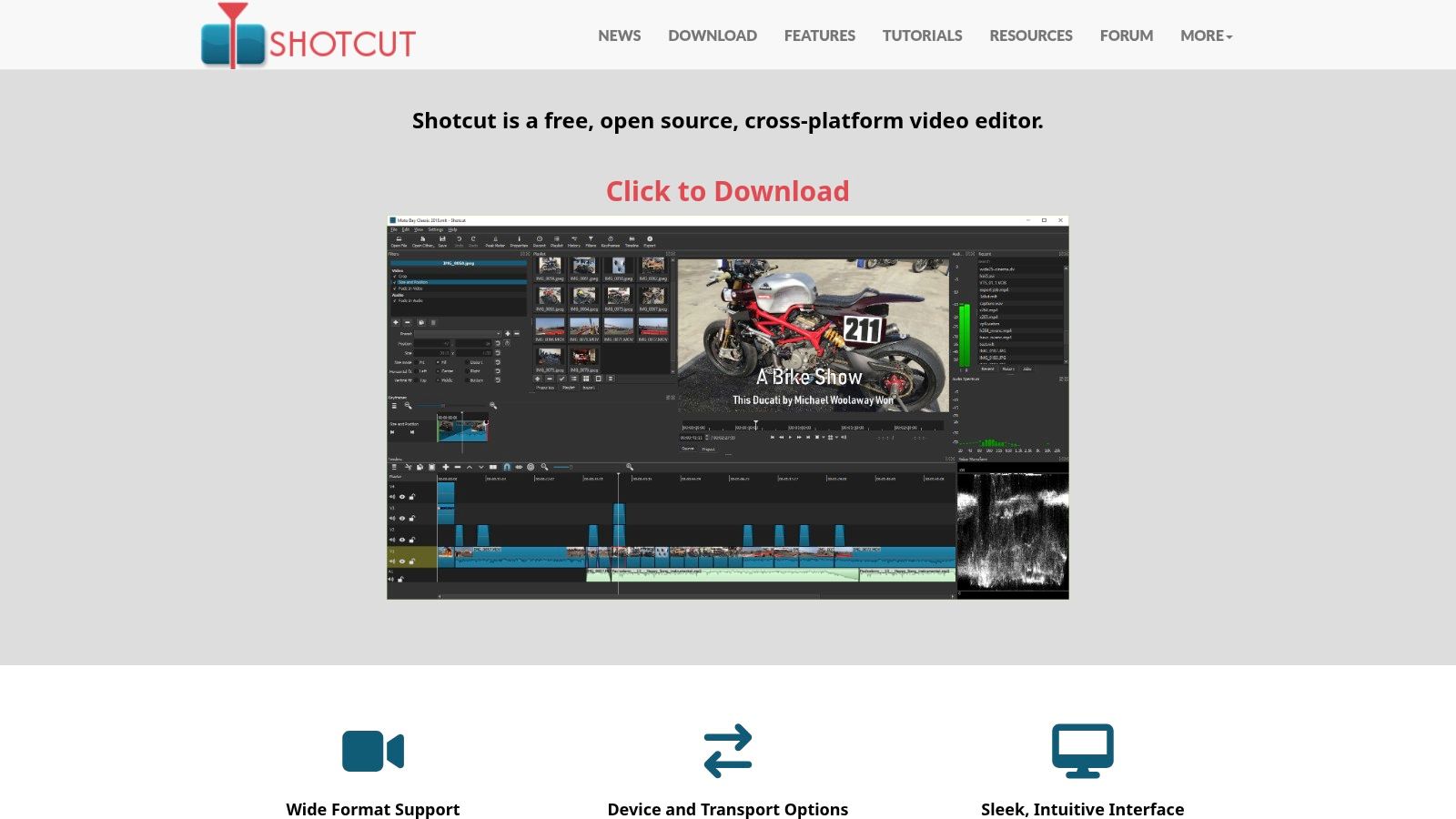
Shotcut is free and open source, with no paid tier to upgrade to and no subscription to lapse. It runs on Windows, Mac and Linux, supports a wide range of media formats, includes subtitle tools, and handles 4K and 8K projects.
Format support deserves a check before committing, because import lists differ between products. Adobe's Premiere Elements system requirements list AVCHD, MPEG-1, MPEG-2, MPEG-4, HEVC, ProRes, H.264, HDV and QuickTime with limited codecs as imports. A phone shooting HEVC, or a camera writing ProRes or MKV, needs its container and codec matched against the editor's own list rather than assumed.
Screening rule: import one file from the actual camera before editing anything. A ten-second test clip reveals a codec problem in a minute, while a failed import three hours into a project costs the evening.
The cost of Shotcut isn't money. It's self-directed learning. There are no storyboards, no templates and no guided first project, so the interface has to be learned from documentation and practice.
Pros
- No licence, ever. Free and open source across three desktop systems.
- Format range. Handles a broad set of containers and codecs up to 8K.
Cons
- No hand-holding. Less guidance than template-based editors.
- Self-taught workflow. Advanced options make the start feel unfriendly.
10. OpenShot
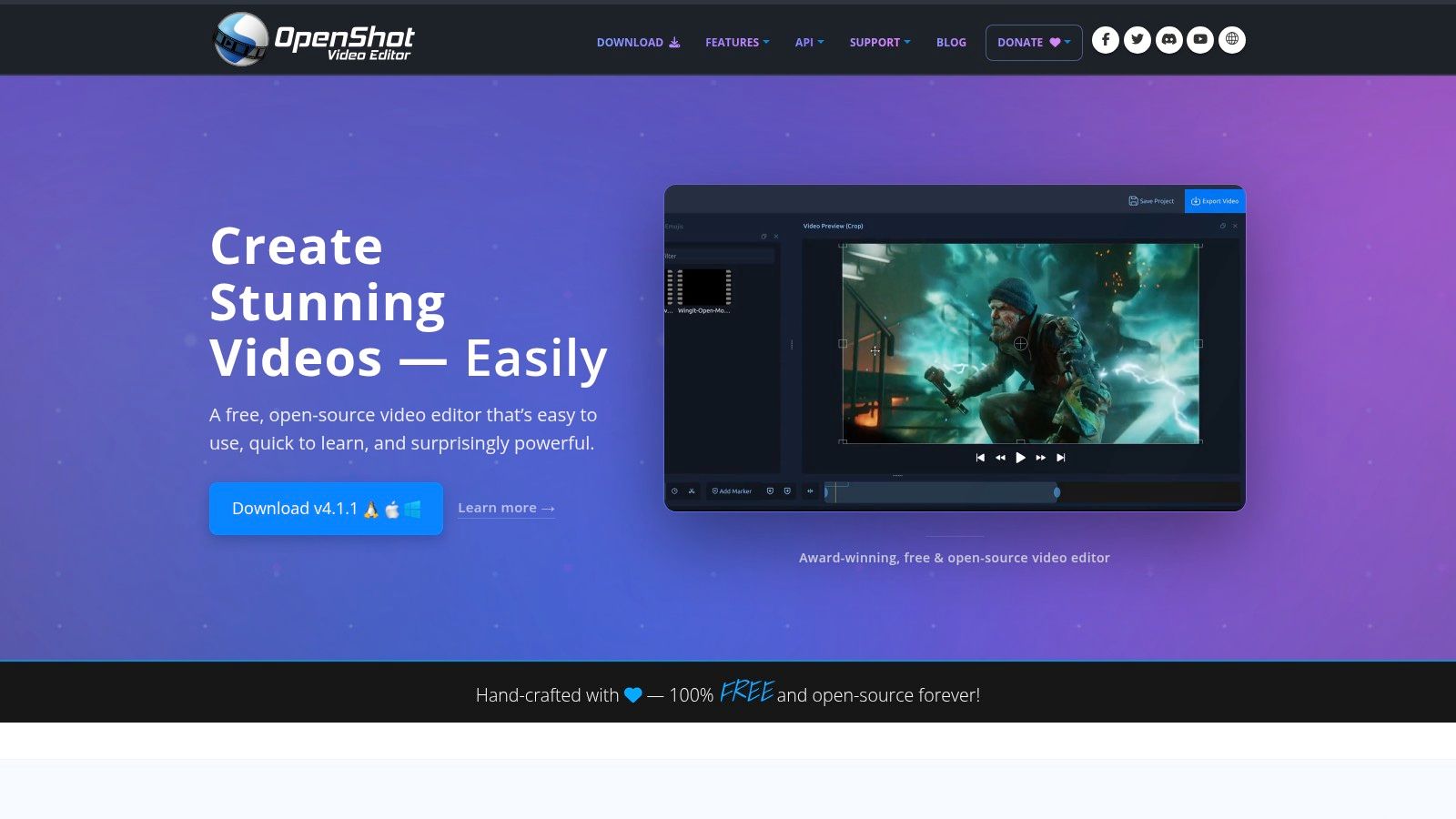
A beginner outgrows OpenShot once the edit needs guided templates, shared collaboration, or a finish the built-in tools cannot carry. Until that point, OpenShot is a free, open-source desktop editor for Linux, Mac and Windows. Multiple timeline tracks, transitions, effects and keyframe animation let a first cut move past a single clip without a licence fee.
Price stays at zero. There is no paid edition and no subscription to renew. Platform support covers the three major desktop systems, so the same project can stay on Windows, Mac or Linux. The learning curve is the tighter limit. OpenShot offers less built-in instruction than a template-driven tool, so the first project depends on reading documentation. Hardware and operating-system requirements still need a check before install.
A solo timeline edit fits. Advanced collaboration, or a heavily finished workflow, sits outside its scope.
Pros
- No licence decision. Free to install, with no paid edition later.
- Traditional timeline. Tracks, transitions, effects and keyframes on three desktop systems.
Cons
- Documentation first. Little guided structure for a specific first task.
- Early ceiling. Collaboration and heavy finishing sit outside its scope.
Readers comparing only the no-cost options will find the wider field in HearSmart's best free video editing software list.
How the beginner video editors compare on platform support, free access, learning curve and price model
A beginner outgrows an editor when the device, the free ceiling, the timeline, or the bill arrives before the project does. The HearSmart research desk lines those limits up in one table: platform support, free access, learning curve and price model, not a feature tally.
| Item | Platforms | Free plan | Learning curve | Price model |
|---|---|---|---|---|
| Apple iMovie | Mac, iPhone, iPad | Yes | Beginner-friendly, guided tools | Free |
| Microsoft Clipchamp | Browser, Windows | Yes; unlimited watermark-free exports up to 1080p | Beginner-friendly | Free plan; premium features via Microsoft 365 |
| Wondershare Filmora | Windows, Mac | Trial available; export conditions may apply | Beginner-friendly, with more creative options | Subscription or perpetual license |
| DaVinci Resolve | Mac, Windows, Linux | Yes; capable free version | Steeper learning curve | Free version; paid Studio license |
| Canva Video Editor | Web, desktop | Yes; watermark-free exports with free elements | Beginner-friendly, template-based | Free plan; paid plan and content |
| CapCut | Desktop, mobile, web | Yes | Beginner-friendly, template-based | Free plan; Pro subscription |
| CyberLink PowerDirector | Windows, Mac | Limited Essential version | Moderate; many effects and options | Free version, subscription, or one-time purchase |
| Shotcut | Windows, Mac, Linux | Yes | Less guided; traditional editing workflow | Free and open-source |
| OpenShot | Windows, Mac, Linux | Yes | Self-guided; a first project relies on documentation | Free and open-source |
Free is not the same as a long runway. iMovie, Canva and CapCut stay beginner-friendly and template-led, so the early limit is the platform (Apple only for iMovie) or a later paid plan and paid content. Clipchamp's free plan already covers watermark-free exports up to 1080p; premium tools sit inside Microsoft 365. Filmora starts as a trial, then a subscription or a perpetual licence. Resolve and PowerDirector keep a usable free or limited edition and a paid step, Studio for Resolve, so the outgrow point is that paid tier rather than day one. Shotcut and OpenShot cost nothing on Windows, Mac and Linux. Both expect a traditional or self-guided timeline, and OpenShot's first project depends on reading the documentation.
Matching an Editor to Your First Projects
Three variables settle most of the decision: the device already owned, the length and format of the first videos, and the hours available before a first export. A phone-only beginner with a vertical clip has little use for a colour suite. A laptop with 8 GB of memory will struggle with software whose own publisher recommends more.
Adobe's 2026 Premiere technical requirements make a useful template for that hardware check. The page lists Windows 11 version 24H2 as the minimum operating system, 8 GB of RAM, at least 4 GB of GPU memory, 8 GB of available storage plus extra space during installation, a 1,920 by 1,080 display, and rules out installation on removable flash storage. The same page recommends 16 GB for HD media and 32 GB or more for 4K, which shows how far a minimum specification sits from a working recommendation.
The shortlist step is deliberately narrow. Pick two or three editors from the table, open each seller's own page, and confirm the current price, plan limits and export conditions with the date checked. Plan rules move: Microsoft's Clipchamp pages were current in 2026, and subscription tiers change more often than perpetual licences.
Longevity is the last thing to weigh, and the category's own history explains why. Adobe describes its 1991 Premiere release as a shift toward beginner-accessible editing on affordable general-purpose computers, followed by full-screen broadcast-quality playback in 1994, RAM previews in 1998, an audio mixer in 2001, the Premiere Pro relaunch in 2003 and the move to Creative Cloud in 2011, in Adobe's 25-year retrospective. More than three decades on, ease of use is the differentiator rather than a convenience, and an editor that receives updates is worth more than one that doesn't.
HearSmart's published formula puts performance at 40%, ease of use at 25% and value at 35%, which is why this comparison treats onboarding time and export limits as first-class evidence rather than footnotes. Any purchase decision should rest on the reader's own device, the format of the first three videos, and the price confirmed on the seller's page that day.
The practical move is to install or open two free tiers this week, run the same one-minute clip through each, and time the first export. Whichever editor finishes that test without documentation is the one to learn on. HearSmart's ranked guide carries the spec sheet, the scoring method and the dated prices that should be checked again before any payment is made.
Spotted an error in this guide? Email editorial@hearsmart.org