10 Best Online Learning for Kids of 2026
By the HearSmart research desk · Updated November 22, 2026 · Next review January 6, 2027 · 10 products compared
 Ranked firstKhan Academy KidsFamilies with children ages 2 to 8 who want daily lessons with nothing to subscribe to9.0
The short version
Khan Academy Kids is the first app to install for children ages 2 to 8: it is free, ad-free and has no subscription to manage. IXL is the most complete practice service for school-age kids with more than 20,000 skills, though its US price was pending on our check. Prodigy keeps reluctant grade schoolers practicing math inside a game for free, and Beast Academy is the step up for advanced math at $100 a year. ABCmouse, BrainPOP Family, Adventure Academy and Lingokids are paid options whose value depends on how many children share the account, and Outschool is the only choice with a live teacher.
Short answer
Khan Academy Kids is the best online learning app for ages 2 to 8 because its own page promises it is 100% free forever with no ads and no subscriptions, so there is no trial to cancel or upsell screen mid-lesson. Prodigy is the best free option for grade school math and English, with a Core membership at $9.95 a month or $58.95 a year when you want science. Families who need a live teacher or standards practice through grade 12 should look at Outschool or IXL instead; all prices were checked in November 2026.
This list is for parents who want a learning app or service a child will actually use most days, without fights over upsells, surprise renewals or a confusing setup. On November 22, 2026 we reopened 10 seller pages and App Store listings, confirmed 8 US prices word for word, and marked IXL and Outschool as pending because IXL showed us zloty prices and Outschool lets each teacher set the price. We compared documented features and published prices; we did not test the apps with children. Scores weigh performance at 40, ease of use at 25 and value at 35. Ease of use here means daily friction: how quickly a session starts, how many child profiles you get, and how simple it is to cancel.
At a glance
| Rank | Product | Best for | Price | Score |
|---|---|---|---|---|
| 1 | Khan Academy Kids | Families with children ages 2 to 8 who want daily lessons with nothing to subscribe to | Free, with no ads or subscriptions | 9.0 |
| 2 | IXL | Parents who want skill-by-skill practice that matches school standards from Pre-K through high school. | Price not listed | 8.6 |
| 3 | Prodigy | Grade school children who resist worksheets but will practice math inside a game. | Free to play for math and English; Core membership $9.95 a month or $58.95 a year ($4.91 a month) | 8.6 |
| 4 | Beast Academy | Parents of math-curious or advanced children who want depth and problem solving, not drills. | From $100 a year for the self-paced online platform | 8.5 |
| 5 | ABCmouse | Parents of preschoolers and young grade schoolers who want one subscription across every early subject. | $14.99 a month after a 30-day free trial, or $79.99 a year | 8.4 |
| 6 | Duolingo ABC | Parents of 3 to 7 year olds who want short, free reading lessons on a phone or tablet. | Free, with no ads or in-app purchases | 8.4 |
| 7 | BrainPOP Family | Curious children who learn best from short animated explainers on topics beyond math and reading. | BrainPOP Jr. Family $119 a year for grades K to 3; BrainPOP Family $129 a year for grades 3 to 8; combined K to 8 plan $159 a year; two-week free trial | 8.3 |
| 8 | Adventure Academy | Children who have outgrown ABCmouse and want a game world with friends and quests. | $9.99 monthly subscription in the US App Store; annual plans also listed | 8.1 |
| 9 | Lingokids | Parents of toddlers and preschoolers who want ad-free, character-led learning games. | Lingokids Monthly Plan $14.99 in the US App Store; yearly plans also listed | 8.1 |
| 10 | Outschool | Parents who want a live teacher for a specific subject, interest or learning need. | Price not listed | 8.0 |
Figures worth knowing
- 54.154.1% of all students at U.S. degree-granting institutions took at least one distance education course in fall 2023.Source: National Center for Education Statistics
- 26.126.1% of U.S. college students studied exclusively through distance education in fall 2023, per NCES.Source: National Center for Education Statistics
- 34.8%34.8% of EU internet users took an online course or used online learning material in 2025, according to Eurostat.Source: Eurostat
- 58%Adult learning rates in OECD countries ranged from 58% in Norway to 13% in Korea in the 2023 Survey of Adult Skills.Source: OECD
- 40%40% of US children have their own tablet by age 2, according to Common Sense Media's 2025 census of children 8 and younger.Source: Common Sense Media
How we make the call
Every entry gets a 0 to 10 rating on the three criteria below, and the order follows the weighted total. The ratings rest on the documented features and published prices on each maker's own pages, never hands-on testing.
- 40%Performance
- 25%Ease of use
- 35%Value
No. 1, top ranked
Khan Academy KidsA free early learning app from the nonprofit Khan Academy with games, books and lessons in reading, writing and math for ages 2 to 8.
9.0of 10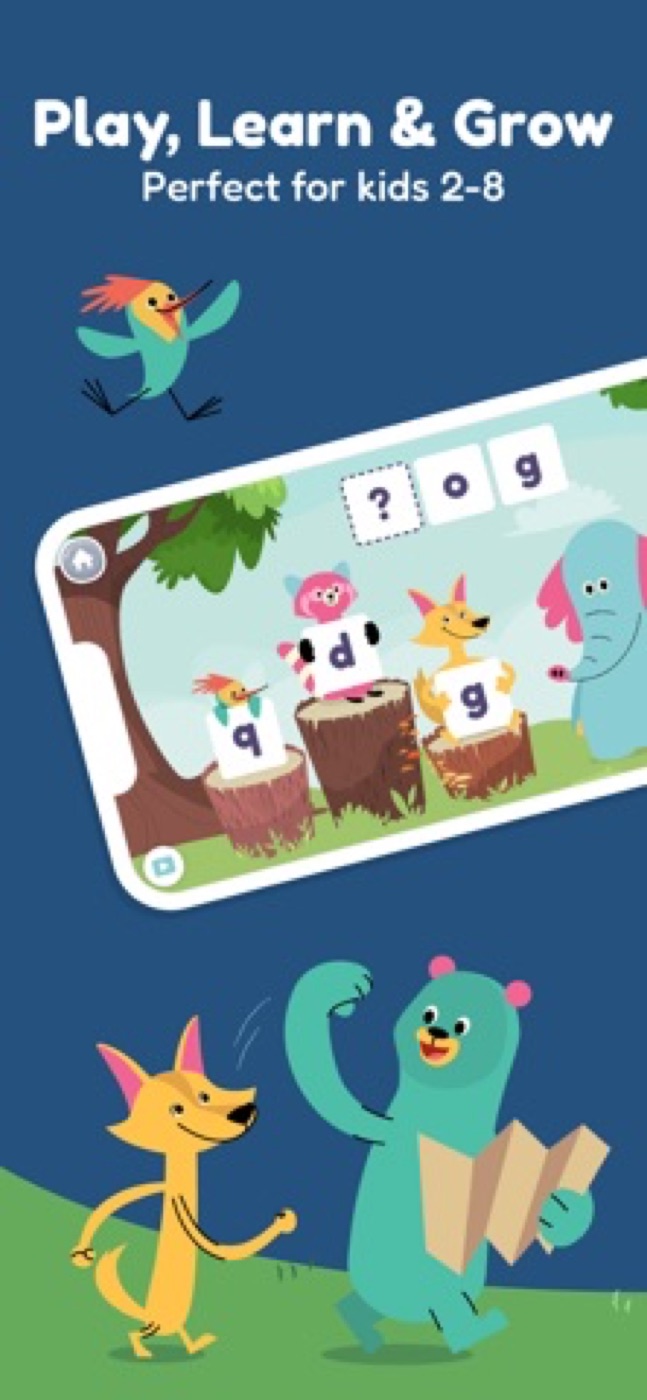
Best for Families with children ages 2 to 8 who want daily lessons with nothing to subscribe to
- Performance
- 8.4
- Ease of use
- 9.0
- Value
- 9.8
Price
Free, with no ads or subscriptions
Quoted from the Khan Academy Kids pricing page on November 22, 2026:
100% free - forever No ads, no subscriptions
Khan Academy Kids ranks first because it gives young children a complete, well-designed learning app for free. The nonprofit describes it as 100 percent free forever, with no ads and no subscriptions, which removes the usual upsell screens that interrupt a preschooler mid-lesson. Children ages 2 to 8 work through interactive games and story-based lessons in early literacy, reading, writing, language and math, guided by five characters including narrator Kodi Bear. There are hundreds of books, videos and creative activities, and kids can either explore freely or follow a personalized path. The curriculum was built with learning experts at Stanford and is aligned with the Head Start Early Learning Outcomes Framework and Common Core. Limits are clear: the app ends at age 8, there is no live teacher, and science and history get less attention than reading and math. We compared documented features and published prices.
What it does well
- +Free with no ads and no subscriptions, so there is no renewal to track
- +A personalized path picks the next activity, so a session starts with one tap
- +Curriculum aligned with Head Start Early Learning Outcomes Framework and Common Core
Where it falls short
- −Stops at age 8, so older children need another service
- −Covers early literacy and math more deeply than science or social studies
- −No live teacher or tutor support
- Price
- Free
- Ages
- 2 to 8
- Subjects
- Reading, writing, language, math, social-emotional skills
- Ads
- None
Visit khanacademy.org|Read the full Khan Academy Kids profile
No. 2
 IXL
An adaptive practice program with more than 20,000 Pre-K to 12 skills in math, English, science, social studies and Spanish.
8.6of 10Best for Parents who want skill-by-skill practice that matches school standards from Pre-K through high school.
- Performance
- 9.4
- Ease of use
- 8.0
- Value
- 8.2
Price
See vendor pricing (USD check pending)
No US price was listed when we checked. See the IXL pricing page.
IXL is the most thorough practice tool here for school-age children. A family membership opens more than 20,000 skills across math from Pre-K to calculus, language arts from Pre-K to 12, science, social studies and Spanish. Its Diagnostic estimates a child's level and suggests the skills they are ready for, so a parent does not have to guess where to begin, and questions adapt in difficulty as the child answers. IXL lists more than 1,300 video tutorials and lessons, and every wrong answer comes with a step-by-step explanation. Families can pick a single subject, a Combo plan for math and language arts, or a Core subjects plan that adds science and social studies, and progress carries over between the website and the apps. The trade-off is tone: IXL is structured practice rather than a game world, so younger children may need encouragement. Pricing loaded in zloty for us, so the USD figure is pending. We compared documented features and published prices.
What it does well
- +More than 20,000 skills from Pre-K to calculus, plus 1,300+ video tutorials
- +Progress is saved across IXL.com and the apps, so a child can switch devices
- +Family support by phone at (855) 255-8800 and by email
Where it falls short
- −Question practice can feel like homework, which some children resist daily
- −Our check showed prices in zloty, so the US price is pending
- −Science and social studies need the larger Core subjects plan
- Grades
- Pre-K to 12
- Skills
- 20,000+
- Plans
- Single subject, Combo (math and language arts), Core subjects
- Platforms
- Web, iPhone, iPad and other tablets
No. 3
 Prodigy
Fantasy adventure games where children answer curriculum-aligned math and English questions to win battles and build worlds.
8.6of 10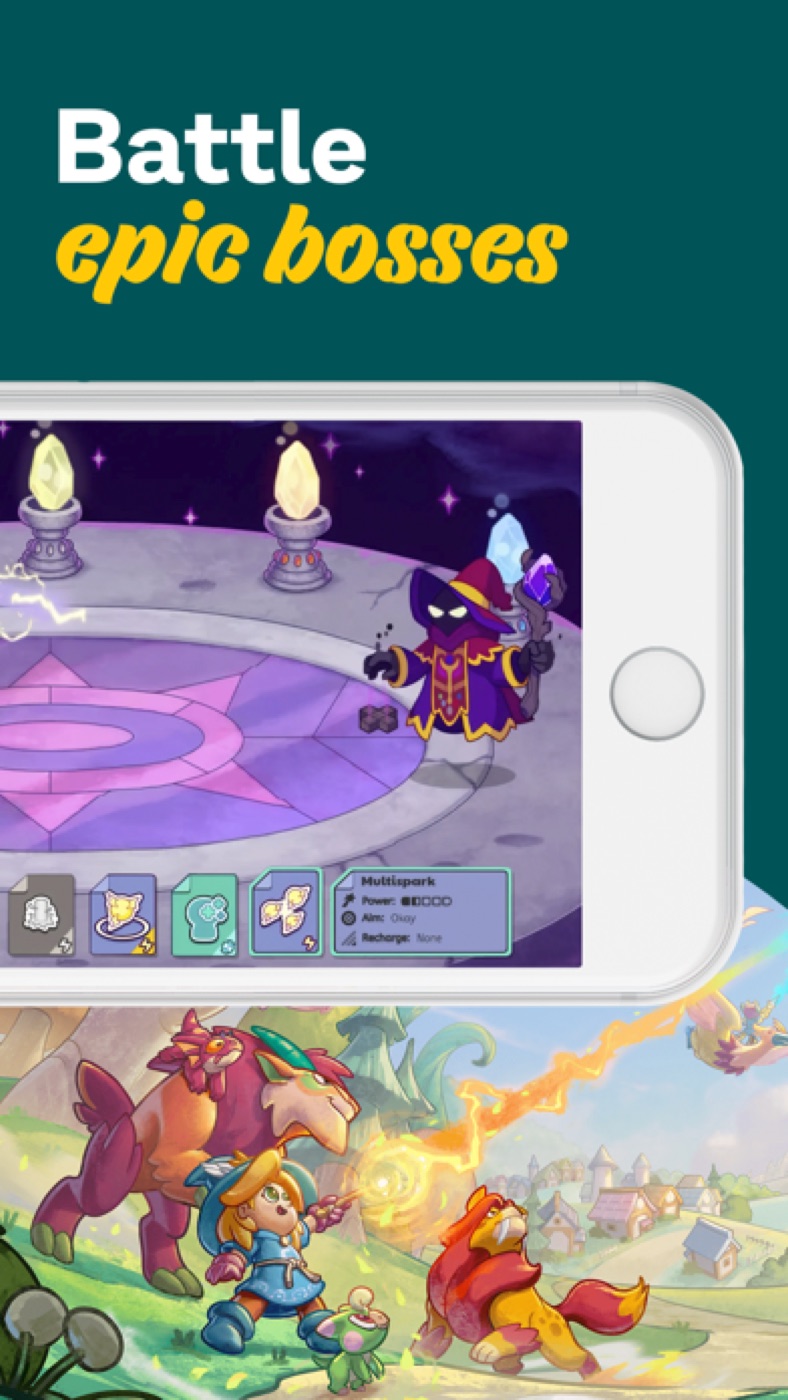
Best for Grade school children who resist worksheets but will practice math inside a game.
- Performance
- 8.2
- Ease of use
- 8.8
- Value
- 8.8
Price
Free to play for math and English; Core membership $9.95 a month or $58.95 a year ($4.91 a month)
Quoted from the Prodigy pricing page on November 22, 2026:
CORE $9.95 $4.91/mo* One subject
Prodigy turns practice into a fantasy role-playing game. In Prodigy Math, children create a wizard and answer math questions to win battles, while Prodigy English has them gather supplies and build a village through reading and language questions. Prodigy says its questions follow the curriculum taught in school, with math standards covered for grades 1 to 8, and an adaptive algorithm steers each child toward weak areas. The key point for parents is that the math and English content is free. A free parent account shows progress and sends a monthly report card. Paid memberships add science, more game items and stronger parent tools such as goals, in-game cheers and printable practice sheets; Core starts at $9.95 a month or $58.95 a year, and extra children get 25 percent off. The downside is that the game constantly shows rewards that require a membership, which can lead to requests to upgrade. We compared documented features and published prices.
What it does well
- +Math and English content is free to play
- +Membership pages state subscriptions renew automatically but can be canceled anytime
- +Paid plans add progress tracking and goal setting for parents
Where it falls short
- −Pets, gear and Magicoin rewards sit behind the paid tiers and children notice
- −Science needs a membership, and Ultra's English game runs in a web browser only
- −Game time can drift away from answering questions
- Free plan
- Yes, math and English content
- Grades
- Math for grades 1 to 8
- Paid plans
- Core, Plus, Ultra
- Multi-child discount
- 25% off extra memberships
- Renewal
- Automatic, cancel anytime
No. 4
 Beast Academy
An online math curriculum from Art of Problem Solving with illustrated, story-led lessons and challenging problems for ages 6 to 13.
8.5of 10Best for Parents of math-curious or advanced children who want depth and problem solving, not drills.
- Performance
- 8.7
- Ease of use
- 7.8
- Value
- 8.8
Price
From $100 a year for the self-paced online platform
Quoted from the Beast Academy pricing page on November 22, 2026:
Starting at $100/yr
Beast Academy, from Art of Problem Solving, is the pick for children who are ready for harder math. The online platform runs Levels 1 to 5 for ages 6 to 13 and calls itself a comprehensive elementary math curriculum, though the company notes that many families use it as supplemental enrichment. Lessons follow illustrated storylines, and Beast Academy Online includes complete versions of the illustrated Guide books alongside more than 1,000 instructional videos. The focus is on problem solving with several methods rather than memorizing formulas, and Beast Academy says its program goes deeper than most standard elementary programs. Parents get detailed reports and a dashboard, and the company also runs live online classes with instructors for Levels 2 to 5. Pricing starts at $100 a year, which works out to about $8.33 a month. It covers math only, and the difficulty is intentional, so children who are already behind may do better with IXL first. We compared documented features and published prices.
What it does well
- +Goes deeper than most elementary math programs
- +Teaches problem-solving strategies, not memorized procedures
- +Works as a full curriculum or as enrichment
Where it falls short
- −Math only
- −Problems are hard by design, which can frustrate some children
- −Sold as a yearly subscription starting at $100, with no monthly option on the main page
- Price
- From $100 a year
- Ages
- 6 to 13
- Levels
- 1 to 5 online
- Videos
- 1,000+
No. 5
 ABCmouse
An early learning program from Age of Learning with guided paths in reading and math plus science, art and music.
8.4of 10Best for Parents of preschoolers and young grade schoolers who want one subscription across every early subject.
- Performance
- 8.7
- Ease of use
- 8.5
- Value
- 8.0
Price
$14.99 a month after a 30-day free trial, or $79.99 a year
Quoted from the ABCmouse pricing page on November 22, 2026:
Try FREE for 30 Days! Then just USD 14.99/mo. until canceled
ABCmouse is the broadest subscription for young children on this list. Age of Learning organizes it around educator-designed learning paths in reading and math, so the program chooses the next activity rather than leaving a child to wander. Around that core, it adds science through virtual experiments, nature documentaries and simulations, along with digital art studios and music composition tools. Children earn tickets for progress and spend them in areas such as Pet Town, Aquarium and Hamster Maze, which keeps many young learners engaged. The company says more than 45 million families have used it. Pricing is $14.99 a month after a 30-day free trial, or $79.99 a year, which brings the monthly cost down sharply. It ranks below the free apps because Khan Academy Kids covers much of the same early ground at no cost, and older grade schoolers will be better served by Adventure Academy or IXL. We compared documented features and published prices.
What it does well
- +Covers reading, math, science, art and music with more than 13,000 activities
- +Up to three child profiles on one subscription
- +The $79.99 yearly plan costs less than six months at $14.99
Where it falls short
- −Bills $14.99 a month automatically once the 30-day trial ends
- −Tickets and virtual pets can pull attention away from lessons
- −Built for early learners, so older children outgrow it
- Price
- $14.99 a month or $79.99 a year
- Free trial
- 30 days
- Subjects
- Reading, math, science, art, music
- Child profiles
- Up to 3
No. 6
 Duolingo ABC
A free learn-to-read app from Duolingo with bite-sized phonics lessons and interactive stories for preschool to second grade.
8.4of 10Best for Parents of 3 to 7 year olds who want short, free reading lessons on a phone or tablet.
- Performance
- 7.2
- Ease of use
- 9.0
- Value
- 9.4
Price
Free, with no ads or in-app purchases
Quoted from the Duolingo ABC pricing page on November 22, 2026:
There are no ads or in-app purchases to worry about
Duolingo ABC applies the bite-sized lesson style of the Duolingo language app to early reading. Its App Store listing describes more than 700 lessons on the alphabet, phonics, sight words and vocabulary for preschool through second grade, plus interactive stories that read text aloud and highlight each word as it is spoken. Activities include letter tracing and drag-and-drop prompts, and mini games and rewards keep children coming back. Duolingo says there are no ads or in-app purchases, so the app is free in practice, and lessons work offline. It ranks this high because it is a polished, safe, zero-cost reading tool. Its range is narrow, though: it teaches reading only, ends at second grade level, and does not describe the parent reporting that IXL or Prodigy offer. Pair it with Khan Academy Kids for math, or see our reading apps list for deeper phonics programs. We compared documented features and published prices.
What it does well
- +Free, with no ads or in-app purchases
- +Short lessons suit young attention spans
- +Offline play for car trips and flights
Where it falls short
- −Reading only, with no math in this app
- −Content stops at second grade level
- −The US App Store listing showed version 1.96.2 from August 2023, the oldest update on this list
- Price
- Free
- Grades
- Preschool to second grade
- Lessons
- 700+
- Offline
- Yes
- Last App Store update
- August 2023 (version 1.96.2)
No. 7
 BrainPOP Family
Animated movies with quizzes and activities across all subjects for grades K to 8.
8.3of 10Best for Curious children who learn best from short animated explainers on topics beyond math and reading.
- Performance
- 8.5
- Ease of use
- 8.4
- Value
- 8.0
Price
BrainPOP Jr. Family $119 a year for grades K to 3; BrainPOP Family $129 a year for grades 3 to 8; combined K to 8 plan $159 a year; two-week free trial
Quoted from the BrainPOP Family pricing page on November 22, 2026:
Get started with a free trial $119/year
BrainPOP Family brings the animated movies many children see at school into the home. Each topic pairs a short movie with activities such as quizzes, Vocab Builder, Challenge and, for younger kids, Draw About It and Pop a Joke. BrainPOP Jr. Family covers grades K to 3 with more than 300 topics for $119 a year, BrainPOP Family covers grades 3 to 8 with more than 800 topics for $129 a year, and a combined plan with 1,200 plus movies costs $159 a year. Every plan includes two child profiles, and accessibility tools include Microsoft Immersive Reader and multilingual movie players. BrainPOP says there are never ads during movies or activities, and the trial lasts two weeks. It stands out for broad topic coverage across all subjects, where the practice apps here are thin. The limits are that the web plans bill yearly, families with three children need more profiles, and the format is watch and answer rather than adaptive practice. We compared documented features and published prices.
What it does well
- +Covers topics across all subjects that drill apps skip
- +Cancel online from Manage Subscription in the account profile
- +Two child profiles on every plan
Where it falls short
- −Two-week trial converts to a paid plan automatically
- −Only two child profiles, even on the $159 combined K to 8 plan
- −Watching and quizzing, rather than adaptive practice
- Price
- $119 to $159 a year
- Grades
- K to 8
- Profiles
- 2 children
- Free trial
- Two weeks
- Cancel
- Online, via Manage Subscription
No. 8
 Adventure Academy
A multiplayer learning game from the makers of ABCmouse with thousands of activities for elementary and middle school.
8.1of 10Best for Children who have outgrown ABCmouse and want a game world with friends and quests.
- Performance
- 8.0
- Ease of use
- 8.3
- Value
- 8.2
Price
$9.99 monthly subscription in the US App Store; annual plans also listed
Quoted from the Adventure Academy pricing page on November 22, 2026:
$9.99 Monthly Subscription $9.99
Adventure Academy is Age of Learning's step up from ABCmouse for older children. It is built as a virtual school world where kids complete quests and learning challenges, level up a character and decorate a 3D home with items earned from activities. The App Store listing describes thousands of activities across math, language arts, reading, science and social studies, built with a curriculum-first approach for grades 2 to 5. Up to four children can play at the same time on one account, each on their own phone, tablet or computer. Because it is social, parents can monitor progress, use filtered chat or block in-game communication entirely. The monthly subscription is $9.99 in the US App Store. It ranks in the lower half because the game layer is heavy, so learning time can slip into customizing outfits, and the chat features need oversight. For pure skill gains, IXL or Prodigy are more focused. We compared documented features and published prices.
What it does well
- +Covers more subjects than most game-based apps
- +One account works for up to four children
- +Parent controls over in-game chat
Where it falls short
- −Social features need parent attention
- −Rewards and character customization can compete with learning time
- −Tablet support is limited to listed devices
- Price
- $9.99 a month in the US App Store
- Grades
- Curriculum for 2nd to 5th grade
- Players
- Up to 4 per account
- Maker
- Age of Learning, creators of ABCmouse
Visit adventureacademy.com|Read the full Adventure Academy profile
No. 9
 Lingokids
A play-based learning app with more than 4,000 games, songs and shows for ages 2 to 8.
8.1of 10Best for Parents of toddlers and preschoolers who want ad-free, character-led learning games.
- Performance
- 7.8
- Ease of use
- 8.8
- Value
- 7.8
Price
Lingokids Monthly Plan $14.99 in the US App Store; yearly plans also listed
Quoted from the Lingokids pricing page on November 22, 2026:
Lingokids Monthly Plan $14.99
Lingokids is aimed at the youngest children on this list. Its App Store listing describes more than 4,000 interactive games, songs and shows covering 650 plus learning objectives in math, literacy, science, engineering, art and music, for children roughly 2 to 8. The company calls its approach Playlearning, built on play, repetition and curiosity, and the app now includes activities featuring Disney characters along with Blippi and Pocoyo, plus content created with NASA and Oxford University Press. It is ad-free and kidSAFE certified, and the app is available in Spanish as well as English. The monthly plan is $14.99 in the US App Store, with several yearly plans also listed. It scores lower on value because Khan Academy Kids covers similar early skills for free, and the strong character branding can make sessions feel more like entertainment than lessons. For families whose toddler responds to familiar characters, it is an easy, safe choice. We compared documented features and published prices.
What it does well
- +More than 4,000 games and activities for the youngest learners
- +kidSAFE certified and 100% ad-free
- +Actively updated, with a new App Store version five days before our check
Where it falls short
- −Monthly price matches ABCmouse while free apps cover similar ground
- −Character content can tilt toward entertainment
- −Several overlapping plans in the App Store make pricing hard to compare
- Price
- $14.99 a month in the US App Store
- Ages
- 2 to 8
- Activities
- 4,000+
- Safety
- kidSAFE certified, ad-free
No. 10
 Outschool
A marketplace of live small-group online classes and tutoring taught by independent teachers for ages 3 to 18.
8.0of 10Best for Parents who want a live teacher for a specific subject, interest or learning need.
- Performance
- 8.8
- Ease of use
- 7.6
- Value
- 7.4
Price
See vendor pricing (USD check pending); each teacher sets the price of a class
No US price was listed when we checked. See the Outschool pricing page.
Outschool is different from everything else on this list because a real teacher leads each session. It is a marketplace where independent educators run live online classes and tutoring for ages 3 to 18, with an average class size of four learners. Families can choose year-long or semester academic courses, one-on-one tutoring, electives and enrichment such as chess or coding, and weekly social clubs built around shared interests. Outschool highlights teachers experienced with ADHD, anxiety, autism and dyslexia, which matters for families who struggle to find support locally, and says more than 1.5 million families have used it. The app handles reminders and messages with teachers. Each teacher sets their own price, so there is no single subscription, and the USD price check is pending for this list. Quality also varies between teachers, so read reviews before booking. It ranks last here on value and convenience, not on what a good class can deliver. We compared documented features and published prices.
What it does well
- +The only option here with live human teachers
- +Huge range of topics, from math to chess and coding
- +Classes for neurodivergent learners
Where it falls short
- −Quality varies from teacher to teacher
- −Prices vary by class, so costs are hard to predict
- −Classes run on fixed schedules and need an adult to set up
- Ages
- 3 to 18
- Average class size
- 4:1
- Families
- 1.5M+ according to Outschool
- Formats
- Live classes, tutoring, social clubs
Before you pick a product or a plan
Match the app to your child's age first
Ages 2 to 5 fit Khan Academy Kids, Lingokids, ABCmouse and Duolingo ABC, which run on short games and read-aloud stories. Kindergarten to grade 3 fits BrainPOP Jr. Family at $119 a year, Prodigy and Beast Academy's early levels. Grades 2 to 8 fit Adventure Academy, IXL and BrainPOP Family at $129 a year. IXL is the only app here that runs through grade 12, and Outschool classes go to age 18.
Know what happens when a trial ends
The most common surprise is an automatic charge. ABCmouse bills $14.99 a month after its 30-day trial, BrainPOP says it charges the card on file once the two-week trial is over, and Prodigy states that subscriptions renew automatically. Put a reminder in your calendar a few days before any trial ends, and check how cancellation works: BrainPOP cancels from Manage Subscription in your account profile.
Count child profiles before you pay
A second mistake is paying for one plan and finding a sibling cannot use it. BrainPOP Family plans include two child profiles, ABCmouse allows up to three, and Adventure Academy lets up to four children play on one account. Prodigy memberships are per child. Free apps such as Khan Academy Kids and Duolingo ABC avoid the problem.
Watch for game rewards that crowd out learning
Prodigy, ABCmouse and Adventure Academy reward progress with pets, tickets, gear or home decor. That keeps many children coming back, but it can also turn a 15 minute session into shopping. If your child drifts, IXL's question practice, BrainPOP's short movies or Beast Academy's story-led lessons keep more of the time on learning.
Check how current and supported the app is
An app that is still updated is more likely to keep working on new tablets and operating systems. Lingokids' App Store listing showed an update five days before our check, while Duolingo ABC's listing showed version 1.96.2 from August 2023. For help, IXL publishes a phone line, (855) 255-8800, and an email address on its family page.
Questions readers ask
- What is the best online learning app for young kids in 2026?
- Khan Academy Kids is our No. 1 for ages 2 to 8. Its page describes it as 100% free forever with no ads and no subscriptions, covering early literacy, reading, writing, language and math.
- Is there a good free learning app for grade school kids?
- Yes, Prodigy. Its math and English content is free to play, and a Core membership at $9.95 a month or $58.95 billed yearly adds science and extra game features.
- Will I be charged automatically after a free trial?
- Yes, for most paid picks. ABCmouse charges $14.99 a month after 30 free days, BrainPOP charges the card on file after its two-week trial, and Prodigy memberships renew automatically until you cancel.
- Which online learning service works best for several siblings?
- Adventure Academy, which lets up to four children play on one account from $9.99 a month in the US App Store. ABCmouse allows up to three child profiles and BrainPOP Family plans include two.
- How much does BrainPOP Family cost?
- BrainPOP Jr. Family costs $119 a year for grades K to 3, BrainPOP Family costs $129 a year for grades 3 to 8, and a combined K to 8 plan costs $159 a year. Each starts with a two-week free trial.
- Which program is best for a child who is ahead in math?
- Beast Academy, from $100 a year for ages 6 to 13. It teaches problem solving through story-led lessons and gives parents a progress dashboard, but it covers math only.
- How did we rank these services?
- We scored each one on performance, ease of use and value, weighted 40, 25 and 35. Scores come from documented features, trial and cancellation terms and published US prices on each vendor's site or App Store listing, rechecked on November 22, 2026.
Sources and price checks
The page behind each price, with the date we read it.
- Khan Academy Kids
- Price: https://learn.khanacademy.org/khan-academy-kids/, checked
- IXL
- Price: https://www.ixl.com/membership/family/pricing, checked (price not listed)
- Prodigy
- Price: https://www.prodigygame.com/main-en/prodigy-membership, checked
- Beast Academy
- Price: https://beastacademy.com/online, checked
- ABCmouse
- Price: https://www.abcmouse.com/, checked
- Duolingo ABC
- BrainPOP Family
- Price: https://www.brainpop.com/family/, checked
- Adventure Academy
- Price: https://apps.apple.com/us/app/adventure-academy/id1380452295, checked
- Lingokids
- Price: https://apps.apple.com/us/app/lingokids-games-shows/id1002043426, checked
- Outschool
- Price: https://outschool.com/, checked (price not listed)
Cite this page
HearSmart. 10 Best Online Learning for Kids of 2026. Updated November 22, 2026. https://hearsmart.org/best/best-online-learning-for-kids
Spotted an error or a price change? Write to editorial@hearsmart.org
How we work is in our editorial policy. Makers change prices, plans and terms often, so check the price on their site before you buy or upgrade.