Review · Kids & family
 Prodigy review
Fantasy adventure games where children answer curriculum-aligned math and English questions to win battles and build worlds.
By the HearSmart research desk · Updated November 23, 2026
The short answer
Prodigy is a set of game-based learning products for grade school children: Prodigy Math (grades 1 to 8), Prodigy English (grades 1 to 6), Math Facts and the Arcadia game library. All math and English questions are free, and paid memberships, checked in November 2026, run from $9.95 a month or $58.95 a year (Core) to $118.95 a year (Ultra). It suits children who avoid worksheets but will practice inside a fantasy game, as long as parents accept steady pressure to buy a membership.
- Performance (40%)
- 8.2
- Ease of use (25%)
- 8.8
- Value (35%)
- 8.8
What it looks like
Our verdict
Prodigy is the right pick for a parent who wants free, adaptive math practice for a child in grades 1 to 8 who will not sit through drills, because every educational question is free and the free parent account already shows progress and sends a monthly report card. It is the wrong pick for a child who needs new concepts taught, since Prodigy is practice inside a game rather than a lesson sequence, and for families who dislike in-game upselling: Common Sense Media rates its purchase pressure as "a lot". The deciding fact is that a membership buys game rewards, science and stronger parent tools, not more math.
Overview
Prodigy Education makes several connected games under one account. Prodigy Math is a role-playing game where a child's wizard wins battles by answering math questions, from level 1 to level 100, according to the App Store listing. Prodigy English is a separate life simulation game in which reading and language answers earn the energy needed to build a village. Prodigy says one login works for both games, and parents and teachers see reports for both in the same dashboard.
The content scope is clear on Prodigy's own pages. The math membership FAQ states that Prodigy Math has more than 45,000 questions aligned with state or provincial standards for grades 1 to 8, and that Prodigy Science covers grades 1 to 6 with 3,000 questions in physical, life, Earth and space science and engineering. Prodigy English is aligned with Common Core reading, language and writing standards for grades 1 to 6. A placement test starts one grade below the grade chosen at sign-up and works upward, then the adaptive algorithm keeps adjusting.
The recent change is breadth. Prodigy now markets Arcadia, which it describes as a collection of over 15 games for ages 6 to 12 in which a child must answer math correctly to keep playing, with no ads and no chat. Every math membership tier now includes Math Facts and Arcadia. Prodigy also sells a Homeschool Companion for US families at $250 a year for one child or $399 a year for up to three children, which includes Prodigy Ultra plus a progress dashboard.
Against the other math apps on this site, Prodigy's advantage is price at the free level. DreamBox Math lists $12.95 a month or $99.95 for 12 months, and Beast Academy Online starts at $100 a year, while Prodigy charges nothing for the questions themselves. Khan Academy Kids is also free but stops at younger ages, and Beast Academy and DreamBox teach concepts in a structured sequence, which Prodigy does not.
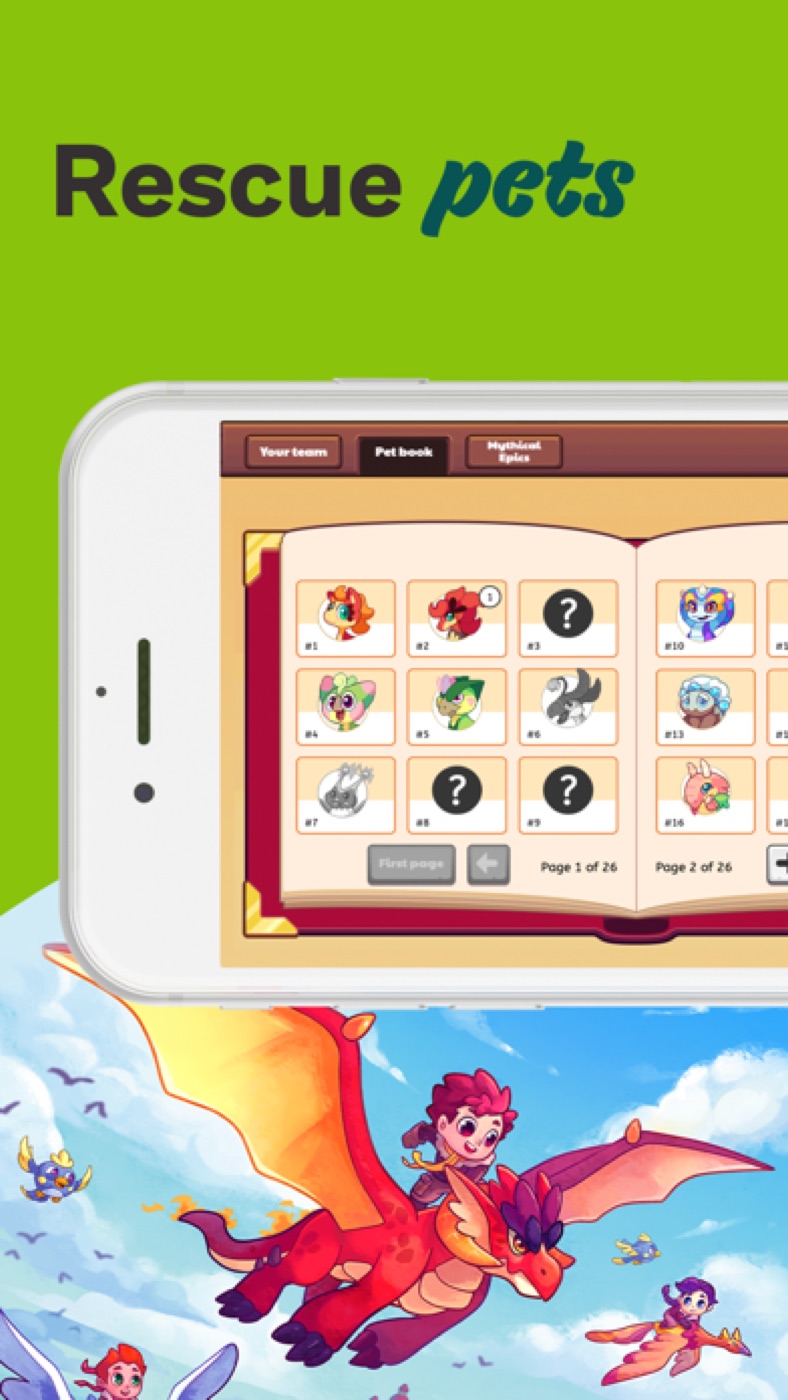
The real limits are the business model and the game layer. Prodigy says on its teacher page that free content is sustained by optional parent memberships, and the game shows member-only pets, gear and Mythical Epics to free players. Common Sense Media, which rates the app for age 7 and up, rates educational value as "some" and says leveling up is easier for paid users and that kids are reminded of this often. Science requires a Plus or Ultra plan, and the English game included in Ultra runs in a web browser only.
How it scored
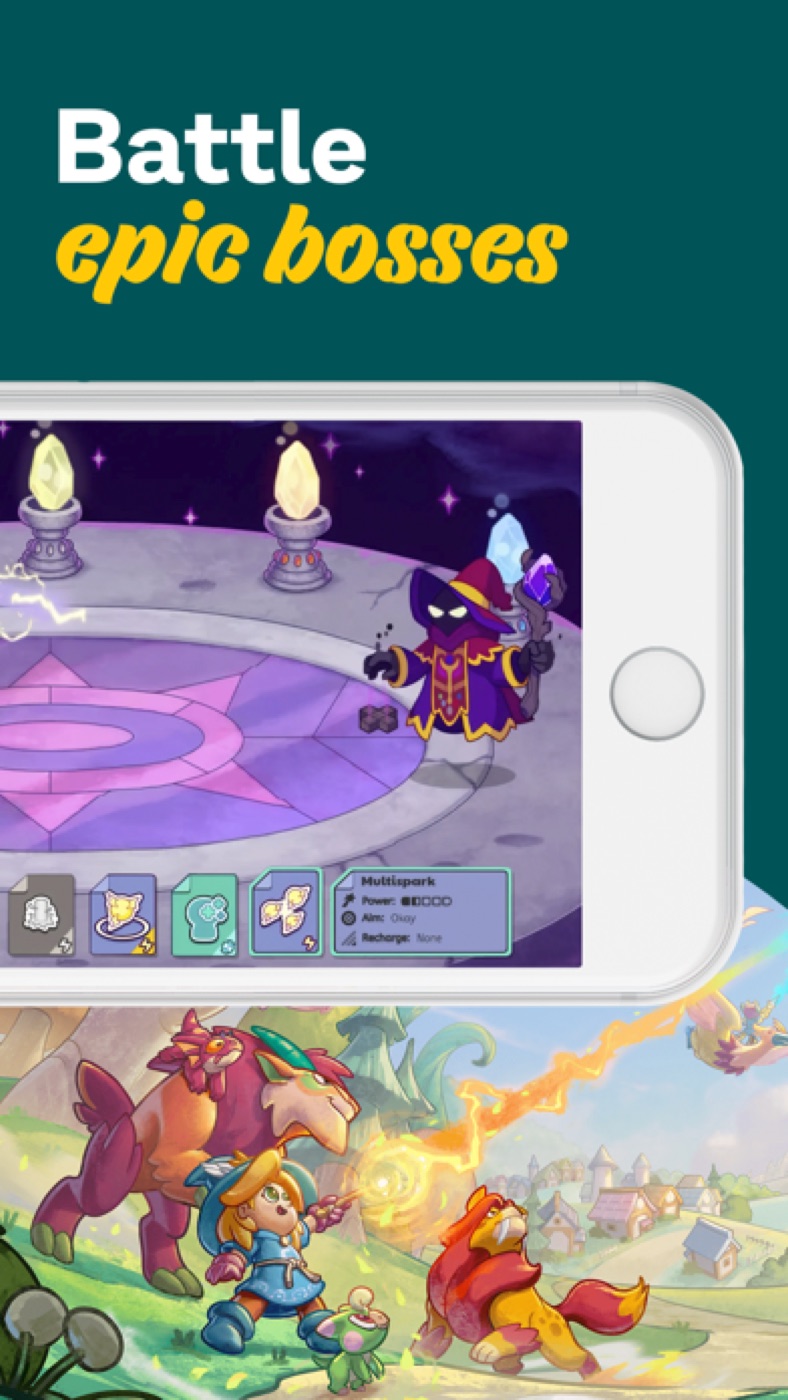
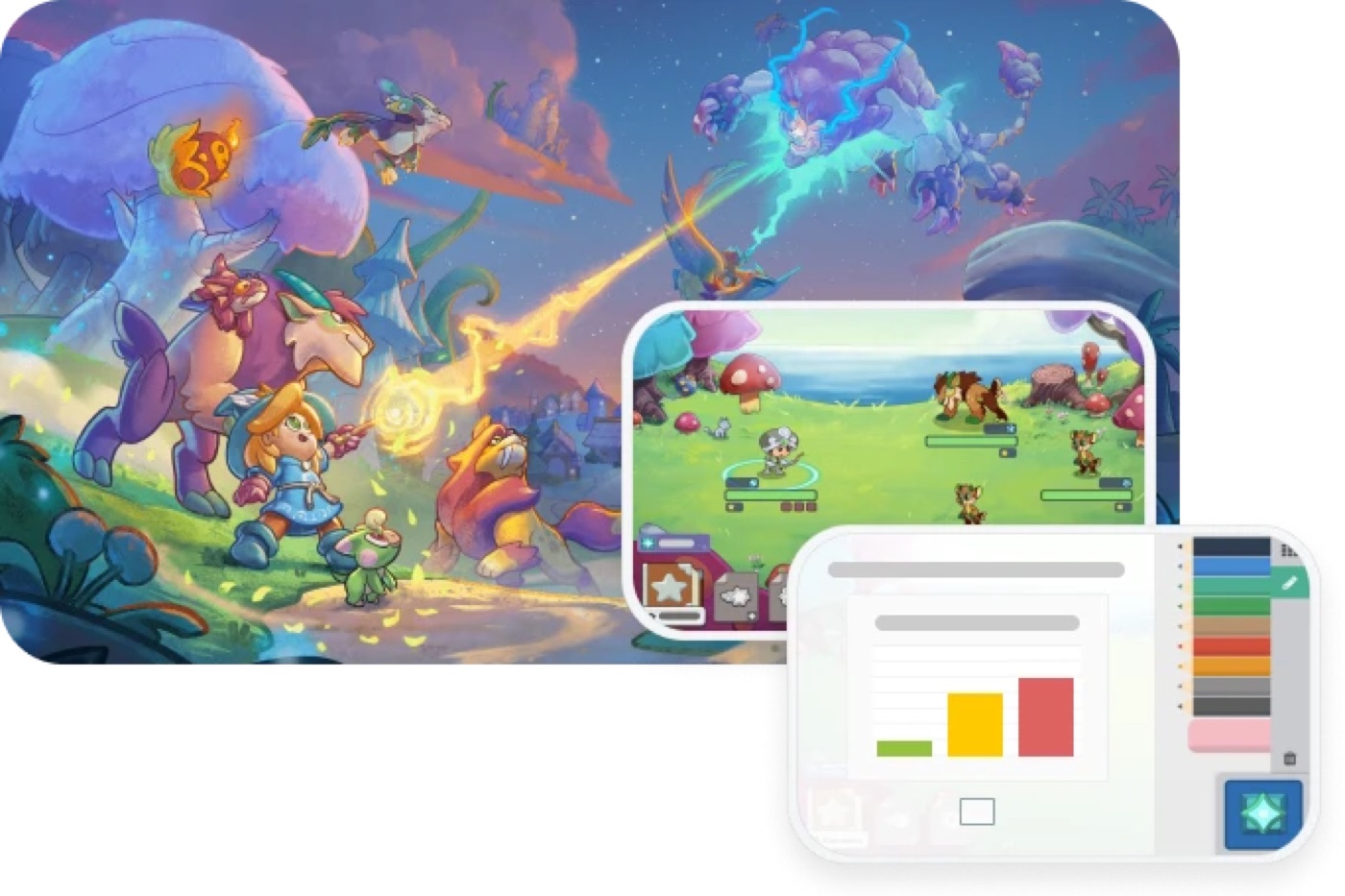
Prodigy turns practice into a fantasy role-playing game. In Prodigy Math, children create a wizard and answer math questions to win battles, while Prodigy English has them gather supplies and build a village through reading and language questions. Prodigy says its questions follow the curriculum taught in school, with math standards covered for grades 1 to 8, and an adaptive algorithm steers each child toward weak areas. The key point for parents is that the math and English content is free. A free parent account shows progress and sends a monthly report card. Paid memberships add science, more game items and stronger parent tools such as goals, in-game cheers and printable practice sheets; Core starts at $9.95 a month or $58.95 a year, and extra children get 25 percent off. The downside is that the game constantly shows rewards that require a membership, which can lead to requests to upgrade. We compared documented features and published prices.
Who it is for
Grade school children who resist worksheets but will practice math inside a game.
Good fit if
- Parents of children in grades 1 to 8 who resist math worksheets but will play a role-playing game
- Families who want free, standards-aligned math and English practice with a free parent dashboard and monthly report card
- Teachers who need a no-cost classroom practice tool: Prodigy says over 800,000 teachers use it each year for free
- US homeschool families who can pay with state grants, ESAs or scholarships and want a progress dashboard on top of Prodigy Ultra
- Parents of several children, since extra memberships get an additional 25% off
Skip it if
- Children who need new math concepts taught step by step: DreamBox Math or Beast Academy Online provide structured instruction
- Children under grade 1 or preschoolers: Khan Academy Kids is free and built for younger ages
- Families who want no in-game purchase prompts at all: Khan Academy Kids has no subscriptions or ads
- Students past grade 8 or needing deep reading instruction beyond grade 6: IXL covers a wider grade and subject range
Specifications
| Product type | Game-based practice: Prodigy Math (role-playing game), Prodigy English (life simulation), Math Facts and Arcadia games | source |
|---|---|---|
| Math grades | Grades 1 to 8, aligned to state or provincial standards | source |
| Math question bank | More than 45,000 math questions | source |
| Math skills | 1,500+ math skills, DOK levels 1 to 3 | source |
| Science | Grades 1 to 6, 3,000 questions, Plus or Ultra membership required | source |
| English | Grades 1 to 6, aligned to Common Core reading, language and writing standards | source |
| Curricula covered | United States, Canada, India, Mexico, Brazil, United Kingdom and Australia | source |
| Free content | All math and English questions; free parent account with portal and monthly report card | source |
| Paid tiers (math) | Core, Plus, Ultra, from $9.95 a month or $58.95 a year | source |
| Platforms | Web browser (play.prodigygame.com), iPhone and iPad (iOS and iPadOS 16.0 or later), parent app on iOS and Android | source |
| App Store rating | 4.8 from 257K ratings (Prodigy Math Game, US store) | source |
| Parent app rating | 4.9 from 16K ratings (Prodigy for Parents, US store) | source |
| Privacy | iKeepSafe COPPA Safe Harbor and FERPA certification; chat limited to preselected phrases | source |
| Common Sense Media age | Age 7+, purchase pressure rated "a lot" | source |
| Renewal | Subscriptions renew automatically; cancel anytime from the parent account Memberships page | source |
Price
Free to play for math and English; Core membership $9.95 a month or $58.95 a year ($4.91 a month).
CORE $9.95 $4.91/mo* One subject
Quoted from the vendor pricing page on November 22, 2026.
Plans and pricing
| Plan | Price | What is included | Source |
|---|---|---|---|
| Free (Math and English) | $0free | All Prodigy Math questions for grades 1 to 8; All Prodigy English questions for grades 1 to 6; Free parent account with progress portal, monthly report card and curriculum progress report; Free for teachers in classrooms | Checked Nov 23, 2026 |
| Math Core | $9.95 a month, or $58.95 a year ($4.91 a month)monthly or annual | One subject: Math; Math Facts and Arcadia; Up to 350 Magicoin a month; Access to some Mythical Epics; 2x treasure track rewards; Track progress and set basic goals | Checked Nov 23, 2026 |
| Math Plus | $14.95 a month, or $88.95 a year ($7.41 a month)monthly or annual | Two subjects: Math and Science (grades 1 to 6); Math Facts and Arcadia; Up to 720 Magicoin a month; All the latest Mythical Epics; 3x treasure track rewards; More control over goals and a wider choice of prizes; Seasonal Member Chest | Checked Nov 23, 2026 |
| Math Ultra | $19.95 a month, or $118.95 a year ($9.91 a month)monthly or annual | Three subjects: Math, Science and English; Everything in Plus; Bonus 880 Magicoin a month; All Ultra benefits in Prodigy English (web browser only) | Checked Nov 23, 2026 |
| English Level Up | $9.95 a month, or $74.95 a year ($6.25 a month)monthly or annual | 100 Wishcoins every week; 40% more gold and over 5x the Wishcoins for completing jobs; 15% more coins on items sold; Extra daily store items; One-time tree fort decoration | Checked Nov 23, 2026 |
| English Ultimate | $14.95 a month, or $99.95 a year ($8.33 a month)monthly or annual | Everything in Level Up; 25 additional Wishcoins every week; 35% more Wishcoins for completing jobs; 30% more coins on items sold compared with Basic; One-time Wishie shirt | Checked Nov 23, 2026 |
| Homeschool Companion | $250 a year for one child; $399 a year for up to three childrenannual | Prodigy Ultra membership; Dashboard showing mastered skills and areas needing support; Separate dashboard per child on the Family Bundle; Available to US customers only; can be funded with state grants or scholarships | Checked Nov 23, 2026 |
Key features
Placement test and adaptive questions
Prodigy Math starts with a placement test one grade below the grade chosen at sign-up and works upward, then its adaptive algorithm moves back to basics or ahead based on answers. Members can also change the grade level of questions from the parent side.
Free parent account and reports
Parents get a portal with progress data, a skill-by-skill monthly report card by email and a curriculum progress report showing which grade-level skills a child has mastered, all without paying.
Member parent tools
Members can set goals with rewards chosen from over 40 in-game items, send in-game cheers, see which questions cause trouble and print practice sheets. Plus members get more control over goal size and prize choice than Core.
Arcadia and Math Facts
Every math membership includes Math Facts and Arcadia, a library Prodigy describes as over 15 games for ages 6 to 12 where play continues only after correct math answers, with no ads or chat.
Science inside the math game
Plus and Ultra add Prodigy Science for grades 1 to 6 with 3,000 questions. A child picks Math or Science at launch and keeps the same game progress.
Child safety and privacy
Player chat is limited to preselected phrases, and Prodigy cites iKeepSafe certification for COPPA and FERPA compliance and state laws such as SOPIPA.
Strengths and weaknesses
What we like
- Every math and English question is free, covering more than 45,000 math questions for grades 1 to 8
- Free parent account includes a progress portal and a monthly skill-by-skill report card
- Annual memberships cost about half of monthly: Core is $58.95 a year against $9.95 a month
- Math coverage runs to grade 8, later than Khan Academy Kids and most early-years apps on this site
- Additional 25% off memberships for more than one child
- Free for classroom use, with Prodigy reporting over 800,000 teachers a year
- High store ratings: 4.8 from 257K ratings for the game and 4.9 from 16K for the parent app in the US App Store
What could be better
- Common Sense Media rates purchase pressure as "a lot" and says leveling up is easier for paid users
- Practice, not instruction: Common Sense rates educational value "some" and math is not deeply built into the story
- Science needs Plus ($88.95 a year) or Ultra, and English membership is sold separately unless you buy Ultra
- Ultra's English game benefits work in a web browser only
- Grade limits: math stops at grade 8 and English and science stop at grade 6
- Prodigy's efficacy results come from studies it publishes on its own research page rather than independent trials
Key facts
- Free plan: Yes, math and English content
- Grades: Math for grades 1 to 8
- Paid plans: Core, Plus, Ultra
- Multi-child discount: 25% off extra memberships
- Renewal: Automatic, cancel anytime
Where it ranks
Prodigy is No. 3 in our Best Online Learning for Kids verdict.
Alternatives to consider
- DreamBox Math: Structured adaptive lessons that teach concepts, at $12.95 a month or $99.95 for 12 months, for children who need instruction rather than practice.
- Beast Academy Online: Problem-solving curriculum for strong math students, from $100 a year, with a clear lesson sequence.
- Khan Academy Kids: Free with no ads or subscriptions, better for younger children and families who want no upsell prompts.
- IXL: Worksheet-style practice across more subjects and grades for families who do not need a game layer.
- SplashLearn: Game-based math and reading for younger grades, from $7.99 a month in the US App Store.
Questions readers ask
Is Prodigy really free?
Yes, Prodigy says all of its Math and English educational content is free. Memberships add science, game items such as pets and gear, extra games and stronger parent tools, starting at $9.95 a month or $58.95 a year.
Is a Prodigy membership worth it?
It depends on whether your child wants the game rewards, because a membership does not add more math questions. It does add Math Facts, Arcadia, science on Plus and Ultra, goal setting and printable practice sheets, and annual billing halves the monthly cost.
How much does Prodigy cost?
Math memberships checked in November 2026 cost $9.95, $14.95 or $19.95 a month for Core, Plus and Ultra, or $58.95, $88.95 and $118.95 a year. Separate English memberships cost $74.95 or $99.95 a year, and Homeschool Companion costs $250 a year for one child.
What grades is Prodigy for?
Prodigy Math covers grades 1 to 8, while Prodigy English and Prodigy Science cover grades 1 to 6. Common Sense Media rates the math game for age 7 and up.
Is Prodigy safe for kids?
Prodigy limits player chat to preselected phrases and says no personal information can be shared with other users. It cites iKeepSafe certification for COPPA and FERPA, and Arcadia has no ads or chat features.
Prodigy vs DreamBox: which is better?
DreamBox Math is better for teaching new concepts through structured lessons, at $12.95 a month. Prodigy is better as free practice for a child motivated by games, with paid extras from $58.95 a year.
How do I cancel a Prodigy membership?
Log into the parent account, open the Memberships page and click Cancel, according to Prodigy's FAQ. Memberships bought through the iOS app are handled through Apple, and subscriptions renew automatically until canceled.
Does Prodigy teach math or just practice it?
Prodigy is mainly practice: children answer questions with hints during battles, and the adaptive algorithm targets weak areas. Common Sense Media rates its educational value as "some", so pair it with a curriculum when a child needs new topics taught.
Sources we checked
- Prodigy: Buy Math Memberships, checked November 23, 2026
- Prodigy: Buy English Memberships, checked November 23, 2026
- Prodigy: Support Your Child's Math Success (parents), checked November 23, 2026
- Prodigy English, checked November 23, 2026
- Prodigy Arcadia, checked November 23, 2026
- Prodigy for teachers, checked November 23, 2026
- Prodigy for homeschoolers, checked November 23, 2026
- Prodigy Education Research, checked November 23, 2026
- Prodigy Math Game on the US App Store, checked November 23, 2026
- Prodigy for Parents on the US App Store, checked November 23, 2026
- Common Sense Media: Prodigy: Kids Math Game review, checked November 23, 2026
- DreamBox Math family pricing, checked November 12, 2026
- Beast Academy Online, checked November 12, 2026
Deep review last updated November 23, 2026. We recheck prices and specs against these pages; send corrections to the address below.
Alternatives we scored
- Khan Academy Kids9.0
- IXL8.6
- Beast Academy8.5
- ABCmouse8.4
Cite this page
HearSmart. Prodigy review. Updated November 23, 2026. https://hearsmart.org/review/prodigy
Visit prodigygame.com · Questions or corrections: editorial@hearsmart.org